<?xml version="1.0" encoding="ISO-8859-1"?><article xmlns:mml="http://www.w3.org/1998/Math/MathML" xmlns:xlink="http://www.w3.org/1999/xlink" xmlns:xsi="http://www.w3.org/2001/XMLSchema-instance">
<front>
<journal-meta>
<journal-id>2176-6223</journal-id>
<journal-title><![CDATA[Revista Pan-Amazônica de Saúde]]></journal-title>
<abbrev-journal-title><![CDATA[Rev Pan-Amaz Saude]]></abbrev-journal-title>
<issn>2176-6223</issn>
<publisher>
<publisher-name><![CDATA[Instituto Evandro Chagas. Secretaria de Vigilância em Saúde e Ambiente. Ministério da Saúde]]></publisher-name>
</publisher>
</journal-meta>
<article-meta>
<article-id>S2176-62232013000200004</article-id>
<article-id pub-id-type="doi">10.5123/S2176-62232013000200004</article-id>
<title-group>
<article-title xml:lang="en"><![CDATA[Healthcare-associated infections among HIV-positive and HIV/AIDS-negative patients: a casuistic from the Amazonian Region]]></article-title>
<article-title xml:lang="pt"><![CDATA[Infecções relacionadas à assistência à saúde em pacientes HIV-positivos e HIV/aids-negativos: uma casuística da Região Amazônica]]></article-title>
<article-title xml:lang="es"><![CDATA[Infecciones asociadas a los cuidados de salud en pacientes VIH-positivos y VIH/SIDA-negativos: una casuística de la Región Amazónica]]></article-title>
</title-group>
<contrib-group>
<contrib contrib-type="author">
<name>
<surname><![CDATA[Reis]]></surname>
<given-names><![CDATA[Danielle Saraiva Tuma dos]]></given-names>
</name>
<xref ref-type="aff" rid="A01"/>
</contrib>
<contrib contrib-type="author">
<name>
<surname><![CDATA[Carneiro]]></surname>
<given-names><![CDATA[Irna Carla do Rosário Souza]]></given-names>
</name>
<xref ref-type="aff" rid="A02"/>
</contrib>
<contrib contrib-type="author">
<name>
<surname><![CDATA[Neves]]></surname>
<given-names><![CDATA[Dilma Costa de Oliveira]]></given-names>
</name>
<xref ref-type="aff" rid="A03"/>
</contrib>
<contrib contrib-type="author">
<name>
<surname><![CDATA[Marsola]]></surname>
<given-names><![CDATA[Lourival Rodrigues]]></given-names>
</name>
<xref ref-type="aff" rid="A04"/>
</contrib>
<contrib contrib-type="author">
<name>
<surname><![CDATA[Sousa]]></surname>
<given-names><![CDATA[Rita Catarina Medeiros]]></given-names>
</name>
<xref ref-type="aff" rid="A05"/>
</contrib>
</contrib-group>
<aff id="A01">
<institution><![CDATA[,Universidade Federal do Pará Faculdade de Enfermagem ]]></institution>
<addr-line><![CDATA[Belém Pará]]></addr-line>
<country>Brasil</country>
</aff>
<aff id="A02">
<institution><![CDATA[,Universidade Federal do Pará Departamento de Doenças Infecciosas ]]></institution>
<addr-line><![CDATA[Belém Pará]]></addr-line>
<country>Brasil</country>
</aff>
<aff id="A03">
<institution><![CDATA[,Universidade Estadual do Pará Departamento de Doenças Infecciosas ]]></institution>
<addr-line><![CDATA[Belém Pará]]></addr-line>
<country>Brasil</country>
</aff>
<aff id="A04">
<institution><![CDATA[,Universidade Federal do Pará Hospital Universitário João de Barros Barreto ]]></institution>
<addr-line><![CDATA[Belém Pará]]></addr-line>
<country>Brasil</country>
</aff>
<aff id="A05">
<institution><![CDATA[,Instituto Evandro Chagas/SVS/MS Seção de Virologia ]]></institution>
<addr-line><![CDATA[Belém Pará]]></addr-line>
<country>Brasil</country>
</aff>
<pub-date pub-type="pub">
<day>00</day>
<month>06</month>
<year>2013</year>
</pub-date>
<pub-date pub-type="epub">
<day>00</day>
<month>06</month>
<year>2013</year>
</pub-date>
<volume>4</volume>
<numero>2</numero>
<fpage>27</fpage>
<lpage>32</lpage>
<copyright-statement/>
<copyright-year/>
<self-uri xlink:href="http://scielo.iec.gov.br/scielo.php?script=sci_arttext&amp;pid=S2176-62232013000200004&amp;lng=en&amp;nrm=iso"></self-uri><self-uri xlink:href="http://scielo.iec.gov.br/scielo.php?script=sci_abstract&amp;pid=S2176-62232013000200004&amp;lng=en&amp;nrm=iso"></self-uri><self-uri xlink:href="http://scielo.iec.gov.br/scielo.php?script=sci_pdf&amp;pid=S2176-62232013000200004&amp;lng=en&amp;nrm=iso"></self-uri><abstract abstract-type="short" xml:lang="en"><p><![CDATA[OBJECTIVE: To investigate and compare the incidence of healthcare-associated infections (HAIs) involving HIV and non-HIV/AIDS patients. METHODS: Analytical, observational and prospective study. Setting: The Infectious Disease Nursery at the Hospital Universitário João de Barros Barreto in Belém, Pará State, Brazil. Patients: HIV and non-HIV/AIDS inpatients from February to December 2007. The patients were monitored daily from admission to the day of discharge. RESULTS: During the study period, there were 20,276 reported patient-days. Out of the 1,130 discharged patients, 40 patients acquired HAIs, and HAIs occurred more frequently in the HIV-positive patients (57.5%), with 29 (60.4%) HAI episodes (p &#8804; 0.05). A total of 11 (55%) HIV-positive patients showed a TCD4 cell count < 100 cell/mm³, and 15 (65.22%) HIV-positive patients died from complications associated with the HAIs (p = 0.009). The most frequent infections were urinary tract infections related to urinary catheter use per 1,000 catheter-days in non-HIV patients, with 12.11 episodes (p = 0.13). However, HIV-positive patients were more often infected with pneumonia, with 1.6 episodes per 1,000 patient-days (p = 0.04). CONCLUSION: HAI are more likely to occur in HIV-positive patients, most likely as a consequence of their immune condition, and this risk, which is associated with invasive procedures, justifies the need for preventive measures.]]></p></abstract>
<abstract abstract-type="short" xml:lang="pt"><p><![CDATA[OBJETIVO: Investigar e comparar a incidência de infecções relacionadas à assistência à saúde (IRAS), envolvendo pacientes HIV e não HIV/aids. MÉTODO: Estudo analítico, observacional e prospectivo ocorrido na Enfermaria de Doenças Infecciosas do Hospital Universitário João de Barros Barreto em Belém, Estado do Pará, Brasil. Pacientes: Internos, portadores de HIV e não HIV/aids, de fevereiro a dezembro de 2007, com monitoramento diário da admissão até a alta hospitalar. RESULTADOS: Durante o período de estudo, foram relatados 20.276 pacientes/dia. De 1.130 pacientes com alta, 40 contraíram IRAS, e as IRAS ocorreram mais frequentemente nos HIV-positivos (57,5%), com 29 (60,4%) episódios de IRAS (p &#8804; 0,05). Um total de 11 (55%) HIV-positivos apresentou contagem de células TCD4 < 100 células/mm³, e 15 (65,22%) HIV-positivos morreram de complicações associadas com as IRAS (p = 0,009). A infecção mais frequente foi a do trato urinário, associada ao uso de cateter urinário, 1.000 cateteres-dia em pacientes não HIV, com 12,11 episódios (p = 0,13). Entretanto, os HIV-positivos apresentaram pneumonia mais frequentemente, com 1,6 episódios em 1.000 pacientes-dia (p = 0,04). CONCLUSÃO: As IRAS apresentam maior probabilidade de ocorrência em HIV-positivos, provavelmente devido as suas condições de imunidade, e esse risco, que está associado com procedimentos invasivos, justifica a necessidade de medidas preventivas.]]></p></abstract>
<abstract abstract-type="short" xml:lang="es"><p><![CDATA[OBJETIVO: Investigar y comparar la incidencia de infecciones asociadas a los cuidados de la salud (IACS), involucrando a pacientes VIH y no VIH/SIDA. MÉTODO: Estudio analítico, de observación y prospectivo en la Enfermería de Enfermedades Infecciosas del Hospital Universitário João de Barros Barreto en Belém, Estado de Pará, Brasil. Pacientes: Internos, portadores de VIH y no VIH/SIDA, de febrero a diciembre de 2007, con monitoreo diario desde el ingreso hasta el alta hospitalaria. RESULTADOS: Durante el período de estudio, se relataron 20.276 pacientes/día. De 1.130 pacientes con alta, 40 contrajeron IACS, y las IACS fueron más frecuentes en los VIH-positivos (57,5%), con 29 (60,4%) episodios de IACS (p &#8804; 0,05). Un total de 11 (55%) VIH-positivos presentó conteo de células TCD4 < 100 células/mm³, y 15 (65,22%) VIH-positivos murieron de complicaciones asociadas con las IACS (p = 0,009). La infección más frecuente fue la del trato urinario, asociada al uso de catéter urinario, 1.000 catéteres-día en pacientes no VIH, con 12,11 episodios (p = 0,13). No obstante, los VIH-positivos presentaron neumonía más frecuentemente, con 1,6 episodios en 1.000 pacientes-día (p = 0,04). CONCLUSION: Las IACS presentan más probabilidad de suceder en VIH-positivos, probablemente debido a sus condiciones de inmunidad, y ese riesgo, que está asociado a procedimientos invasivos, justifica la necesidad de medidas preventivas.]]></p></abstract>
<kwd-group>
<kwd lng="en"><![CDATA[Cross Infection]]></kwd>
<kwd lng="en"><![CDATA[HIV]]></kwd>
<kwd lng="en"><![CDATA[Pneumonia]]></kwd>
<kwd lng="en"><![CDATA[Risk Factors]]></kwd>
<kwd lng="pt"><![CDATA[Infecção Hospitalar]]></kwd>
<kwd lng="pt"><![CDATA[HIV]]></kwd>
<kwd lng="pt"><![CDATA[Pneumonia]]></kwd>
<kwd lng="pt"><![CDATA[Fatores de Risco]]></kwd>
<kwd lng="es"><![CDATA[Infección Hospitalaria]]></kwd>
<kwd lng="es"><![CDATA[VIH]]></kwd>
<kwd lng="es"><![CDATA[Neumonía]]></kwd>
<kwd lng="es"><![CDATA[Factores de Riesgo]]></kwd>
</kwd-group>
</article-meta>
</front><body><![CDATA[ <p align="right"><font face="Verdana" size="2"><b>ORIGINAL ARTICLE | ARTIGO ORIGINAL | ART&Iacute;CULO ORIGINAL</b></font></p>     <p>&nbsp;</p>     <p><font face="Verdana" size="4"><b><a name="topo"></a>Healthcare-associated infections among HIV-positive and HIV/AIDS-negative patients: a casuistic from the Amazonian Region</b></font></p>     <p>&nbsp;</p>     <p><font face="Verdana" size="3"><b>Infec&#231;&#245;es relacionadas &agrave; assist&ecirc;ncia &agrave; sa&uacute;de em pacientes HIV-positivos e HIV/aids-negativos: uma casu&#237;stica da Regi&#227;o Amaz&#244;nica</b></font></p>     <p>&nbsp;</p>     <p><b><font face="Verdana" size="3">Infecciones asociadas a los cuidados de salud en pacientes VIH-positivos y VIH/SIDA-negativos: una casu&#237;stica de la Regi&#243;n Amaz&#243;nica</font></b></p>     <p>&nbsp;</p>     <p>&nbsp;</p>     <p><font face="Verdana" size="2"><b>Danielle Saraiva Tuma dos Reis<font face="Verdana" size="2"><sup>I</sup></font>; </b></font><b><font face="Verdana" size="2">Irna Carla do Ros&#225;rio Souza Carneiro<sup>II</sup>; Dilma Costa de Oliveira Neves<sup>III</sup>; Lourival Rodrigues Marsola<sup>IV</sup>; </font><font face="Verdana" size="2">Rita Catarina Medeiros Sousa<sup>V</sup></font></b></p>     ]]></body>
<body><![CDATA[<p><font size="2" face="Verdana"><font face="Verdana" size="2"><sup>I</sup></font><i>Faculdade de Enfermagem, Universidade Federal do Par&aacute;, Bel&eacute;m,   Par&aacute;, Brasil.   Enfermaria de Doen&ccedil;as Infecciosas, Hospital Universit&aacute;rio Jo&atilde;o de Barros Barreto, Bel&eacute;m, Par&aacute;, Brasil</i></font><font size="2" face="Verdana"><i>    <br> </i></font><font face="Verdana" size="2"><font face="Verdana" size="2"><sup>II</sup></font><i>Departamento de Doen&#231;as Infecciosas, Universidade Estadual do Par&#225;, Bel&#233;m, Par&#225;, Brasil</i></font>. <font face="Verdana" size="2"><i>Departamento de Doen&#231;as Infecciosas, Universidade Federal do Par&#225;, Bel&#233;m, Par&#225;, Brasil    <br> </i><font face="Verdana" size="2"><sup>III</sup></font><i>Departamento de Doen&#231;as Infecciosas, Universidade Estadual do Par&#225;, Bel&#233;m, Par&#225;, Brasil</i></font>. <font face="Verdana" size="2"><i>Centro Universit&#225;rio do Par&#225;, Bel&#233;m, Par&#225;, Brasil</i></font>    <br>   <font face="Verdana" size="2"><font face="Verdana" size="2"><sup>IV</sup></font><i>Comit&#234; de Controle de Infec&#231;&#227;o Hospitalar, Hospital Universit&#225;rio Jo&#227;o de Barros Barreto, Universidade Federal do Par&#225;, Bel&#233;m, Par&#225;, Brasil</i></font>    <br>   <font face="Verdana" size="2"><font face="Verdana" size="2"><sup>V</sup></font><i>Departamento de Doen&#231;as Infecciosas, Universidade Federal do Par&#225;, Bel&#233;m, Par&#225;, Brasil</i></font>. <font face="Verdana" size="2"><i>Se&#231;&#227;o de Virologia, Instituto Evandro Chagas/SVS/MS, Bel&#233;m, Par&#225;, Brasil</i></font></p>     <p><font size="2" face="Verdana"><a href="#endereco">Endere&ccedil;o para correspond&ecirc;ncia    <br> Correspondence    <br> Direcci&oacute;n para correspondencia</a></font></p>     <p>&nbsp;</p>     <p>&nbsp;</p> <hr size="1" noshade>     ]]></body>
<body><![CDATA[<p><font face="Verdana" size="2"><b>ABSTRACT</b></font></p>     <p><font face="Verdana" size="2"><b>OBJECTIVE:</b> To investigate and compare the incidence of healthcare-associated infections (HAIs) involving HIV and non-HIV/AIDS patients.    <br>     <b>METHODS</b>: Analytical, observational and prospective study. Setting: The Infectious Disease Nursery at the Hospital Universit&#225;rio Jo&#227;o de Barros Barreto in Bel&#233;m, Par&#225; State, Brazil. Patients: HIV and non-HIV/AIDS inpatients from February to December 2007. The patients were monitored daily from admission to the day of discharge.    <br>     <b> RESULTS:</b> During the study period, there were 20,276 reported patient-days. Out of the 1,130 discharged patients, 40 patients acquired HAIs, and HAIs occurred more frequently in the HIV-positive patients (57.5%), with 29 (60.4%) HAI episodes (p &#8804 0.05). A total of 11 (55%) HIV-positive patients showed a TCD4 cell count &lt; 100 cell/mm<sup>3</sup>, and 15 (65.22%) HIV-positive patients died from complications associated with the HAIs (p = 0.009). The most frequent infections were urinary tract infections related to urinary catheter use per 1,000 catheter-days in non-HIV patients, with 12.11 episodes (p = 0.13). However, HIV-positive patients were more often infected with pneumonia, with 1.6 episodes per 1,000 patient-days (p = 0.04).    <br>     <b> CONCLUSION:</b> HAI are more likely to occur in HIV-positive patients, most likely as a consequence of their immune condition, and this risk, which is associated with invasive procedures, justifies the need for preventive measures.</font></p>     <p><font face="Verdana" size="2"><b>Keywords: </b>Cross Infection; HIV; Pneumonia; Risk Factors.</font></p> <hr size="1" noshade>     <p><font face="Verdana" size="2"><b>RESUMO</b></font></p>     <p><font face="Verdana" size="2"><b>OBJETIVO:</b> Investigar e comparar a incid&#234;ncia de infec&#231;&#245;es relacionadas &agrave; assist&ecirc;ncia &agrave; sa&uacute;de (IRAS), envolvendo pacientes HIV e n&#227;o HIV/aids.    <br>   <b> M&#201;TODO:</b> Estudo anal&#237;tico, observacional e prospectivo ocorrido na Enfermaria de Doen&#231;as Infecciosas do Hospital Universit&#225;rio Jo&#227;o de Barros Barreto em Bel&#233;m, Estado do Par&#225;, Brasil. Pacientes: Internos, portadores de HIV e n&#227;o HIV/aids, de fevereiro a dezembro de 2007, com monitoramento di&#225;rio da admiss&#227;o at&#233; a alta hospitalar.    <br>   <b> RESULTADOS:</b> Durante o per&#237;odo de estudo, foram relatados 20.276 pacientes/dia. De 1.130 pacientes com alta, 40 contra&#237;ram IRAS, e as IRAS ocorreram mais frequentemente nos HIV-positivos (57,5%), com 29 (60,4%) epis&#243;dios de IRAS (p &#8804 0,05). Um total de 11 (55%) HIV-positivos apresentou contagem de c&#233;lulas TCD4 &lt; 100 c&#233;lulas/mm<sup>3</sup>, e 15 (65,22%) HIV-positivos morreram de complica&#231;&#245;es associadas com as IRAS (p = 0,009). A infec&#231;&#227;o mais frequente foi a do trato urin&#225;rio, associada ao uso de cateter urin&#225;rio, 1.000 cateteres-dia em pacientes n&#227;o HIV, com 12,11 epis&#243;dios (p = 0,13). Entretanto, os HIV-positivos apresentaram pneumonia mais frequentemente, com 1,6 epis&#243;dios em 1.000 pacientes-dia (p = 0,04).    ]]></body>
<body><![CDATA[<br>   <b> CONCLUS&#195;O:</b> As IRAS apresentam maior probabilidade de ocorr&#234;ncia em HIV-positivos, provavelmente devido as suas condi&#231;&#245;es de imunidade, e esse risco, que est&#225; associado com procedimentos invasivos, justifica a necessidade de medidas preventivas.</font></p>     <p><font face="Verdana" size="2"><b>Palavras-chave: </b>Infec&#231;&#227;o Hospitalar; HIV; Pneumonia; Fatores de Risco.</font></p> <hr size="1" noshade>     <p><font face="Verdana" size="2"><b>RESUMEN</b></font></p>     <p><font face="Verdana" size="2"><b>OBJETIVO:</b> Investigar y comparar la incidencia de infecciones asociadas a los cuidados de la salud (IACS), involucrando a pacientes VIH y no VIH/SIDA.    <br>   <b> M&#201;TODO:</b> Estudio anal&#237;tico, de observaci&#243;n y prospectivo en la Enfermer&#237;a de Enfermedades Infecciosas del Hospital Universit&#225;rio Jo&#227;o de Barros Barreto en Bel&#233;m, Estado de Par&#225;, Brasil. Pacientes: Internos, portadores de VIH y no VIH/SIDA, de febrero a diciembre de 2007, con monitoreo diario desde el ingreso hasta el alta hospitalaria.    <br>   <b> RESULTADOS:</b> Durante el per&#237;odo de estudio, se relataron 20.276 pacientes/d&#237;a. De 1.130 pacientes con alta, 40 contrajeron IACS, y las IACS fueron m&#225;s frecuentes en los VIH-positivos (57,5%), con 29 (60,4%) episodios de IACS (p &#8804 0,05). Un total de 11 (55%) VIH-positivos present&#243; conteo de c&#233;lulas TCD4 &lt; 100 c&#233;lulas/mm<sup>3</sup>, y 15 (65,22%) VIH-positivos murieron de complicaciones asociadas con las IACS (p = 0,009). La infecci&#243;n m&#225;s frecuente fue la del trato urinario, asociada al uso de cat&#233;ter urinario, 1.000 cat&#233;teres-d&#237;a en pacientes no VIH, con 12,11 episodios (p = 0,13). No obstante, los VIH-positivos presentaron neumon&#237;a m&#225;s frecuentemente, con 1,6 episodios en 1.000 pacientes-d&#237;a (p = 0,04).    <br>   <b> CONCLUSION:</b> Las IACS presentan m&#225;s probabilidad de suceder en VIH-positivos, probablemente debido a sus condiciones de inmunidad, y ese riesgo, que est&#225; asociado a procedimientos invasivos, justifica la necesidad de medidas preventivas.</font></p>     <p><font face="Verdana" size="2"><b>Palabras clave: </b>Infecci&#243;n Hospitalaria; VIH; Neumon&#237;a; Factores de Riesgo.</font></p> <hr size="1" noshade>     <p>&nbsp;</p>     <p>&nbsp;</p>     ]]></body>
<body><![CDATA[<p><font face="Verdana" size="3"><b>INTRODUCTION</b></font></p>     <p><font face="Verdana" size="2">Infection with human Immunodeficiency Virus (HIV) starts a progressive process of TCD4+ lymphocyte destruction, leading to infections that are caused by opportunistic microorganisms<sup>1</sup>. With the advent of antiretroviral therapy, the survival of patients with AIDS has increased;</font> <font face="Verdana" size="2">however, HAIs can occur in hospitals where nosocomial microorganisms are present<sup>2</sup>. According to the Center for Disease Control (CDC)<sup>3</sup>, HAI results from treatment in a hospital setting, where immune-compromised patients are most susceptible thus constituting a public health problem, which is characterized by high rates of mortality and morbidity<sup>2</sup>. HAI data are not well-characterized in Brazil; however, a study assessing 8,624 patients over 24 hours of hospitalization, with an average length of stay of 11.8 days, identified 1,129 patients with HAIs, representing an incidence rate of 15.5%<sup>4</sup>. In a study that focused on the HAI incidence among HIV carriers, which was performed in a hospital in S&#227;o Paulo, 29 (14.9%) HAI cases were detected among 195 hospitalizations<sup>5</sup>. Numerous studies</font> <font face="Verdana" size="2">have reported HAIs and the risk factors for the population in general. However, few studies have addressed the risk of HAIs in HIV-positive patients, especially in Brazilian and Amazonian contexts, where a great diversity of tropical pathologies are observed. Therefore, the purpose of this study was to compare the HAI indicators among HIV-positive and non-HIV/AIDS patients.</font></p>     <p>&nbsp;</p>     <p><font face="Verdana" size="3"><b>METHODS</b></font></p>     <p><b><font face="Verdana" size="2">PATIENT POPULATION</font></b></p>     <p><font face="Verdana" size="2">The analytical, observational, and prospective study occurred at an infectious disease ward at the Hospital Universit&#225;rio Jo&#227;o de Barros Barreto (HUJBB) situated in the City of Bel&#233;m, Par&#225; State, in north Brazil, where 64 beds are available for HIV/AIDS and other infectious diseases, with four isolation rooms.</font></p>     <p><font face="Verdana" size="2">The study population consisted of patients of both sexes and aged at least 13 years who were admitted to the infectious disease ward during the period of February to December 2007. The population was classified into two cohorts, HIV/AIDS (HIV-positive) patients and HIV-negative patients, according to the clinical and laboratorial diagnoses at the patient's admission. The exclusion criteria included patients admitted with infections from other hospitals, patients transferred from other clinics and patients with a length of stay of less than 48 hours. This study followed 451 HIV-positive and 679 non-HIV patients. The patients within the cohorts were followed throughout their hospital stay until discharge. The variables considered for both populations were: the use of an invasive device (e.g., urinary catheter (UC), central vascular catheter (CVC) and mechanic ventilator (MV), healthcare-associated infection episodes and mortality associated with HAIs. The dependent variable for the HIV-positive population was the TCD4+ cell count collected during the hospitalization period.</font></p>     <p><b><font face="Verdana" size="2">SURVEILLANCE OF NOSOCOMIAL INFECTIONS</font></b></p>     <p><font face="Verdana" size="2">By using active and prospective epidemiological surveillance and the National Nosocomial Infections Survillance System (NNISS/CDC) components methodology, data were collected, and the CDC's diagnostic criteria for HAIs were employed<sup>6</sup>.</font></p>     <p><font face="Verdana" size="2">Patients were monitored for HAIs from their admission until the discharge day at the Infectious Disease Nursery based upon: medical records, invasive device inspection, reports from the microbiology laboratory, anti-microbial files from the hospital pharmacy and the daily census report service.</font></p>     ]]></body>
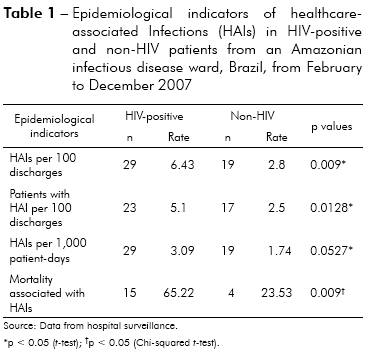
<body><![CDATA[<p><font face="Verdana" size="2">The indicators calculated were: the rate of nosocomial infectious episodes (number of HAI episodes/outputs x 100), the density of incidence of HAI episodes (number of nosocomial infectious episodes/patient-days x 1,000), the rate of patients with HAIs (number of patients with HAIs/outputs x 1,000), the density of incidence of HAIs associated with invasive procedures (number infections in accordance with the risk of the invasive procedure/invasive procedure day x 1,000), the utilization rate of invasive procedures (number of invasive procedure   days/patient-days)   and  the   mortality  rate</font> <font face="Verdana" size="2">associated with nosocomial infections (number of deaths associated with HAIs/infected patients x 100). The number of outputs matched the number of discharges, transfers and deaths; the number of patient-days signified the sum of the total days of stay for all patients during the period under review, and the number of invasive procedure-days was considered the sum of the total length of stay for the invasive procedures during the period considered.</font></p>     <p><font face="Verdana" size="2">The Microsoft Office Excel 7.0 program and the BioEstat 5.0 software were employed, and the statistics tests used were the Chi-squared and the t-test, with a confidence interval (CI) of 95%, 5% error, and p &#8804 0.05.</font></p>     <p><b><font face="Verdana" size="2">ETHICAL APPROVAL</font></b></p>     <p><font face="Verdana" size="2">The project was submitted to the Human Research Ethics Committee of the HUJBB and approved on January 24, 2007. The protocol was n<sup>o</sup> 3,888/06 and was in conformity with the National Health Council Resolution n<sup>o</sup> 196/96.</font></p>     <p>&nbsp;</p>     <p><font face="Verdana" size="3"><b>RESULTS</b></font></p>     <p><font face="Verdana" size="2">During the study period, there were 451 HIV-positive patients (9,373 HIV-positive patient-days) and 679 non-HIV patients (10,903 non-HIV patient-days) observed, with a total of 1,130 discharges from the infectious disease ward, and 40 patients acquired HAIs. Seventeen (42.5%) of those patients were non-HIV patients, with 19 (39.6%) HAI episodes, and 23 (57.5%) of those patients were HIV-positive patients, with 29 (60.4%) HAI episodes (p &#8804 0.05). The rate of nosocomial infections was higher among HIV-positive patients when the denominator was the number of discharges. However, when patient-days was the denominator, there was no significance. The mortality rate associated with nosocomial infections was significantly higher among HIV-positive patients compared to the HIV-negative group, p = 0.009 (<a href="#t1">Table 1</a>).</font></p>     <p><a name="t1"></a></p>     <p>&nbsp;</p>     <p align="center"><img src="/img/revistas/rpas/v4n2/2a04t1.gif" border="0"></p>     ]]></body>
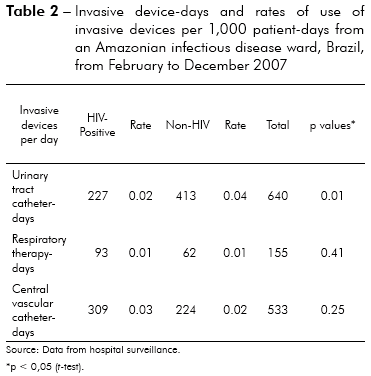
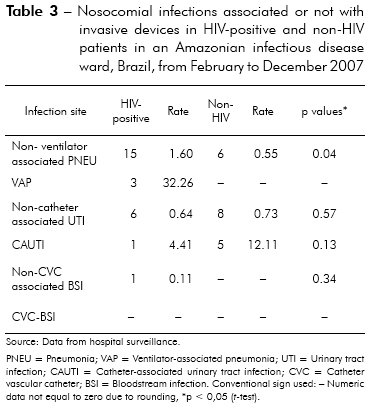
<body><![CDATA[<p>&nbsp;</p>     <p><font face="Verdana" size="2">The average hospitalization time was longer for the HIV patients and was 19.42 days compared to 15 days for the HIV-negative patients. Despite this result, a higher urinary tract catheter utilization rate (0.04) was observed in HIV-negative patients compared to HIVpositive patients (0.02). No differences were observed for ventilators or central vascular catheters between the two groups (<a href="#t2">Table 2</a>).</font></p>     <p><a name="t2"></a></p>     <p>&nbsp;</p>     <p align="center"><img src="/img/revistas/rpas/v4n2/2a04t2.gif" border="0"></p>     <p>&nbsp;</p>     <p><font face="Verdana" size="2">The most frequent type of HAI was pneumonia ((PNEU), n = 21), with 44%, followed by urinary tract infections ((UTIs), n = 14), with 29%. Bloodstream infections (BSIs) accounted for 2% of the infections (n = 1). Pneumonia was more frequent among HIV-positive patients, p = 0.04 <a href="#t3">(Table 3</a>).</font></p>     <p><a name="t3"></a></p>     <p>&nbsp;</p>     <p align="center"><img src="/img/revistas/rpas/v4n2/2a04t3.gif" border="0"></p>     ]]></body>
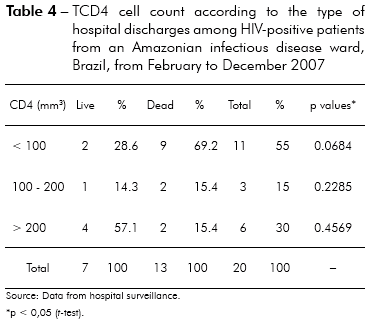
<body><![CDATA[<p>&nbsp;</p>     <p><font face="Verdana" size="2">The TCD4 cell count of the HIV-positive patients who acquired healthcare-associated infections demonstrated that low immunity was not related to poor outcome (<a href="#t4">Table 4</a>).</font></p>     <p><a name="t4"></a></p>     <p>&nbsp;</p>     <p align="center"><img src="/img/revistas/rpas/v4n2/2a04t4.gif" border="0"></p>     <p>&nbsp;</p>     <p><font face="Verdana" size="3"><b>DISCUSSION</b></font></p>     <p><font face="Verdana" size="2">HIV-positive patients were more likely to have HAIs than HIV-negative patients in our Amazonian casuistic. These data confirm the high susceptibility of HIV-positive patients documented by other studies, in which HIV-positive patients had higher HAI rates compared to patients with other underlying diseases, with an incidence ranging from 3.6 to 8.6 episodes per 1,000 patient-days<sup>7,8</sup>. However, this ratio has decreased after the HAART era, due to the reduction of hospitalizations<sup>1,9,10</sup>.</font></p>     <p><font face="Verdana" size="2">The specific risk factors for the HIV/AIDS population must be considered and include: abnormalities in cell-mediated and humoral immunities, phagocytic cell dysfunctions, low TCD4 lymphocyte counts, secondary neutropenia due to drugs or diseases, modified microbial flora due to the selection of antibiotic-resistant microorganisms by prophylactic medications, difficult diagnoses of atypical diseases, invasive procedures and unpredictable responses to antibiotics and vaccines<sup>11,12</sup>. In this study, invasive procedures did not influence the occurrence of HAIs.</font></p>     <p><font face="Verdana" size="2">A TCD4 &lt; 100 cell/mm<sup>3</sup> count was observed in 55% of the HIV-positive patients who acquired HAIs, suggesting that the TCD4 cell count might be a risk factor. In fact, Panis et al<sup>2</sup> found a 2.5% rate of HAIs in patients with an AIDS diagnosis, where the mean TCD4 cell count was 158.4 cell/mm<sup>3</sup> and the mean time of stay in the hospital was of 36.16 days. In addition, other studies showed a correlation between low TCD4 cell counts and respiratory infections<sup>13,14</sup> and bloodstream infections<sup>11,15</sup>.</font></p>     ]]></body>
<body><![CDATA[<p><font face="Verdana" size="2">In our study, the average length of stay of the HIVpositive patients was longer than that of the non-HIV patients (19.42 versus 15 days, respectively). However, the study design did not allow us to evaluate if the length of stay in the hospital was directly related to HAI occurrences.</font></p>     <p><font face="Verdana" size="2">Nosocomial pulmonary infections are considered one of the most important infections among HIV patients<sup>2,16</sup>. Non-ventilator associated pneumonia was the most frequent infection among HIV-positive patients, with an incidence of 1.75 episodes per 1,000 patient-days in our study. However, similar to the observation in the study carried out by Tenore<sup>5</sup>, ventilators had little influence on the incidence of HAIs, most likely due to the difficulty in diagnosing pneumonia as a consequence of HAIs from other opportunistic diseases.</font></p>     <p><font face="Verdana" size="2">UTIs were the second most frequent HAI among both groups of patients. Although HIV-negative patients were more likely to use urinary tract catheters (p = 0.01), there was no difference between the incidence of UTIs between the cohorts (p = 0.57). UTIs may be under-reported in HIV-positive patients, although AIDS caused microscopic proteinuria, hematuria and nephropathy in some cases.</font></p>     <p><font face="Verdana" size="2">According to Padoveze et al<sup>8</sup>, BSIs were found to be the main type of HAIs (44%), with an incidence of 18.4 episodes per 1,000 CVC-days in HIV-positive patients, which was greater than the incidence in HIV-negative patients (7.39, p = 0.24). These data differed from the present study in which only one BSI episode, which was unrelated to the CVC, occurred. The low incidence of BSIs in our casuistic may be a consequence of an educational campaign held at the intensive care unit of the hospital, which emphasized the importance of hand hygiene prior to the manipulation and insertion of CVCs, contributing to a reduction in the BSI incidence<sup>17</sup>. Other studies have confirmed these findings through educational studies employed as tools to reduce BSIs associated with CVCs<sup>18,19</sup>.</font></p>     <p><font face="Verdana" size="2">Nosocomial infections can worsen the clinical condition of HIV-positive patients, which may explain</font> <font face="Verdana" size="2">the higher mortality rate associated with HAIs in the HIV-positive group.</font></p>     <p><font face="Verdana" size="2">The design of this study could not confirm the relationship between HAIs and severe immunosuppression in HIV-positive patients or between HAIs and the mortality associated with infection.</font></p>     <p>&nbsp;</p>     <p><font face="Verdana" size="3"><b>CONCLUSION</b></font></p>     <p><font face="Verdana" size="2">We conclude that there is a high susceptibility to nosocomial infections among HIV-positive patients compared to non-HIV patients, despite providing the same environmental conditions and care for both groups (patients from both groups were admitted in the same ward).</font></p>     <p>&nbsp;</p>     ]]></body>
<body><![CDATA[<p><font face="Verdana" size="3"><b>ACKNOWLEDGMENTS</b></font></p>     <p><font face="Verdana" size="2">The authors would like to thank the Commission for Hospital Infection Control, HUJBB of this research by providing technical input and epidemiological data</font> <font face="Verdana" size="2">of HAI.</font></p>     <p>&nbsp;</p>     <p><font face="Verdana" size="3"><b>FINANCIAL SUPPORT</b></font></p>     <p><font face="Verdana" size="2">Additional financial support for this study was provided by Coordena&#231;&#227;o de Aperfei&#231;oamento de Pessoal de N&#237;vel Superior (CAPES) and Pr&#243;-Reitoria de Pesquisa e P&#243;s-Gradua&#231;&#227;o da UFPA (PROPESP) of Universidade Federal</font> <font face="Verdana" size="2">do Par&#225; (UFPA).</font></p>     <p>&nbsp;</p>     <p><font face="Verdana" size="3"><b>CONFLICT OF INTERESTS</b></font></p>     <p><font face="Verdana" size="2">The authors: Danielle Saraiva Tuma dos Reis, Irna Carla do Ros&#225;rio Souza Carneiro, Dilma Costa de Oliveira Neves, Lourival Rodrigues Marsola and Rita Catarina Medeiros declare no conflict of interests.</font></p>     <p>&nbsp;</p>     <p><font face="Verdana" size="3"><b>REFERENCES</b></font></p>     ]]></body>
<body><![CDATA[<!-- ref --><p><font face="Verdana" size="2">1 Craven DE, Craven KAS, Rosa FG. Healthcare-associated infections in adults infected with human immunodeficiency virus. In: Mayhall CG. Hospital epidemiology and infection control. 3. ed. Philadelphia: Lippincott Williams &amp; Wilkins; 2004. p. 945-68.</font><!-- ref --><p><font face="Verdana" size="2">2 Panis C, Matsuo T, Reiche EMV. Nosocomial infections in human immunodeficiency virus type 1 (HIV-1) infected and AIDS patients: major microorganisms and immunological profile. Braz J Microbiol. 2009 Jan-Mar;40(1):155-62.</font><!-- ref --><p><font face="Verdana" size="2">3 Centers for Disease Control and Prevention. Public health focus: surveillance, prevention and control of nosocomial infections. MMWR Morb Mortal Wkly Rep. 1992 Oct;41(42):783-7.</font><!-- ref --><p><font face="Verdana" size="2">4 Nogueira PSF. Nosocomial infection profile at an university hospital. Rev Enferm. 2009 Jan-Mar;17(1):96-101.</font><!-- ref --><p><font face="Verdana" size="2">5 Tenore SB. Infection in patients infected with human immunodeficiency virus: analysis of incidence and risk factors &#91;dissertation&#93;. S&#227;o Paulo: Federal University of S&#227;o Paulo, Master in Infectious and Parasitic Diseases; 2001.</font><!-- ref --><p><font face="Verdana" size="2">6 Garner JS, Jarvis WR, Emori TG, Horan TC, Hughes JM. CDC definitions for nosocomial infections, 1988. Am J Infect Control. 1988 Jun;16(3):128-40.</font><!-- ref --><p><font face="Verdana" size="2">7 Petrosillo N, Pugliese G, Girardi E, Pallavicini F, Carosi G, Moro ML, et al. Nosocomial infections in HIV infected patients. AIDS. 1999 Apr;13(5):599-605.</font><!-- ref --><p><font face="Verdana" size="2">8 Padoveze MC, Trabasso P, Branchini MLM. Nosocomial infections among HIV positive and HIV negative patients in a Brazilian infectious diseases unit. Am J Infect Control. 2002 Oct;30(6):346-50.</font><!-- ref --><p><font face="Verdana" size="2">9 Tumbarelo M, Tacconelli E, Donati KG, Citton R, Leone F, Spanu T, et al. HIV associated bacteremia: how it has changed in the highly active antiretroviral therapy (HAART) era. J Acquir Immune Defic Syndr.</font> <font face="Verdana" size="2">2000&nbsp;Feb;23(2):145-51.</font><!-- ref --><p><font face="Verdana" size="2">10 Puro V, Serraino D, Piselli P, Boumis E, Petrosillo N, Angeletti C, et al. The epidemiology of recurrent bacterial pneumonia in people with AIDS in Europe. Epidemiol Infect. 2005 Apr;133(2):237-43.</font><!-- ref --><p><font face="Verdana" size="2">11 Petrosillo N, Pagani L, Ippolito G. Nosocomial infections in HIV-positive patients: an overview. Infection. 2003 Dec;31 Suppl 2:S28-34.</font><!-- ref --><p><font face="Verdana" size="2">12 Afessa B, Morales I, Weaver B. Bacteremia in hospitalized patients with human immunodeficiency virus: a prospective, cohort study. BMC Infect Dis.</font> <font face="Verdana" size="2">2001&nbsp;Sep;1:13.</font><!-- ref --><p><font face="Verdana" size="2">13 Donati KG, Bertagnolio S, Tumbarello M, Tacconelli E, Cataldo M, Longo B, et al. Effect of highly active antiretroviral therapy on the incidence of bacterial pneumonia in HIV-infected subjects. Int J Antimicrob Agentes. 2000 Nov;16(3):357-60.</font><!-- ref --><p><font face="Verdana" size="2">14 Miguez-Burbano MJ, Ashkin D, Rodriguez A, Duncan R, Flores M, Acosta B, et al. Cellular immune response to pulmonary infections in HIV infected individuals hospitalized with diverse grades of immunosuppression. Epidemiol Infect. 2006 Apr;134(2):271-8.</font><!-- ref --><p><font face="Verdana" size="2">15 Tacconelli E, Tumbarelo M, Donati KG, Bertagnolio S, Pittiruti M, Leone F, et al. Morbidity associated with central venous catheter-use in a cohort of 212 hospitalized subjects with HIV infection. J Infect Hosp.</font> <font face="Verdana" size="2">2000 Mar;44(3):186-92.</font><!-- ref --><p><font face="Verdana" size="2">16 Petrosillo N, Nicastri E, Viale P. Nosocomial pulmonary infections in HIV positive patients. Curr</font> <font face="Verdana" size="2">Opin Pulm Med. 2005 May;11(3):231-5.</font><!-- ref --><p><font face="Verdana" size="2">17 Costa MHA. Impacto na incid&#234;ncia de infec&#231;&#227;o relacionada a cateter vascular central ap&#243;s medidas de educa&#231;&#227;o na unidade de terapia intensiva do hospital universit&#225;rio Jo&#227;o de Barros Barreto &#91;disserta&#231;&#227;o&#93;. Bel&#233;m: Universidade Federal do Par&#225;, N&#250;cleo de Medicina Tropical; 2007.</font><!-- ref --><p><font face="Verdana" size="2">18 Warren DK, Cosgrove SE, Diekema DJ, Zuccotti G, Climo MW. A multicenter intervention to prevent catheter-associated bloodstream infections. Infect Controle Hosp Epidemiol. 2006 Jul;27(7):662-9.</font><!-- ref --><p><font face="Verdana" size="2">19 Raskind CH, Worley S, Vinski J, Goldfarb J. Hand hygiene compliance rates after an educational intervention in a neonatal intensive care unit. Infect Control Hosp Epidemiol. 2007 Sep;28(9):1096-8.</font><p>&nbsp;</p>     ]]></body>
<body><![CDATA[<p>&nbsp;</p>     <p><font size="2" face="verdana"><b><b><b><b><a name="endereco"></a><a href="#topo"><img src="img/revistas/ess/v20n1/seta.gif" border="0"></a></b></b></b></b></font><font face="Verdana" size="2"><b>Correspondence / Correspond&#234;ncia / Correspondencia:</b></font>    <br>   <font face="Verdana" size="2">Danielle Saraiva Tuma dos Reis</font>    <br> <font face="Verdana" size="2">Av. Cipriano Santos, 447. Bairro: Canudos</font>    <br> <font face="Verdana" size="2">CEP: 66070-000     Bel&#233;m-Par&#225;-Brasil</font>    <br> <font face="Verdana" size="2">Phone: +55 (91) 9135-1204</font>    <br> <font face="Verdana" size="2">E-mail: <a href="mailto:danituma@ufpa.br">danituma@ufpa.br</a></font></p>     <p><font face="Verdana" size="2">Received / Recebido em / Recibido en: 1/1/2013    <br> Accepted / Aceito em / Aceito en: 12/6/2013</font></p> <script type="text/javascript"> var gaJsHost = (("https:" == document.location.protocol) ? "https://ssl." : "http://www."); document.write(unescape("%3Cscript src='" + gaJsHost + "google-analytics.com/ga.js' type='text/javascript'%3E%3C/script%3E")); </script> <script type="text/javascript"> try { var pageTracker = _gat._getTracker("UA-7885746-4"); pageTracker._setDomainName("none"); pageTracker._setAllowLinker(true); pageTracker._trackPageview(); } catch(err) {}</script>      ]]></body><back>
<ref-list>
<ref id="B1">
<label>1</label><nlm-citation citation-type="book">
<person-group person-group-type="author">
<name>
<surname><![CDATA[Craven]]></surname>
<given-names><![CDATA[DE]]></given-names>
</name>
<name>
<surname><![CDATA[Craven]]></surname>
<given-names><![CDATA[KAS]]></given-names>
</name>
<name>
<surname><![CDATA[Rosa]]></surname>
<given-names><![CDATA[FG]]></given-names>
</name>
</person-group>
<article-title xml:lang="en"><![CDATA[Healthcare-associated infections in adults infected with human immunodeficiency virus]]></article-title>
<person-group person-group-type="editor">
<name>
<surname><![CDATA[Mayhall]]></surname>
<given-names><![CDATA[CG]]></given-names>
</name>
</person-group>
<source><![CDATA[Hospital epidemiology and infection control]]></source>
<year>2004</year>
<edition>3</edition>
<page-range>945-68</page-range><publisher-loc><![CDATA[Philadelphia ]]></publisher-loc>
<publisher-name><![CDATA[Lippincott Williams & Wilkins]]></publisher-name>
</nlm-citation>
</ref>
<ref id="B2">
<label>2</label><nlm-citation citation-type="journal">
<person-group person-group-type="author">
<name>
<surname><![CDATA[Panis]]></surname>
<given-names><![CDATA[C]]></given-names>
</name>
<name>
<surname><![CDATA[Matsuo]]></surname>
<given-names><![CDATA[T]]></given-names>
</name>
<name>
<surname><![CDATA[Reiche]]></surname>
<given-names><![CDATA[EMV]]></given-names>
</name>
</person-group>
<article-title xml:lang="en"><![CDATA[Nosocomial infections in human immunodeficiency virus type 1 (HIV-1) infected and AIDS patients: major microorganisms and immunological profile]]></article-title>
<source><![CDATA[Braz J Microbiol]]></source>
<year>2009</year>
<month> J</month>
<day>an</day>
<volume>40</volume>
<numero>1</numero>
<issue>1</issue>
<page-range>155-62</page-range></nlm-citation>
</ref>
<ref id="B3">
<label>3</label><nlm-citation citation-type="journal">
<article-title xml:lang="en"><![CDATA[Centers for Disease Control and Prevention. Public health focus: surveillance, prevention and control of nosocomial infections]]></article-title>
<source><![CDATA[MMWR Morb Mortal Wkly Rep]]></source>
<year>1992</year>
<month> O</month>
<day>ct</day>
<volume>41</volume>
<numero>42</numero>
<issue>42</issue>
<page-range>783-7</page-range></nlm-citation>
</ref>
<ref id="B4">
<label>4</label><nlm-citation citation-type="journal">
<person-group person-group-type="author">
<name>
<surname><![CDATA[Nogueira]]></surname>
<given-names><![CDATA[PSF]]></given-names>
</name>
</person-group>
<article-title xml:lang="en"><![CDATA[Nosocomial infection profile at an university hospital]]></article-title>
<source><![CDATA[Rev Enferm]]></source>
<year>2009</year>
<month> J</month>
<day>an</day>
<volume>17</volume>
<numero>1</numero>
<issue>1</issue>
<page-range>96-101</page-range></nlm-citation>
</ref>
<ref id="B5">
<label>5</label><nlm-citation citation-type="book">
<person-group person-group-type="author">
<name>
<surname><![CDATA[Tenore]]></surname>
<given-names><![CDATA[SB]]></given-names>
</name>
</person-group>
<source><![CDATA[Infection in patients infected with human immunodeficiency virus: analysis of incidence and risk factors]]></source>
<year>2001</year>
<publisher-loc><![CDATA[São Paulo ]]></publisher-loc>
<publisher-name><![CDATA[Federal University of São Paulo, Master in Infectious and Parasitic Diseases]]></publisher-name>
</nlm-citation>
</ref>
<ref id="B6">
<label>6</label><nlm-citation citation-type="journal">
<person-group person-group-type="author">
<name>
<surname><![CDATA[Garner]]></surname>
<given-names><![CDATA[JS]]></given-names>
</name>
<name>
<surname><![CDATA[Jarvis]]></surname>
<given-names><![CDATA[WR]]></given-names>
</name>
<name>
<surname><![CDATA[Emori]]></surname>
<given-names><![CDATA[TG]]></given-names>
</name>
<name>
<surname><![CDATA[Horan]]></surname>
<given-names><![CDATA[TC]]></given-names>
</name>
<name>
<surname><![CDATA[Hughes]]></surname>
<given-names><![CDATA[JM]]></given-names>
</name>
</person-group>
<article-title xml:lang="en"><![CDATA[CDC definitions for nosocomial infections, 1988]]></article-title>
<source><![CDATA[Am J Infect Control]]></source>
<year>1988</year>
<month> J</month>
<day>un</day>
<volume>16</volume>
<numero>3</numero>
<issue>3</issue>
<page-range>128-40</page-range></nlm-citation>
</ref>
<ref id="B7">
<label>7</label><nlm-citation citation-type="journal">
<person-group person-group-type="author">
<name>
<surname><![CDATA[Petrosillo]]></surname>
<given-names><![CDATA[N]]></given-names>
</name>
<name>
<surname><![CDATA[Pugliese]]></surname>
<given-names><![CDATA[G]]></given-names>
</name>
<name>
<surname><![CDATA[Girardi]]></surname>
<given-names><![CDATA[E]]></given-names>
</name>
<name>
<surname><![CDATA[Pallavicini]]></surname>
<given-names><![CDATA[F]]></given-names>
</name>
<name>
<surname><![CDATA[Carosi]]></surname>
<given-names><![CDATA[G]]></given-names>
</name>
<name>
<surname><![CDATA[Moro]]></surname>
<given-names><![CDATA[ML]]></given-names>
</name>
</person-group>
<article-title xml:lang="en"><![CDATA[Nosocomial infections in HIV infected patients]]></article-title>
<source><![CDATA[AIDS]]></source>
<year>1999</year>
<month> A</month>
<day>pr</day>
<volume>13</volume>
<numero>5</numero>
<issue>5</issue>
<page-range>599-605</page-range></nlm-citation>
</ref>
<ref id="B8">
<label>8</label><nlm-citation citation-type="journal">
<person-group person-group-type="author">
<name>
<surname><![CDATA[Padoveze]]></surname>
<given-names><![CDATA[MC]]></given-names>
</name>
<name>
<surname><![CDATA[Trabasso]]></surname>
<given-names><![CDATA[P]]></given-names>
</name>
<name>
<surname><![CDATA[Branchini]]></surname>
<given-names><![CDATA[MLM]]></given-names>
</name>
</person-group>
<article-title xml:lang="en"><![CDATA[Nosocomial infections among HIV positive and HIV negative patients in a Brazilian infectious diseases unit]]></article-title>
<source><![CDATA[Am J Infect Control]]></source>
<year>2002</year>
<month> O</month>
<day>ct</day>
<volume>30</volume>
<numero>6</numero>
<issue>6</issue>
<page-range>346-50</page-range></nlm-citation>
</ref>
<ref id="B9">
<label>9</label><nlm-citation citation-type="journal">
<person-group person-group-type="author">
<name>
<surname><![CDATA[Tumbarelo]]></surname>
<given-names><![CDATA[M]]></given-names>
</name>
<name>
<surname><![CDATA[Tacconelli]]></surname>
<given-names><![CDATA[E]]></given-names>
</name>
<name>
<surname><![CDATA[Donati]]></surname>
<given-names><![CDATA[KG]]></given-names>
</name>
<name>
<surname><![CDATA[Citton]]></surname>
<given-names><![CDATA[R]]></given-names>
</name>
<name>
<surname><![CDATA[Leone]]></surname>
<given-names><![CDATA[F]]></given-names>
</name>
<name>
<surname><![CDATA[Spanu]]></surname>
<given-names><![CDATA[T]]></given-names>
</name>
</person-group>
<article-title xml:lang="en"><![CDATA[HIV associated bacteremia: how it has changed in the highly active antiretroviral therapy (HAART) era]]></article-title>
<source><![CDATA[J Acquir Immune Defic Syndr]]></source>
<year>2000</year>
<month> F</month>
<day>eb</day>
<volume>23</volume>
<numero>2</numero>
<issue>2</issue>
<page-range>145-51</page-range></nlm-citation>
</ref>
<ref id="B10">
<label>10</label><nlm-citation citation-type="journal">
<person-group person-group-type="author">
<name>
<surname><![CDATA[Puro]]></surname>
<given-names><![CDATA[V]]></given-names>
</name>
<name>
<surname><![CDATA[Serraino]]></surname>
<given-names><![CDATA[D]]></given-names>
</name>
<name>
<surname><![CDATA[Piselli]]></surname>
<given-names><![CDATA[P]]></given-names>
</name>
<name>
<surname><![CDATA[Boumis]]></surname>
<given-names><![CDATA[E]]></given-names>
</name>
<name>
<surname><![CDATA[Petrosillo]]></surname>
<given-names><![CDATA[N]]></given-names>
</name>
<name>
<surname><![CDATA[Angeletti]]></surname>
<given-names><![CDATA[C]]></given-names>
</name>
</person-group>
<article-title xml:lang="en"><![CDATA[The epidemiology of recurrent bacterial pneumonia in people with AIDS in Europe]]></article-title>
<source><![CDATA[Epidemiol Infect]]></source>
<year>2005</year>
<month> A</month>
<day>pr</day>
<volume>133</volume>
<numero>2</numero>
<issue>2</issue>
<page-range>237-43</page-range></nlm-citation>
</ref>
<ref id="B11">
<label>11</label><nlm-citation citation-type="journal">
<person-group person-group-type="author">
<name>
<surname><![CDATA[Petrosillo]]></surname>
<given-names><![CDATA[N]]></given-names>
</name>
<name>
<surname><![CDATA[Pagani]]></surname>
<given-names><![CDATA[L]]></given-names>
</name>
<name>
<surname><![CDATA[Ippolito]]></surname>
<given-names><![CDATA[G]]></given-names>
</name>
</person-group>
<article-title xml:lang="en"><![CDATA[Nosocomial infections in HIV-positive patients: an overview]]></article-title>
<source><![CDATA[Infection]]></source>
<year>2003</year>
<month> D</month>
<day>ec</day>
<volume>31</volume>
<numero>^s2</numero>
<issue>^s2</issue>
<supplement>2</supplement>
<page-range>28-34</page-range></nlm-citation>
</ref>
<ref id="B12">
<label>12</label><nlm-citation citation-type="journal">
<person-group person-group-type="author">
<name>
<surname><![CDATA[Afessa]]></surname>
<given-names><![CDATA[B]]></given-names>
</name>
<name>
<surname><![CDATA[Morales]]></surname>
<given-names><![CDATA[I]]></given-names>
</name>
<name>
<surname><![CDATA[Weaver]]></surname>
<given-names><![CDATA[B]]></given-names>
</name>
</person-group>
<article-title xml:lang="en"><![CDATA[Bacteremia in hospitalized patients with human immunodeficiency virus: a prospective, cohort study]]></article-title>
<source><![CDATA[BMC Infect Dis]]></source>
<year>2001</year>
<month> S</month>
<day>ep</day>
<volume>1</volume>
<page-range>13</page-range></nlm-citation>
</ref>
<ref id="B13">
<label>13</label><nlm-citation citation-type="journal">
<person-group person-group-type="author">
<name>
<surname><![CDATA[Donati]]></surname>
<given-names><![CDATA[KG]]></given-names>
</name>
<name>
<surname><![CDATA[Bertagnolio]]></surname>
<given-names><![CDATA[S]]></given-names>
</name>
<name>
<surname><![CDATA[Tumbarello]]></surname>
<given-names><![CDATA[M]]></given-names>
</name>
<name>
<surname><![CDATA[Tacconelli]]></surname>
<given-names><![CDATA[E]]></given-names>
</name>
<name>
<surname><![CDATA[Cataldo]]></surname>
<given-names><![CDATA[M]]></given-names>
</name>
<name>
<surname><![CDATA[Longo]]></surname>
<given-names><![CDATA[B]]></given-names>
</name>
</person-group>
<article-title xml:lang="en"><![CDATA[Effect of highly active antiretroviral therapy on the incidence of bacterial pneumonia in HIV-infected subjects]]></article-title>
<source><![CDATA[Int J Antimicrob Agentes]]></source>
<year>2000</year>
<month> N</month>
<day>ov</day>
<volume>16</volume>
<numero>3</numero>
<issue>3</issue>
<page-range>357-60</page-range></nlm-citation>
</ref>
<ref id="B14">
<label>14</label><nlm-citation citation-type="journal">
<person-group person-group-type="author">
<name>
<surname><![CDATA[Miguez-Burbano]]></surname>
<given-names><![CDATA[MJ]]></given-names>
</name>
<name>
<surname><![CDATA[Ashkin]]></surname>
<given-names><![CDATA[D]]></given-names>
</name>
<name>
<surname><![CDATA[Rodriguez]]></surname>
<given-names><![CDATA[A]]></given-names>
</name>
<name>
<surname><![CDATA[Duncan]]></surname>
<given-names><![CDATA[R]]></given-names>
</name>
<name>
<surname><![CDATA[Flores]]></surname>
<given-names><![CDATA[M]]></given-names>
</name>
<name>
<surname><![CDATA[Acosta]]></surname>
<given-names><![CDATA[B]]></given-names>
</name>
</person-group>
<article-title xml:lang="en"><![CDATA[Cellular immune response to pulmonary infections in HIV infected individuals hospitalized with diverse grades of immunosuppression]]></article-title>
<source><![CDATA[Epidemiol Infect]]></source>
<year>2006</year>
<month> A</month>
<day>pr</day>
<volume>134</volume>
<numero>2</numero>
<issue>2</issue>
<page-range>271-8</page-range></nlm-citation>
</ref>
<ref id="B15">
<label>15</label><nlm-citation citation-type="journal">
<person-group person-group-type="author">
<name>
<surname><![CDATA[Tacconelli]]></surname>
<given-names><![CDATA[E]]></given-names>
</name>
<name>
<surname><![CDATA[Tumbarelo]]></surname>
<given-names><![CDATA[M]]></given-names>
</name>
<name>
<surname><![CDATA[Donati]]></surname>
<given-names><![CDATA[KG]]></given-names>
</name>
<name>
<surname><![CDATA[Bertagnolio]]></surname>
<given-names><![CDATA[S]]></given-names>
</name>
<name>
<surname><![CDATA[Pittiruti]]></surname>
<given-names><![CDATA[M]]></given-names>
</name>
<name>
<surname><![CDATA[Leone]]></surname>
<given-names><![CDATA[F]]></given-names>
</name>
</person-group>
<article-title xml:lang="en"><![CDATA[Morbidity associated with central venous catheter-use in a cohort of 212 hospitalized subjects with HIV infection]]></article-title>
<source><![CDATA[J Infect Hosp]]></source>
<year>2000</year>
<month> M</month>
<day>ar</day>
<volume>44</volume>
<numero>3</numero>
<issue>3</issue>
<page-range>186-92</page-range></nlm-citation>
</ref>
<ref id="B16">
<label>16</label><nlm-citation citation-type="journal">
<person-group person-group-type="author">
<name>
<surname><![CDATA[Petrosillo]]></surname>
<given-names><![CDATA[N]]></given-names>
</name>
<name>
<surname><![CDATA[Nicastri]]></surname>
<given-names><![CDATA[E]]></given-names>
</name>
<name>
<surname><![CDATA[Viale]]></surname>
<given-names><![CDATA[P]]></given-names>
</name>
</person-group>
<article-title xml:lang="en"><![CDATA[Nosocomial pulmonary infections in HIV positive patients]]></article-title>
<source><![CDATA[Curr Opin Pulm Med]]></source>
<year>2005</year>
<month> M</month>
<day>ay</day>
<volume>11</volume>
<numero>3</numero>
<issue>3</issue>
<page-range>231-5</page-range></nlm-citation>
</ref>
<ref id="B17">
<label>17</label><nlm-citation citation-type="book">
<person-group person-group-type="author">
<name>
<surname><![CDATA[Costa]]></surname>
<given-names><![CDATA[MHA]]></given-names>
</name>
</person-group>
<source><![CDATA[Impacto na incidência de infecção relacionada a cateter vascular central após medidas de educação na unidade de terapia intensiva do hospital universitário João de Barros Barreto]]></source>
<year>2007</year>
<publisher-loc><![CDATA[Belém ]]></publisher-loc>
<publisher-name><![CDATA[Universidade Federal do Pará, Núcleo de Medicina Tropical]]></publisher-name>
</nlm-citation>
</ref>
<ref id="B18">
<label>18</label><nlm-citation citation-type="journal">
<person-group person-group-type="author">
<name>
<surname><![CDATA[Warren]]></surname>
<given-names><![CDATA[DK]]></given-names>
</name>
<name>
<surname><![CDATA[Cosgrove]]></surname>
<given-names><![CDATA[SE]]></given-names>
</name>
<name>
<surname><![CDATA[Diekema]]></surname>
<given-names><![CDATA[DJ]]></given-names>
</name>
<name>
<surname><![CDATA[Zuccotti]]></surname>
<given-names><![CDATA[G]]></given-names>
</name>
<name>
<surname><![CDATA[Climo]]></surname>
<given-names><![CDATA[MW]]></given-names>
</name>
</person-group>
<article-title xml:lang="en"><![CDATA[A multicenter intervention to prevent catheter-associated bloodstream infections]]></article-title>
<source><![CDATA[Infect Controle Hosp Epidemiol]]></source>
<year>2006</year>
<month> J</month>
<day>ul</day>
<volume>27</volume>
<numero>7</numero>
<issue>7</issue>
<page-range>662-9</page-range></nlm-citation>
</ref>
<ref id="B19">
<label>19</label><nlm-citation citation-type="journal">
<person-group person-group-type="author">
<name>
<surname><![CDATA[Raskind]]></surname>
<given-names><![CDATA[CH]]></given-names>
</name>
<name>
<surname><![CDATA[Worley]]></surname>
<given-names><![CDATA[S]]></given-names>
</name>
<name>
<surname><![CDATA[Vinski]]></surname>
<given-names><![CDATA[J]]></given-names>
</name>
<name>
<surname><![CDATA[Goldfarb]]></surname>
<given-names><![CDATA[J]]></given-names>
</name>
</person-group>
<article-title xml:lang="en"><![CDATA[Hand hygiene compliance rates after an educational intervention in a neonatal intensive care unit]]></article-title>
<source><![CDATA[Infect Control Hosp Epidemiol]]></source>
<year>2007</year>
<month> S</month>
<day>ep</day>
<volume>28</volume>
<numero>9</numero>
<issue>9</issue>
<page-range>1096-8</page-range></nlm-citation>
</ref>
</ref-list>
</back>
</article>