Notas sobre os vertebrados do norte do Pará, Brasil: uma parte esquecida da Região das Guianas, II. Avifauna
Alexandre Aleixo I; Fabíola Poletto I; Maria de Fátima Cunha LimaI; Marcelo Castro I; Eduardo Portes II; Leonardo de Sousa Miranda II
IMuseu Paraense Emílio Goeldi
IICurso de Pós-graduação em Zoologia - Universidade Federal do Pará / Museu Paraense Emílio Goeldi
]]>
ABSTRACT
We carried out seven two-week long avifaunal inventories in five newly-established conservation units spanning the entire 'Calha Norte' area, a portion ofthe Guiana Shield in the northern part ofthe state of Pará, Brazil, between January 2008 and January 2009. Prior to our study, most ofthis part of/Amazonia was regarded as virtually unsampled from an ornithological perspective. Here, we present an annotated check-list with 446 species of birds recorded during the surveys, including 62 species for which our records represented significant range extensions, and hence are discussed in detail. The number of species recorded at each site varied between 203 and 302, and was positively correlated with the local availability of steep altitudinal and vegetational (forest/savanna and seasonally-flooded/upland forest) gradients. The number of unique species recorded at each site varied between 2 and 27, and reflected an interesting biogeographic pattern in which the Trombetas river appears to separate distinct upland and white-sand forest bird faunas on the Guiana Shield, a pattern also verified for the herpetofauna. Our results also showed that savannas represent a very important component ofthe local biota, with enclaves harboring a typical bird fauna also distributed in similar habitats in nearby southern Guyana, Suriname, and the state of Amapá in Brazil. /Altogether, the five conservation units surveyed harbour 74 bird species of special interest for conservation (threatened, endemic, rare, range-restricted, and hunted species) and therefore play a key role in the preservation of all main subsets of the heterogeneous bird fauna of the Guiana Shield.
Keywords: Amazonia. Biogeography. Birds. Conservation. Guiana Shield. Savanna.
RESUMO
Entre janeiro de 2008 e janeiro de 2009, executamos sete inventários de avifauna com a duração de duas semanas cada em cinco unidades de conservação estaduais estabelecidas recentemente na região da 'Calha Norte', uma porção do escudo guianense no norte do estado do Pará, Brasil. Antes deste esforço de campo, a maior parte desta região da Amazônia era considerada virtualmente não amostrada ornitologicamente. Apresentamos, neste artigo, uma lista comentada de 446 espécies registradas durante os levantamentos supracitados, incluindo uma discussão pormenorizada para 62 espécies, cujos registros representaram importantes extensões de distribuição para a região da 'Calha Norte' no Pará. O número de espécies registradas em cada uma das sete localidades amostradas variou entre 203 e 302, sendo correlacionado positivamente com a disponibilidade local de gradientes altitudinais e de ecótonos vegetacionais (floresta de terra firme/cerrado e floresta sazonalmente alagada/floresta de terra firme). O número de espécies exclusivas em cada sítio variou entre 2 e 27, refletindo um interessante padrão biogeográfico, no qual o rio Trombetas aparenta separar avifaunas distintas do escudo guianense ligadas aos ambientes de floresta de terra firme e campina/ campinarana, de modo análogo ao verificado para a herpetofauna. Os resultados também mostraram que o cerrado representa um importante componente da biota local, contribuindo com um contingente único de espécies associadas a este ambiente e também distribuídas em localidades vizinhas do sul da Guyana, Suriname e no estado do Amapá. Em conjunto, as cinco unidades de conservação estudadas abrigam 74 espécies de aves de especial interesse para a conservação (ameaçadas, endêmicas, raras, de distribuição restrita e de interesse cinegético), o que atesta a importância estratégica destas áreas para a preservação dos principais conjuntos únicos de espécies da heterogênea avifauna do escudo guianense.
Palavras-chave: Amazônia. Biogeografia. Avifauna. Conservação. Escudo das Guianas. Cerrado.
INTRODUCTION
]]> The Guiana shield is an ancient and distinct geological formation in northeastern Amazonia roughly bounded by the negro/orinoco river in the west, the Amazon river in the south, and the Atlantic ocean in the east, spanning over the territories of Colombia, Venezuela, Brazil, Guyana, suriname, and french Guiana (Gibbs & Barron, 1993). from a biogeographic standpoint, the Guiana shield represents an important area of endemism for several biological groups, including birds (Haffer, 1974; Cracraft, 1985; stotz et al., 1996; silva et al., 2005).Despite the fact that birds are likely the best studied biological group occurring on the Guiana shield (Milensky et al., 2005), many knowledge gaps still exist. Particularly, the eastern portion of the Guiana shield in the northern part of the state of Pará, Brazil (known locally as 'Calha norte Paraense', hereafter CNP), is perhaps the least known ornithologically in the entire shield. While some parts of the Brazilian Amazon regarded as poorly sampled during the 1990's have since then been explored in more detail (e.g., the state of tocantins, see Pacheco & olmos, 2006), most of the CNP has remained inaccessible to ornithologists until now as a result of extreme isolation (oren, 2001; Aleixo, 2009). to this date, all bird surveys conducted on the CNP relied exclusively on expensive aerial support (novaes, 1980), since rivers in this part of Amazonia do not offer a good alternative for transportation due to the high number of rapids, which have inhibited or in some cases prevented even local populations from creating major settlements.
Between January 2008 and January 2009, we sampled birds during 96 days at seven localities spanning the entire CNP (Avila-Pires et al., 2010), thus making this the most complete ornithological survey undertaken to date in this region. Here, we present an annotated checklist of birds recorded during those surveys, discussing in detail several noteworthy records.
MATERIAL AND METHODS
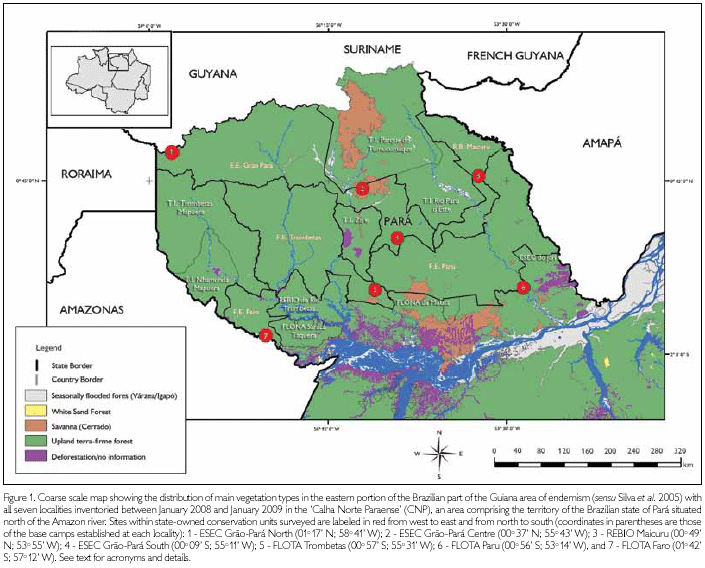
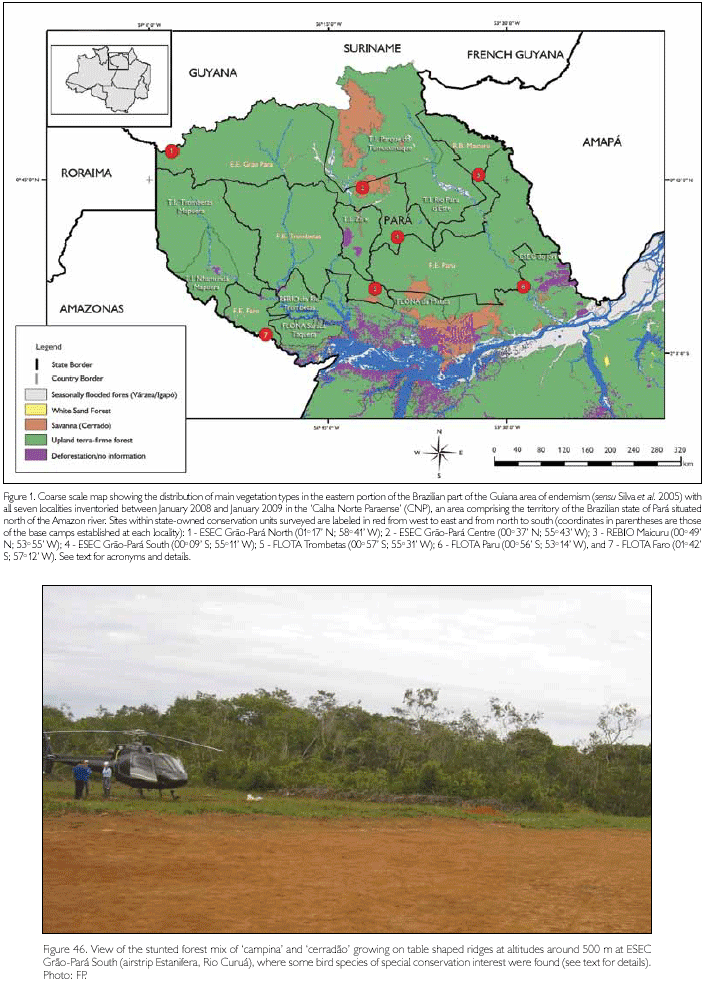
Between January 2008 and January 2009, we carried out standard two-week long avifaunal inventories at seven localities belonging to five conservation units recently established in the CNP (figure 1): faro state forest (hereafter FLOTA faro; sampled between 15 - 28 January 2008), trombetas state forest (FLOTA trombetas; 16 - 28 April 2008), southern part of the Grão Pará Ecological station (ESEC Grão-Pará south; 7 - 20 June 2008), northern part of the Grão Pará Ecological station (ESEC Grão-Pará north; 28 August - 10 september 2008), Biological reservation Maicuru (REBIO Maicuru; 22 october - 5 november 2008), Paru state forest (FLOTA Paru; 5 - 17 december 2008), and the central part of the Grão Pará Ecological station (ESEC Grão-Pará Centre; 19 - 31 January 2009). for a detailed description of those seven localities, including the habitats surveyed in each of them, see Avila-Pires et al. (2010). At all sites, a radius of about 5 km around established camps was surveyed, so there was an overall standardization of the area covered by the bird inventory at the different sites (Avila-Pires et al., 2010).
]]> At each locality, birds were surveyed by a single observer (AA) for about 150 hours with binoculars and tape recorders (sony® tCM 5000 or Marantz® PMd 670 coupled to a sennheiser ME66 microphone). during this survey, relative abundance estimates for the different species recorded were obtained with the '20 species list' method described in Herzog et al. (2002), whereby birds detected are grouped in sequential lists of 20 species; thus, the first list at each site consisted of the first 20 species recorded, followed by a second list with the next 20 species detected (which could include species already recorded in the previous list), and so on. due to differences in local species richness, seasonality, and the total size of the area sampled, the number of '20 species' lists accumulated at each site varied as follows: FLOTA faro (n = 55); ESEC Grão-Pará north (n = 67); ESEC Grão-Pará Centre (n = 106); FLOTA trombetas (n = 122); FLOTA Paru (n = 143); ESEC Grão-Pará south (n = 165); and REBIO Maicuru (n = 181). At each site, the percentage at which any given species appeared in '20 species lists' was taken as their relative abundance; furthermore, '20 species lists' were used to generate observed species rarefaction curves, thus providing a measure of survey efficiency at each site (see below).
Twenty 12 x 2 m mist-nets were operated independently during 12 days at each site by MC (FLOTA trombetas; ESEC Grão-Pará south; ESEC Grão-Pará Centre; ESEC Grão-Pará north; REBIO Maicuru; FLOTA Paru), fP (FLOTA trombetas), EP (FLOTA faro), and LsM (ESEC Grão-Pará Centre) and resulted in accumulation of an additional sampling effort 1.500 net.hours per site.
Voucher specimens were collected with shotguns and mist-nets and deposited in the ornithological collection of the Museu Paraense Emílio Goeldi (hereafter MPEG) in Belém, state of Pará, Brazil.
Based on '20 species lists' accumulated at each site, observed species rarefaction curves and two estimators of species richness (Chao 2 and MMMean) were calculated separately for all seven sites sampled with the software Estimates version 8.2 (Colwell, 2009). According to Herzog et al. (2002), Chao 2 and MMMean were the best performing richness estimators in their simulated and empirical datasets based on '20 species lists' of neotropical avian communities in Bolivia. Confidence intervals for both rarefaction curves and species richness estimators were assessed with 50 randomizations. similarity in species composition across the sites sampled was calculated with a cluster analysis on presence-absence data, as implemented in the PAst 2.0 software (Hammer et al., 2001).
Common names of species, sequence, nomenclature, and taxonomy adopted throughout this paper follow the Brazilian Check-list Committee (CBRO, 2009). We present colour photos of some of the species found during the expeditions (figures 2-44). they appear in the same sequence as in the Appendix.

RESULTS AND DISCUSSION
]]> SPECIES RICHNESS AND SURVEY EFFICIENCYA total of 446 species of birds was recorded at all seven sites sampled (Appendix). species richness at each site varied between 203 (ESEC Grão-Pará north) and 302 (REBIO Maicuru; table 1). A common pattern was that the three richest sites (all with ca. 300 species, i.e. FLOTA faro, REBIO Maicuru, and FLOTA Paru; table 1) were all in the vicinity of large rivers (respectively, nhamundá, ipitinga, and Paru), which added species associated with riverine habitats to the pool of upland 'terra-firme' species that consisted the bulk of species recorded at all sites (Appendix).
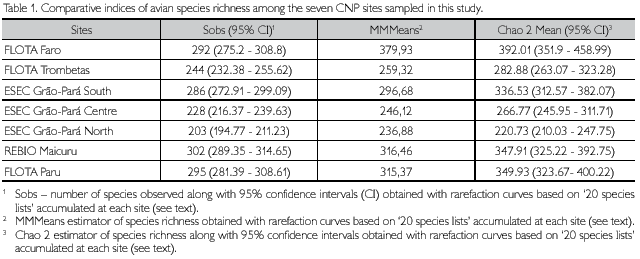
Rarefaction curves obtained at all sites (all of which reached the asymptote; not shown) yielded fairly narrow observed species confidence intervals (table 1), thus indicating that surveys sampled a very significant portion of the local avifauna present at the time of the inventories. richness estimators Chao 2 and MMMean predicted the occurrences of additional species varying from as low as 10 (MMMean at ESEC Grão-Pará south ) up to 100 (Chao 2 mean at FLOTA faro; table 1). According to both of those estimators, FLOTA faro was the site for which the largest number of additional species was predicted, and thus it can be regarded as the least thoroughly sampled site in this study (table 1); accordingly, FLOTA faro had also the smallest sample size of '20 species lists' among all sites.
Upper bound Chao 2 confidence intervals indicated that the four richest sites (FLOTA faro, ESEC Grão-Pará south , REBIO Maicuru, and FLOTA Paru) have a maximum predicted richness of 400 - 450 species (table 1); those four sites were the most heterogeneous in terms of elevations and habitats present, which included large stretches of seasonally-flooded and transitional forests (ESEC Grão-Pará south only) in addition to the widespread 'terra-firme' forest at several altitudes (Avila-Pires et al., 2010). A second group of sites included FLOTA trombetas and ESEC Grão-Pará Center, with predicted species richness slightly above 300 species (table 1); despite this similarity in predicted species richness, the ecological factors explaining species richness at those two sites are completely different. While FLOTA trombetas was fairly homogeneous and covered mostly with 'terra-firme' forest at 300 - 400 m above sea level, ESEC Grão-Pará Centre was one of the most heterogeneous of all sites sampled, with a mosaic combination of savanna, 'terra-firme', and transitional forests (Avila-Pires et al., 2010). Apparently, while FLOTA trombetas harbors a slightly impoverished 'terra-firme' bird community due to its comparatively high average elevation (ca. 350 species of birds are predicted to occur only in 'terra-firme' forests throughout Amazonia; Cohn-Haft et al., 1997), this same community is even more impoverished at ESEC Grão-Pará Centre due to the natural fragmentation of 'terra-firme' forest by the locally widespread savanna, but this is somewhat compensated by a higher inter-habitat beta diversity, thus yielding similar species richness values (see Appendix for differences in species composition). finally, the poorest site according to both observed and predicted species richness was ESEC Grão-Pará north (with ca. 250 species; table 1), and this can probably be explained by the fact that this was the highest and one of the least heterogeneous sites among all those surveyed (Avila-Pires et al., 2010); in addition to a locally impoverished 'terra-firme' community due to the higher altitude and little habitat heterogeneity, the absence of several otherwise widespread Amazonian species such as macaws (Ara spp.), parrots (Amazona spp.), and toucanets (Pteroglossus spp.) could be due to a seasonal effect linked to local scarcity in fruit supplies during the timing of the survey.
Despite the sampling limitations of this study, analyses of rarefaction curves and richness estimates combined indicate that 1) even though species lists produced were not exhaustive at any given site, they nonetheless included a very significant part of the local bird community; and 2) there was a good correspondence between the local landscape and habitat heterogeneity and levels of observed and estimated avian species richness throughout the CNP, as documented previously for other neotropical bird communities (robinson & terborgh, 1997).
SPECIES COMPOSITION AND DISTRIBUTION
]]> Species composition varied significantly across all seven sites sampled, with 346 species (77.5% of all 446 species recorded) absent from at least one site (Appendix; table 2). inasmuch as part of this variation probably was due to the fact that some species were not observed at particular sites due to the relative short period of the surveys, another part also certainly reflected true differences in species composition, which will be explored in more detail here based on the results of a cluster analysis with species' presence - absence data at all seven sites sampled (figure 45).
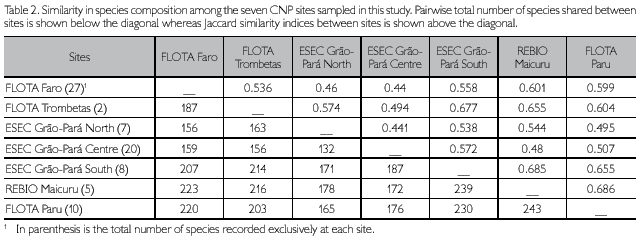
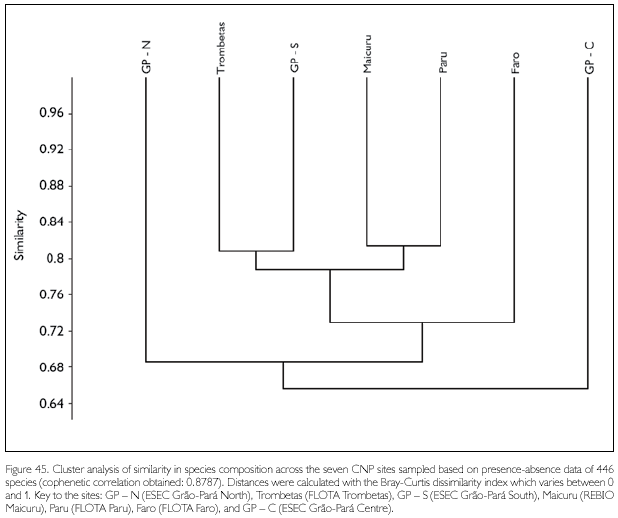
The most distinct site in terms of composition of the local bird community was ESEC Grão-Pará Centre, which did not group with any other particular site according to the results of the cluster analysis (figure 45). this major distinction is explained by the fact that unlike the other sites where 'terra-firme' forest was by far the dominant vegetation type, at ESEC Grão-Pará Centre, open savanna (found only at this site) was the major habitat type sampled instead (Avila-Pires et al., 2010); therefore, out of the 20 species recorded exclusively at this site, 15 at least can be regarded as typical savanna species (sensu silva, 1995), such as Aratinga aurea (Psittacidae), Hydropsalis torquata (Caprimulgidae), Synallaxis albescens (furnariidae), Elaenia cristata, Elaenia chiriquensis, and Myiarchus tyrannulus (tyrannidae), and Schistochlamys melanopis (thraupidae) (table 2; Appendix). Another factor distinguishing the bird community at ESEC Grão- Pará Centre was the absence of many 'core' 'terra-firme' species recorded at all other sites (e.g., Pyrrhura picta [Psittacidae], Cercomacra cinerascens [thamnophilidae], Formicarius analis [formicariidae], Deconychura longicauda [dendrocolaptidae], Sirystes sibilator [tyrannidae], Perissocephalus tricolor [Cotingidae], Vireolanius leucotis [Vireonidae], and Lanio fulvus [thraupidae]) probably due to the small area covered by this habitat at this site; in fact, we sampled two naturally isolated fragments of 'terrafirme' forest at ESEC Grão-Pará Centre (Avila-Pires et al., 2010), providing evidence that many of those typical and widespread 'terra-firme' species were absent from this site probably due to a fragmentation effect (Appendix).
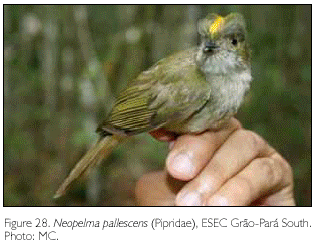
]]> The next most dissimilar locality was ESEC Grão-Pará north, which had the lowest species richness of all sites sampled due to reduced habitat heterogeneity and overall high elevation (ca. 400-600 m; Avila-Pires et al., 2010). indeed, out of the seven species recorded exclusively at this site, five are associated with forest above 300 m as recorded in the neighboring Acary mountains by robbins et al. (2007): Megascops guatemalae (strigidae), Amazilia viridigaster cupreicauda (trochilidae), Contopus nigrescens (tyrannidae), Oxyruncus cristatus (tityridae), and Hylophilus sclateri (Vireonidae). According to Jaccard indexes, ESEC Grão- Pará north was most similar to FLOTA trombetas, REBIO Maicuru and ESEC Grão-Pará south (table 2; Appendix), all sites where forest above 300 m was also surveyed. therefore, the uniqueness of the bird fauna recorded at ESEC Grão-Pará north can be explained by the a strong influence of a distinct element not present in any of the other sites surveyed: the tepui avifauna occurring mostly in the Brazilian state of roraima, western Guyana, and southern Venezuela, but with a few species reaching the upper elevations of the Acary mountains in southern Guyana (Bobbins et al., 2007), Tafelberg in central Suriname (Zyskowski et al., 2011), and the northern part of ESEC Grão-Pará in northwestern Pará.All remaining five sites grouped together in the cluster analysis, but within this group all four sites located in the eastern portion of the CNP (FLOTA Trombetas, ESEC Grão-Pará South , REBIO Maicuru, and FLOTA Paru) were separated from the westernmost site: FLOTA Faro (Figure 45). This major dichotomy between the eastern and western parts of the CNP is explained by a break in species distributions that apparently coincides with the Trombetas river, which separates the eastern and western sites sampled. Species recorded only at FLOTA Faro such as Amazona autumnalis (Psittacidae), Pharomachrus pavoninus (Trogonidae), Herpsilochmus dorsimaculatus and Percnostola subcristata (Thamnophilidae), and Neopelma chrysocephalum (Pipridae) are frequent in the Manaus area (state of Amazonas) on the southwestern corner of the Guiana Shield (Cohn-Haft et al., 1997), but have not been recorded in the state of Amapá and French Guiana on the opposite (easternmost) part of the shield (Novaes, 1974, 1978; Tostain et al., 1992), indicating a possible break in their distributions somewhere in the CNP Our surveys indicated that the bird fauna at FLOTA Faro is more similar in composition to that of the Manaus area than to any of those sites sampled by us in the CNP including the closest site sampled at FLOTA Trombetas, roughly 200 km to the east, but which clusters with the easternmost sampled sites ESEC Grão-Pará South, REBIO Maicuru, and FLOTA Paru (Figure 45). Therefore, as also verified for the local herpetofauna (Avila-Pires et al., 2010), an important break in the western/eastern composition of bird faunas associated with upland and white-sand/transitional forests was found in the CNP, and we tentatively correlate this discontinuity with the lower stretches of the Trombetas river, a major Amazonian tributary with its headwaters on the Guiana Shield. In their taxonomic review of the Percnostola rufifrons species complex (Thamnophilidae), Isler et al. (2001) already pointed to the role played by the lower Trombetas in delimiting the ranges of those lineages of antbirds, and the results obtained here indicate that other species of birds also share the same pattern. The following factors are also responsible for the observed dissimilarity in the composition of the bird fauna of FLOTA Faro in comparison to the other sites sampled (Table 2): 1) the presence of typical 'white-water' floodplain forest ('várzea') species associated with the Amazon river and the lower part of its main tributaries such as the Nhamundá river, but absent from most of the black or clear water tributaries of the Amazon in the CNP (Milvago chimachima [Falconidae], Eurypyga helias [Eurypygidae], Celeus flavescens [Picidae], and Todirostrum maculatum, Tolmomyias sulphurescens and Ochthornis littoralis [Tyrannidae]); 2) presence of several species associated with lacustrine environments and absent from the fast running rivers (e.g, Paru and Ipitinga) of the CNP (Pilherodius pileatus [Ardeidae], Mesembrinibis cayennensis [Threskiornithidae], Pandion haliaetus [Pandionidae], Jacana jacana [Jacanidae], and Phaetusa simplex [Sternidae]; and 3) presence of species associated with man-disturbed habitats along the Nhamundá river but not observed at the remaining and less disturbed sites (Buteo nitidus [Accipitridae], Columbina minuta [Columbidae], and Troglodytes musculus [Troglodytidae]). Finally, the four remaining sites east of the Trombetas river (FLOTA Trombetas, ESEC Grão-Pará South, REBIO Maicuru and FLOTA Paru) shared between 203 and 243 species and exhibited pairwise Jaccard similarity indexes varying from 0.604 to 0.686 (Table 2; Appendix). Within this group, the two geographically closest sites (FLOTA Trombetas and ESEC Grão-Pará South, separated by less than 100 km) grouped together, the same happening with REBIO Maicuru and FLOTA Paru, the two easternmost sites sampled (Figures 1 and 46). Those four sites are inhabited by Guiana Shield endemics known to occur only on the eastern portion of the shield in Guyana, Suriname, French Guiana, Amapá, and the CNP such as Aratinga maculata [Psittacidae], Threnetes niger [Trochilidae], Thamnophilus melanothorax [Thamnophilidae], and Contopus albogularis [Tyrannidae], but also by several other more widespread species which have their distributions on the Guiana Shield centered in its northeastern portion (i.e., Ara severus [Psittacidae], Cercomacra nigrescens and Myrmoborus leucophrys [Thamnophilidae], Leptopogon amaurocephalus [Tyrannidae], and Neopelma pallescens [Pipridae; Figure 28]; Milensky et al., 2005). As discussed earlier, the limit between the typical bird fauna associated with the eastern and western portions of the Guiana Shield apparently coincides with the Trombetas river in the middle of CNP but at least one notable exception to this general pattern exist: Thamnophilus melanothorax (Thamnophilidae) has been recorded west of the lower Trombetas (Zimmer & isler, 2003), thus indicating that probably the Trombetas itself was not the main vicariant barrier causing the differentiation of the typical eastern and western Guiana Shield avifaunas, but merely an area where the ranges of species belonging to those two groups have stabilized (see Moritz et al., 2000); future phylogeographic studies should address this hypothesis and also investigate in more detail the historical causes of this east/west disjunction in the bird fauna of the Guiana Shield reported herein.
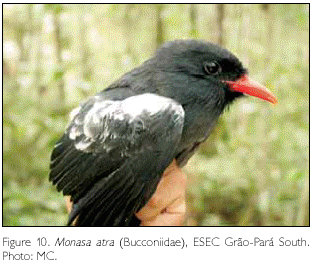
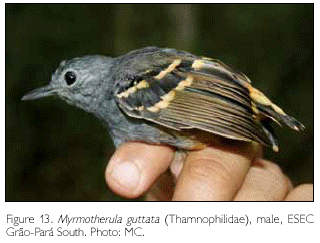
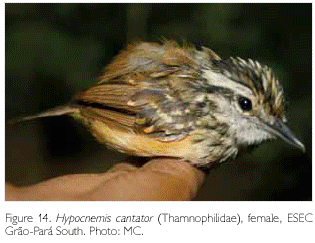
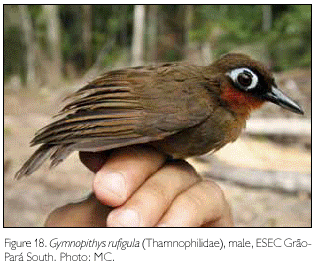
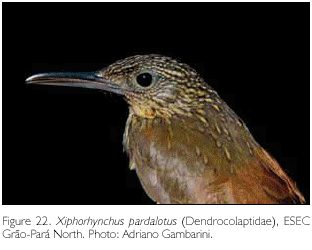
]]> Despite those significant differences in species composition, 100 species (22.4% or nearly a quarter of all species recorded during this study) were shared by all sites sampled, indicating the existence of a 'core' avifauna constituted mostly of widespread Neotropical/Amazonian species (e.g., Crypturellus variegatus [Tinamidae], Patagioenas plumbea [Columbidae], Piaya cayana [Cuculidae], Ramphastos vitellinus [Ramphastidae], Myrmotherula axillaris [Thamnophilidae], Dendrocincla fuliginosa [Dendrocolaptidae], Terenotriccus erythrurus [Tyrannidae], Lipaugus vociferans [Cotingidae], Turdus albicollis [Turdidae], and Psarocolius viridis [icteridae]) and widespread Guiana Shield endemics (e.g., Penelope marail [Cracidae], Pyrilia caica [Psittacidae], Monasa atra [Bucconidae; Figure 10], Capito niger [Capitonidae], Selenidera piperivora [Ramphastidae], Epinecrophylla gutturalis, Myrmotherula guttata (Figure 13), Hypocnemis cantator (Figure 14), and Gymnopithys rufigula (Figure 18) [Thamnophilidae], Xiphorhynchus pardalotus [Dendrocolaptidae; Figure 22], and Tyranneutes virescens [Pipridae]).
]]>
As discussed above, ecological factors such as local landscape (elevation) and habitat heterogeneity (see also Avila-Pires et al., 2010), coupled with historical factors such as the presence of typical "eastern" and "western" Guiana Shield elements as discussed above, are ultimately responsible not only for differences in species richness but also and foremost for differences in composition of bird communities among the seven sites sampled.
NOTEWORTHY RECORDS
We recorded 62 species in the CNP for which our records represented important range extensions, including some locally distributed, poorly known, and rare species, discussed in detail below.
Crypturellus brevirostris - Rusty Tinamou
Exclusively vocal records were obtained for this species only at FLOTA Faro and ESEC Grão-Pará North, the two westernmost sites surveyed, where it was considered uncommon and fairly common, respectively (Appendix). Throughout the Guiana Shield, records of this species are very spotty (Novaes, 1974; Milensky et al., 2005; Robbins et al., 2007).
Ara severus - Chestnut-fronted Macaw
We recorded pairs and flocks of up to five individuals of this species only at the two easternmost sites surveyed (REBIO Maicuru and FLOTA Paru), where it was considered fairly common (Appendix). Our records are the first published for the Guiana Shield in the state of Pará, being continuous with those previously reported for the neighboring state of Amapá (Novaes, 1974). The lack of records of this species at the other five localities sampled in the CNP seems to indicate a true absence in the core area of the Guiana Shield as indicated in infoNatura (2007).
Aratinga maculata - Sulfur-breasted Parakeet
This range-restricted and Guiana Shield endemic described originally as Aratinga pintoi was uncommon at FLOTA Trombetas and ESEC Grão-Pará South, but rare at FLOTA Paru (Appendix), where one adult male was collected (MPEG 66405; see Nemésio & Rasmussen, 2009 for nomenclatural changes). At those localities, small flocks of up to eight individuals were recorded flying over the forest, but more often associated with forest border and river-edge forest (Appendix); at FLOTA Trombetas, a flock was observed continuously between 16 and 28 April roosting together in the cavity of a dead-tree. Our records, along with those published recently by Mittermeier et al. (2010) for Sipaliwini in Suriname, extend considerably the known distribution of this species north and eastward, at the same time that showing it to be rare to uncommon throughout most of its range (Silveira et al., 2005). Our record for FLOTA Paru indicates that A. maculata is probably also found in the neighboring state of Amapá, where there are no published records (Novaes, 1974).
]]> Touit huetii - Scarlet-shouldered ParrotletThis species was recorded based on voice alone twice at FLOTA Faro (15 and 26 January 2008) and several times at REBIO Maicuru (between 22 October and 2 November 2008), but was considered rare at both localities (Appendix). Our records represent the first published for the CNP and the eastern part of the Guiana Shield (Pará - Amapá area of Milensky et al., 2005), where the species was considered mostly absent, except for records in Venezuela and Guyana (InfoNatura, 2007). Robbins et al. (2004) report a Touit sp. as common at Parabara in western Guyana, which could well refer to this species.
Amazona autumnalis - Red-lored Parrot
This species was recorded exclusively at FLOTA Faro, where it was considered uncommon and a female was collected on 26 January 2008 (MPEG 64596). This represents the first published record of this species for the state of Pará and the western part of the Guiana Shield (Milensky et al., 2005). At FLOTA Faro a few flocks with over ten individuals were observed feeding in the treetops of several fruiting trees. The specimen collected exhibited all diagnostic characters of the diadema subspecies, a range-restricted taxon known previously only for the lower portions of the Negro and Solimões rivers in the Brazilian state of Amazonas (Forshaw, 2006). Future systematic work should evaluate the evolutionary distinctiveness of the range-restricted and isolated diadema, which, if proven an evolutionary independent lineage, should be monitored for conservation purposes due to its small range and close association with seasonally flooded forest types.
Dromococcyxphasianellus - Pheasant Cuckoo
A single individual of this species was heard vocalizing its typical song during the night and dawn near ESEC Grão-Pará South on the top of a plateau covered by stunted forest in June and October 2008 (exact coordinates 0o 13' S and 55o 09' W). Apparently, this represents the first published record of this species north of the Amazon in the state of Pará and also the eastern portion of the Guiana Shield (Milensky et al., 2005; Restall et al., 2006; InfoNatura, 2007). See also comments on the species below.
Dromococcyx pavoninus - Pavonine Cuckoo
Two records of this species based solely on its typical song were obtained at ESEC Grão-Pará South on 12 and 20 June 2008 in seasonally flooded forest with a very dense understory. Apparently, those records are the first published for this species north of the Amazon in the state of Pará and also the eastern portion of the Guiana Shield in the Pará - Amapá area of Milensky et al. (2005). At ESEC Grão-Pará South, where both Dromococcyx species were recorded in June 2008, they seem to replace each other in different habitats and elevations, with D. phasianellus occurring at higher sites covered by stunted and transitional forest and D. pavoninus occupying lower sites with forest near water.
Megascops guatemalae - Vermiculated Screech-OwI
Records of this species (theoretically referring to the disjunct and distinct roraimae subspecies) were obtained only at ESEC Grão-Pará North, above 500 m, where it was considered fairly common (Appendix); one individual was tape-recorded on 2 September 2008. The recorded song matches precisely those of birds tape-recorded in the nearby Acary mountains in Guyana (e.g., Macaulay Libary Audio # 131078 and 134487), where a specimen was obtained (Braun et al., 2003). Our record is the first for the state of Pará and also the eastern portion of the Guiana Shield in the Pará - Amapá area of Milensky et al. (2005).
]]> Asio stygius - Stygian OwlA single record ofthis owl was obtained at ESEC Grão-Pará Centre in forest/savanna ecotone, where an individual was tape-recorded at dusk on 23 January 2009. This record is apparently the first for the CNP and also for the eastern portion of the Guiana Shield in the Pará - Amapá area of Milensky et al. (2005). The nearest previous records are from southern Guyana, which, together with the present record, reinforce the prediction that the species will be also found in nearby Suriname (Robbins et al., 2007).
Caprimulgus rufus - Rufous Nightjar Between 8 and 17 June 2008, several records of an apparently lone individual of this species were obtained in a natural clearing during the night and at dawn near the camp site at ESEC Grão-Pará South. Tape-recordings were obtained on 9 June 2008. Apparently, this represents the first published record of this species north of the Amazon in the state of Pará (Robbins & Parker III, 1997). One previously unpublished specimen from Amapá (also in the eastern portion of the Guiana Shield) is housed at MPEG (53435).
Hydropsalis torquata - Scissor-tailed Nightjar
One lone individual sighted at dusk on 24 January 2009 in open savanna at ESEC Grão-Pará Centre apparently represents the first published record of this species north of the Amazon in the state of Pará (Restall et al., 2006; InfoNatura, 2007). Three additional unpublished specimens from Monte Alegre (also in the CNP) are housed at MPEG (53343 - 53345). The nearest records to the one from ESEC Grão-Pará Centre come from the Sipaliwini savanna in nearby southern Suriname (Haverschmidt & Mees, 1994; Mittermeier et al., 2010).
Threnetes niger - Sooty Barbthroat
This range-restricted species, endemic to the eastern portion of the Guiana Shield, was recorded at FLOTA Trombetas (two females collected on 25 and 26 April 2008, respectively MPEG 64962 and 64963), REBIO Maicuru (sighted once on 24 October 2008), and FLOTA Paru (one female collected on 15 December 2008: MPEG 66415). Those records represent the first for the state of Pará and together extend the known distribution of T. niger ca. 300 km to the west. MPEG 64963 (FLOTA Paru) possesses the characteristic dark tail with whitish tips, a character diagnosing T. niger from its widespread congener T. leucurus, and shows the characters of subspecies loehkeni. Even though they were collected at the same locality (FLOTA Trombetas), MPEG 64962 and 64963 differ from each other in that the latter specimen shows the completely dark tail pattern of niger, whereas the former has some light whitish spots evident on the external rectrices, thus approaching leucurus; the latter two specimens also have lighter underparts than the FLOTA Paru specimen and two additional specimens collected in Amapá (not far from the latter locality), both also with the diagnostic tail pattern of T. niger (MPEG 40370 and 40371). The differences in the tail pattern and underpart colors among the CNP specimens reported herein indicate either that 1) T. niger is more variable than previously thought, with a distinct morph (new taxon?) in the western part of its range; or 2) that some intergradation, as evidenced in the tail pattern, is happening between T. niger and T. leucurus in central Pará, somewhere around the lower Trombetas river. Distinguishing between those two alternatives is essential for treating nigerand leucurus as independent species or subspecies (Schuchmann, 1999; Remsen Jr. et al., 2010). These findings reinforce the need of a taxonomic re-evaluation of the Threnetes specimens on the Guiana Shield to better document the ranges of T. leucurus and T. niger in this part of Amazonia.
Amazilia viridigaster - Green-bellied Hummingbird
On 6 September 2008, a lone individual with a characteristic white dot behind the eye and a rufous tail typical of subspecies cupreicauda, was sighted for about a minute in the mid-story of forest edge near a creek and a ridge at ca. 350 m in ESEC Grão-Pará North. This species had been previously recorded in the nearby Acary mountains in Guyana (Robbins et al., 2007). Our record is the first for the state of Pará and the first Brazilian record outside the state of Roraima (Naka et al., 2006).
Colaptes rubiginosus - Golden-olive Woodpecker
]]> On 1 September 2008 a single male was collected (MPEG 65752) while attending a mixed-species flock and after responding to play-back in montane forest at ca. 550 m in ESEC Grão-Pará North. On 31 October 2008 another individual was heard on the top of a ridge covered by forest at ca. 500 m in REBIO Maicuru. Those two records are the first for the state of Pará and they indicate that C. rubiginosus may be found in other localities throughout the CNP at comparatively high elevations (> 500 m), mainly those along or not far the border with Guyana, Suriname, and French Guiana, where the species has been recorded (Tostain et al., 1992; Haverschmidt & Mees, 1994; Robbins et al., 2007).Thamnophilus melanothorax - Band-tailed Antshrike
We recorded this range restricted species, endemic to the Guiana Shield, at FLOTA Trombetas (several individuals tape-recorded and one male collected: MPEG 65082), ESEC Grão-Pará South (a pair tape-recorded), REBIO Maicuru (at least two pairs located and one male tape-recorded and collected: MPEG 66226), and FLOTA Paru (one pair located). All records took place in creek-side 'terra-firme' forest or riverine forest (Appendix). This species' loud song is very low in pitch, which, added to its secretive habits and low density as recorded in the CNF? may account for the paucity of records outside the Brazilian state of Amapá, Suriname, and French Guiana (Novaes, 1974; Tostain et al., 1992; Haverschmidt & Mees, 1994). The records reported herein indicate a widespread distribution in the CNP east of the Trombetas river, whereas literature records support a more spotty distribution west of this river into Guyana and the Brazilian state of Amazonas (Zimmer & Isler, 2003; Robbins et al., 2007).
Herpsilochmus sticturus - Spot-tailed Antwren
We recorded this Guiana Shield endemic at five of the seven sites surveyed, where it was common (except at ESEC Grão-Pará North) and usually found in 'terra-firme' forest attending the same canopy flocks as the species below. Documentation for this species at CNP included three specimens (MPEG 64995 and 64996, respectively unsexed and male, both from FLOTA Trombetas, and MPEG 65432, male, from ESEC Grão-Pará South) and several tape-recordings (Appendix). Together, our records indicate a widespread distribution east of the Trombetas river in the CNP as pointed out by Zimmer & Isler (2003), but unlike other sources such as InfoNatura (2007) and Restall et al. (2006); our only record west of this river is from ESEC Grão-Pará North, adjacent to Guyana, where H. sticturus has been recorded at several sites in the southwestern corner of the country (Robbins et al., 2007). In fact, due to its close proximity to the state of Roraima, our record from ESEC Grão-Pará North suggests that H. sticturus can probably also be found in this state, where the species has not yet been recorded (Naka et al., 2006).
Herpsilochmus stictocephalus - Todd's Antwren
We recorded this other Herpsilochmus endemic to the Guiana Shield at all localities sampled, where it was either common or frequent and most often associated with canopy mixed-species flocks (Appendix). Documentation included three specimens from FLOTA Trombetas (two adult males, both tape-recorded: MPEG 64992 - 64993; and one adult female: MPEG 64994), four specimens from ESEC Grão-Pará South (three adult males: MPEG 64433, 65434, and 65436; and one adult female: MPEG 65435), and tape-recordings at FLOTA Faro (where it co-occurred with the Spot-backed Antwren Herpsilochmus dorsimaculatus, recorded only at this locality) and ESEC Grão-Pará North (Appendix). Our records reported herein, which include all localities sampled at CNP significantly extend the known distribution of this species 300 - 400 km to the southern and western portions of the CNP revealing a much wider range than previously thought (Zimmer & isler, 2003; Restall et al., 2006). Given their close proximity to country and state borders, our records from FLOTA Faro and ESEC Grão-Pará North (see Figure 1), and those by Robbins et al. (2004) from the Rupununi area in Guyana, indicate that H. stictocephalus almost surely occurs in the Brazilian states of Amazonas and Roraima, where the species has not been recorded yet (Zimmer & isler, 2003; Naka et al., 2006).
Microrhopias quixensis - Dot-winged Antwren
We recorded this uncommon to fairly-common species only at FLOTA Faro, REBIO Maicuru (where a female and a male, respectively MPEG 66268 and 66269, were collected), and FLOTA Paru (Appendix). Both specimens collected at REBIO Maicuru belong to the diagnostic subspecies microstictus, a Guiana Shield endemic (Zimmer & isler, 2003). Our record for FLOTA Faro (several individuals were tape-recorded) and a previously unpublished female (MPEG 43764) collected on 9 May 1985 in the lower Mapuera river near its confluence with the Trombetas, represent a ca. 400 km southwestward range extension into the Guiana Shield, with the previous nearest records coming from northeastern Pará, Amapá, and southern Guyana (Zimmer & isler, 2003; Restall et al., 2006). At all CNP sites surveyed this species was associated with river-edge forest, foraging in mixed-species flocks especially in bamboo (REBIO Maicuru and FLOTA Paru) and vine-tangles (FLOTA Faro). Our record from FLOTA Faro indicates that M. quixensis microstictus may also be found in the neighboring state of Amazonas.
Formicivora grisea - White-fringed Antwren
]]> We recorded this species in 'campina', 'cerrado', and transitional forest at FLOTA Faro, ESEC Grao-Para South (one unsexed specimen collected: MPEG 65440), and ESEC Grao-Para Centre (where three males and one female, respectively MPEG 66670, 66672, 66673 and MPEG 66671, were collected; Appendix). All collected specimens belong to the nominate subspecies grisea (Zimmer & Isler, 2003). These records indicate a much more widespread distribution in the CNP and the Guiana Shield as a whole than previously known. They also show that the species is always associated with open vegetation enclaves (Zimmer & Isler, 2003; Restall et al., 2006).Cercomacra nigrescens - Blackish Antbird
We recorded this species always in close association with riparian habitats at FLOTA Trombetas (on the banks of the Cuminapanema river), REBIO Maicuru (banks of the Ipitinga river), and FLOTA Paru (banks of the Paru river, where a young male and an adult female, respectively MPEG 66492 and 66494, were collected and a few individuals tape-recorded; Appendix). Our records and those of Naka et al. (2006) reinforce this species' much more widespread distribution in the CNP and the Guiana Shield as a whole, as first reported by Zimmer & Isler (2003), but contradicting other sources (Ridgely & Tudor, 1994; Restall et al., 2006).
Myrmoborus leucophrys - White-browed Antbird
We recorded this bird at four of the seven localities sampled: FLOTA Trombetas (where MPEG 65000, an adult female, was collected, and a pair was tape-recorded on the banks of the Cuminapanema river), ESEC Grão-Pará South, REBIO Maicuru, and FLOTA Paru (where six specimens were collected: MPEG 66523 - 66528; Appendix). All specimens collected belonged to subspecies angustirostris. The records from FLOTA Trombetas and ESEC Grão-Pará South significantly extend the known distribution of M. leucophrys into the central part of the CNP from where it was thought to be absent (Zimmer & isler, 2003).
Myrmeciza longipes - White-bellied Antbird
This species was recorded only at ESEC Grão-Pará South (where one individual was tape-recorded) and ESEC Grão-Pará Centre (where a male and a female, respectively MPEG 66659 and 66660, were collected; Appendix). Even though this species is well known in the eastern and central portions the CNP (Zimmer & isler, 2003), our records from ESEC Grão-Pará South and Centre appear to be the northernmost for Pará and show that M. longipes can be found in isolated open vegetation enclaves throughout CNF? as also recorded in southern French Guiana (Restall et al., 2006) and Suriname (Mittermeier et al., 2010).
Hylophylaxpunctulatus - Dot-backed Antbird
On 28 August 2008 a single individual of this species singing its typical song was heard along a medium-sized creek at ca. 350 m in 'terra-firme' forest at ESEC Grão-Pará North; unfortunately, the bird stopped singing before it could be tape-recorded. No other records of this species were obtained at this or any of the other sites surveyed in the CNP (Appendix). This represents the first record of H. punctulatus in the CNP and one of the few for the Guiana Shield east of the Rio Branco, where only two isolated populations are known from French Guiana (Zimmer & isler, 2003; Naka et al., 2006; Restall et al., 2006). Despite the fact that this species was not recorded in the nearby Acary mountains by Robbins et al. (2007), our record at ESEC Grão-Pará North strongly indicates it may also be found in Guyana eventually (Zimmer & isler, 2003; Restall et al., 2006).
Xiphocolaptes promeropirhynchus - Strong-billed Woodcreeper
]]> On 23 April 2008 at dawn a single individual of this species singing its typical song was heard along a creek in 'terra-firme' forest at ca. 350 m in FLOTA Trombetas; unfortunately, the bird stopped singing before it could be tape-recorded. No other records of this species were obtained at this or any of the other sites surveyed in the CNP (Appendix). This represents the first record of this species for the CNP and one of the few records for the Guiana Shield east of the Branco river and outside of the Tepuis (Marantz et al., 2003; Naka et al., 2006; Restall et al., 2006; Robbins et al., 2007). As recorded in Guyana, Suriname, and French Guiana, X. promeropirhynchus seems very rare and restricted to higher elevation sites in the CNP (Robbins et al., 2007; Restall et al., 2006).Synallaxis albescens - Pale-breasted Spinetail
A few individuals of this species were heard and tape-recorded at ESEC Grao-Para Centre between 22 and 31 January 2009 in open 'cerrado'. This record extends significantly the known distribution of this species into the core of the CNP and the Guiana Shield as a whole, since previous records for those areas were restricted to the vicinity of the northern bank ofthe Amazon and the Guianas (Remsen Jr., 2003; Restall et al., 2006). We predict that this species may be found throughout the CNP always associated with open 'cerrado' enclaves.
Synallaxis macconnelli - McConnell's Spinetail
We recorded this species only at REBIO Maicuru, where three specimens were collected (one male: MPEG 66293, and two females: MPEG 66294 and 66295) and several individuals tape recorded (Appendix). All specimens collected exhibited the characters diagnosing subspecies obscurior (Remsen Jr., 2003; Restall et al., 2006). At REBIO Maicuru, S. macconnelli was uncommon in the dense understory of river-edge forest in close association with bamboo and vine-tangles. This represents the second record of this species for the CNP after that of Novaes (1980), who collected a female at Aramapucu in the upper Paru do Leste river, ca. 85 km to the northwest of REBIO Maicuru (MPEG 32504). This last record from the CNP was omitted in the latest reviews on this species' distribution, but together with the record reported herein show that subspecies obscurior has a much wider southward distribution than currently recognized (Remsen Jr., 2003; Restall et al., 2006).
Xenops milleri - Rufous-tailed Xenops
We recorded this species at all sites surveyed, except REBIO Maicuru (Appendix); tape-recordings were obtained at most sites where the species was present, while two adult male specimens were collected at FLOTA Faro (MPEG 64665) and FLOTA Paru (MPEG 66474). Together, those records indicate a widespread distribution in the CNP Probably, the lack of specimens and published records for this part of Amazonia explains why different sources have significantly different range maps for this species on the Guiana Shield (compare Ridgely & Tudor, 1994; InfoNatura, 2007; Restall et al., 2006). Our records provide a solid basis for including the entire CNP in X. milleris distribution and, particularly the FLOTA Paru record, indicates that the species may be also found in the neighboring State of Amapá, where apparently no records are available (Novaes, 1974; Remsen Jr., 2003).
Leptopogon amaurocephalus - Sepia-capped Flycatcher
This species was recorded at all sites surveyed, except FLOTA Faro, with tape-recording of several individuals at FLOTA Trombetas, ESEC Grão-Pará South, and REBIO Maicuru, and collecting of specimens at ESEC Grão-Pará North (MPEG 65882 and 65883, respectively female and male) and FLOTA Paru (MPEG 66543, male; Appendix). Prior to our records, the distribution of L. amaurocephalus in the southern part of the Guiana Shield was poorly-known, with some references reporting only Amapá but not the CNP in this species' range north of the Amazon in Brazil (Novaes, 1978; Fitzpatrick, 2004a; InfoNatura, 2007); on the other hand, the map shown in Restall et al. (2006) does include L. amaurocephalus in the CNP but without basic supporting information. The record for FLOTA Trombetas possibly represents the southwestern most documented record for this species on the Guiana Shield, and indicates a widespread distribution in the CNP as shown in Restall et al. (2006).
Hemitriccus inornatus - Pelzeln's Tody-Tyrant
]]> We recorded this spottily-distributed species in the understory and midstory of 'campina' and transitional forest habitats at FLOTA Faro, ESEC Grao-Para South (where at least three individuals were tape-recorded and one male was collected: MPEG 65475), and ESEC Grao-Para Centre (where two individuals were tape-recorded and another male collected: MPEG 66692; Appendix). Those represent the first records for the CNP (Milensky et al., 2005), extending this species' known distribution in Brazil ca. 600 km eastward, with the nearest previous published records coming from two sites in Roraima west of the Branco river (Naka et al., 2006) and Manaus (Clock, 2004). In December 2005, H. inornatus was tape-recorded and collected in central Suriname by Zyskowski et al. (2011). Together, the Suriname and CNP records point towards a much wider distribution for this species than previously thought, at the same time that they reinforce the patchy nature of its occurrence, always associated with 'campina'/ sandy-soil forest (Clock, 2004).Phyllomyias griseiceps - Sooty-headed Tyrannulet
We recorded this species at all sites surveyed, except FLOTA Faro and ESEC Grao-Para Centre (Appendix). One male was tape-recorded and collected (MPEG 65059) at FLOTA Trombetas on 25 April 2008 while responding to play-back in a mixed-species flock. We also tape-recorded several individuals of Pgriseiceps at the other sites in the CNP where the species was recorded; it was always vocally active and found in the canopy, often associated with mixed-species flocks (contra Restall et al., 2006). Prior to our records, this species was known in Brazil for only three localities, all on the Guiana Shield: Óbidos, state of Pará (Griscom & Greenway Jr., 1941), Manaus, state of Amazonas (Cohn-Haft et al., 1997), and the state of Roraima (Naka et al., 2006). Together, the CNP records reported herein indicate a much wider and continuous distribution than currently recognized for this species on the Guiana Shield; particularly, the records from the eastern part of the CNP (REBIO Maicuru and FLOTA Paru) suggest that P. griseiceps may be also found in the neighbouring state of Amapá as well as French Guiana where there are no published records.
Myiopagis caniceps - Gray Elaenia
We obtained aural records of this species at all sites surveyed, except ESEC Grão-Pará Centre; at all sites where M. caniceps was found in the CNP, it was either uncommon or rare, with only a few individuals heard during the surveys and always in association with canopy mixed-species flocks (Appendix). Our records are the first for the CNP and reveal an unforeseen widespread distribution for M. caniceps on the Guiana Shield in Brazil, probably indicating a continuous distribution with previous records from Manaus (Cohn-Haft et al., 1997), Guyana, and French Guiana (Fitzpatrick, 2004b).
Myiopagis flavivertex - Yellow-crowned Elaenia
We recorded this species associated with seasonally flooded forest at all sites surveyed in the CNP, except ESEC Grão-Pará North and ESEC Grão-Pará Centre, where this habitat was absent (Appendix). At FLOTA Faro, one adult male was collected on 19 January 2008 (MPEG 64747). Most previous records of this species for the CNP and the Guiana Shield as a whole indicated a clustering along the Amazon river valley, the state of Amapá, and coastal Guianas (Fitzpatrick 2004c; Restall et al., 2006). Therefore, our records, particularly those for FLOTA Trombetas and ESEC Grão-Pará South, indicate a more widespread distribution in the CNP farther away from the Amazon river valley than previously recognized (Fitzpatrick, 2004c; Restall et al., 2006); those records were obtained, respectively, along the banks of the Cuminapanema and Curuá rivers, hundreds of km upriver from their mouths into the Amazon.
Elaenia ruficeps - Rufous-crowned Elaenia
We recorded this patchily distributed species on the Guiana Shield at ESEC Grão-Pará South (where one individual was tape-recorded and a male was collected: MPEG 65479) and ESEC Grão-Pará Centre (where two males - MPEG 66693 and 66694, and one female - MPEG 66695, were collected) only in 'campina' and 'cerrado' (Appendix). Our records show that Elaenia ruficeps can be found in isolated open vegetation enclaves throughout CNP thus indicating a much wider distribution than currently recognized (Hosner, 2004; InfoNatura, 2007; Restall et al., 2006).
Phylloscartes virescens - Olive-green Tyrannulet
]]> We recorded this species at all sites surveyed, except FLOTA Faro and ESEC Grão-Pará Centre; several individuals were tape-recorded at FLOTA Trombetas, ESEC Grão-Pará South, and FLOTA Paru (Appendix). In most areas of the CNP, P. virescens was rare and always associated with canopy mixed-species flocks (Appendix). Our records are the first for the CNP and together extend the known range of this species significantly to the south and to the east, since the previous nearest records were those from Manaus (Cohn-Haft et al., 1997) and Amapá (Fitzpatrick, 2004d). These new CNP records support a continuous and widespread distribution for P. virescens throughout the Guiana Shield in Brazil and the Guianas.Inezia subflava - Amazonian Tyrannulet
We recorded this species associated with riverine habitats only at FLOTA Faro (along the Nhamundá river) and REBIO Maicuru (along the Ipitinga river; Appendix). Our record from REBIO Maicuru extends significantly to the north the known distribution of this species on the Guiana Shield, where it was thought to be confined to the vicinity of the Amazon river valley (Fitzpatrick, 2004e; InfoNatura, 2007; Restall et al., 2006). In fact, I. subflava was known before to occur in the northern part of the CNP as it was reported by Novaes (1980) for igarapé Castanheira in the upper Paru do Leste river (ca. 85 km to the northwest of REBIO Maicuru), where two specimens were collected (MPEG 32674 and 32675, respectively male and female); unfortunately, this important record has been omitted in all important reviews on this species' distribution (Zimmer & Whittaker, 2000; Fitzpatrick, 2004e; InfoNatura, 2007; Restall et al., 2006). Another previously unreported specimen of I. subflava from the CNP (MPEG 43781, a female) comes from the lower Mapuera river near its confluence with the Trombetas river, ca. 70 km north of FLOTA Faro. These records point towards a much wider distribution for this species on the Guiana Shield than previously thought (Zimmer & Whittaker, 2000; Fitzpatrick, 2004e; InfoNatura, 2007; Restall et al., 2006). A map shown in the last taxonomic review on the Inezia subflava/caudata complex includes an isolated record in the state of Amapá for the Paled-tipped Tyrannulet Inezia caudata, but no details are given in the Appendices (Zimmer & Whittaker, 2000); probably Fitzpatrick (2004e) and InfoNatura (2007) also included Amapá within the range of I. caudata based on this reference. However, based on the specimen-based CNP records discussed, we predict that any Amapá records for Inezia records might in fact refer to I. subflava instead.
Myiophobus fasciatus - Bran-colored Flycatcher
We recorded this species only in the open 'cerrado' at ESEC Grão-Pará Centre, where one individual was tape-recorded and a female (MPEG 66710) and a male (MPEG 66711) were collected (Appendix). This is the first CNP record, extending significantly to the west the known distribution of M. fasciatus on the Guiana Shield, where it was previously known only from scattered records in the state of Amapá and the Guianas (Farnsworth & Lebbin, 2004a; InfoNatura, 2007; Robbins et al., 2004; Restall et al., 2006). We predict that this species will also be found in other 'cerrado' enclaves throughout the CNP.
Contopus virens - Eastern Wood-Pewee
This boreal migratory species was recorded based on its typical song only at REBIO Maicuru and ESEC Grão-Pará Centre, respectively in Late October/Early November 2008 and Late January 2009 in forest edge (Appendix). Those are the first CNP and apparently the easternmost records for this species on the Guiana Shield and the entire Amazon basin (Farnsworth & Lebbin, 2004b; Milensky et al., 2005; InfoNatura, 2007; Restall et al., 2006). The record from ESEC Grão-Pará Centre in particular (mid-winter, i.e. not during the boreal migration season) suggests that C. virens winters in the CNP in addition to passing through the area.
Contopus albogularis - White-throated Peewee
We recorded this species in the 'terra-firme' forest canopy at FLOTA Trombetas, ESEC Grão-Pará South, REBIO Maicuru, and FLOTA Paru, where it was rare to uncommon, and detected mostly through its calls and song (Appendix); birds were particularly active vocally at dawn and dusk, when several individuals were tape-recorded at all sites above, except FLOTA Paru. Our records are the first for the CNP and more than doubled the known range of this Guiana Shield endemic, extending its distribution ca. 400 km to the southwest; previous records included only Suriname, French Guiana and northern and central Amapá in Brazil (Farnsworth & Lebbin, 2004c; InfoNatura, 2007; Restall et al., 2006). This species is probably ubiquitous in the canopy of 'terra-firme' forest canopy throughout the CNP at least east of the Trombetas river, but is easily overlooked by ornithologists unfamiliar with its calls and song.
Myiarchus tyrannulus - Brown-crested Flycatcher
]]> We recorded this species only at ESEC Grão-Pará Centre, where two specimens were collected in open 'cerrado', respectively a female and a male: MPEG 66715 and 66716 (Appendix). This is the first CNP record, extending significantly to the west the known distribution of M. tyrannuluson the Guiana Shield, where it was previously known only from 'cerrado' patches along the Amazon river valley, the state of Amapá, and the Guianas (Joseph, 2004; InfoNatura, 2007; Restall et al., 2006). We predict that this species will also be found in other 'cerrado' enclaves throughout the CNP.Attila phoenicurus - Rufous-tailed Attila
On 28 and 29 August 2008, an individual of this austral migrant was heard by AA at the same spot singing its song shortly after dawn at ESEC Grão-Pará North in the canopy of 'terra-firme' forest at ca. 500 m. No other individuals were recorded during our stay at ESEC Grão-Pará North or any of the other sites surveyed by us. This is the first CNP record and the second for the Guiana Shield as a whole (Milensky et al., 2005); prior to this record, A. phoenicurus had been recorded on the Guiana Shield only in southern Venezuela, also as an austral migrant (Walther, 2004; InfoNatura, 2007; Restall et al., 2006).
Neopelma pallescens - Pale-bellied Tyrant-Manakin
We recorded this species in 'campina' and dense 'cerrado' patches only at ESEC Grão-Pará South and Center, where several individuals were tape-recorded and 14 collected (MPEG 65482 - 65491 at ESEC Grão-Pará South and MPEG 66717 - 66720 at ESEC Grão-Pará Centre; Figure 28; Appendix). Our records significantly extend the known distribution of this species to the northeast on the CNP and Guiana Shield, as it was thought previously to be mostly restricted in this region to open vegetation areas along the lower Amazon river valley (Snow, 2004a; InfoNatura, 2007; Restall et al., 2006), with a recently discovered isolated population in southern Guyana (Robbins et al., 2004) and southern Suriname (Mittermeier et al., 2010). Based on its overall fair abundance in the appropriate habitats in both sites in ESEC Grão-Pará sampled, we predict that N. pallescens will be found in open vegetation enclaves throughout the CNP (Snow, 2004a; Milensky et al., 2005; Restall et al., 2006).
Neopelma chrysocephalum - Saffron-crested Tyrant-Manakin
We recorded this species only at FLOTA Faro, where a single adult male was tape-recorded and collected (MPEG 64769) at an active lek on 27 January 2008 in the understory of 'campina' white-sand forest near a creek (Appendix). This is the first CNP record, significantly extending the known range of N. chrysocephalum east of the lower rio Negro drainage, where the nearest previous records come from Manaus (Cohn-Haft et al., 1997; Snow, 2004a; InfoNatura, 2007). Our CNP surveys indicate that N. pallescens rather than N. chrysocephalum is the widespread Tyrant-Manakin found throughout the eastern part of the Guiana Shield (contra Restall et al., 2006); it is possible that those two species associated with open forest enclaves replace each other in the CNP across the Trombetas river, as reported in this study (Appendix).
Machaeropterus pyrocephalus - Fiery-capped Manakin
We recorded this species only in the understory and mid-levels of gallery forest at ESEC Grao-Para Centre where at least two individuals were tape-recorded (Appendix). This is the second CNP record of M. pyrocephalus after that of Novaes (1980) for the upper Paru do Leste river (ca. 135 km to the northeast of ESEC Grao-Para Centre), where one male was collected (MPEG 32548) also in gallery forest. These records indicate a more widespread, yet patchy distribution on the Guiana Shield than previously thought (Snow, 2004a; InfoNatura, 2007; Restall et al., 2006). We predict that M. pyrocephalus will be found in gallery forest at other open vegetation enclaves throughout the CNP, and possibly also in Suriname and French Guiana, from where there are currently no records (Snow, 2004a; Milensky et al., 2005; Restall et al., 2006).
Xenopipo atronitens - Black Manakin
]]> We recorded this species in the understory of 'campina' and dense 'cerrado' patches only at ESEC Grão-Pará South and Center, where several individuals were tape-recorded and ten collected (MPEG 65513 - 65516 at ESEC Grão-Pará South and MPEG 66721 - 66726 at ESEC Grão-Pará Centre; Appendix). Even though there were previous records of X. atronitens for the CNP, our records extend significantly the known range of this species on the Guiana Shield as a whole (Novaes, 1980; Snow, 2004a; infoNatura, 2007). Based on its overall fair abundance in the appropriate habitats at both sites of ESEC Grão-Pará sampled, we predict that X. atronitens will be found in open vegetation enclaves throughout the Guiana Shield, a pattern not reflected by maps portraying the species' known distribution in key references such as Snow (2004a) and infoNatura (2007).Oxyruncus cristatus - Sharpbill
On 10 September 2008 an individual of this species was tape-recorded while joining a canopy mixed-species flock in hilly 'terra-firme' forest at ESEC Grão-Pará North at ca. 500 m. Robbins et al. (2007) also recorded O. cristatus in the neighboring Acary mountains in Guyana. This is the first CNP record, but we expect this species to be also found in other high elevation sites along the state of Pará borders with the Guianas and Amapá, where it has been previously recorded (Brooke, 2004; infoNatura, 2007; Restall et al., 2006).
Iodopleura fusca - Dusky Purpletuft
On 16 April 2008 a single individual of this Guiana Shield endemic was heard and tape-recorded in the canopy of 'terra-firme' forest at ca. 500 m at FLOTA Trombetas while joining a mixed-species flock; no other individuals were recorded at this or any other site surveyed in the CNP (Appendix). This record is the first for the CNP extending significantly the known range of I. fusca, known in Brazil only based on scattered records from Amapá, Manaus, and Roraima (Snow, 2004b; infoNatura, 2007). Therefore, our record supports the notion that this species has a more widespread yet very patchy distribution on the Guiana Shield (Restall et al., 2006).
Pachyramphus viridis - Green-backed Becard
We tape-recorded this species once at FLOTA Trombetas and ESEC Grão-Pará South and heard it twice at REBIO Maicuru in the canopy of 'terra-firme' forest edge or transition between 'terra-firme' and river-edge forests (Appendix). Our records refer to the distinct subspecies griseigularis, extending significantly to the north its known distribution on the Guiana Shield (Mobley, 2004; infoNatura, 2007; Restall et al., 2006). This canopy-dwelling species is easily overlooked due to its natural scarcity and inconspicuous voice, but our CNP records indicate that it is more widespread on the Guiana Shield than previously thought, probably also occurring in Suriname, French Guiana, and Amapá, from where there are currently no records (Mobley, 2004; Milensky et al., 2005; Restall et al., 2006).
Hylophilus sclateri - Tepui Greenlet
We recorded this range-restricted species only in the mid-levels and canopy of 'terra-firme' forest always in mixed-species flocks around ca. 500 m at ESEC Grão-Pará North, where it was common; several individuals were tape-recorded (Appendix). This is the first CNP record, but the species has also been recorded in the neighboring Acary mountains in Guyana (Robbins et al., 2007) and also in central Suriname (Zyskowski et al., 2011). Therefore, H. sclateri most likely occurs along the entire state of Pará border with Guyana and Suriname at high elevation sites.
Atticora tibialis - White-thighed Swallow
]]> On 21 January 2009, a single individual was observed perched in a tree at the edge of gallery forest at ESEC Grão-Pará Centre; no other individuals were recorded at this or any other site surveyed in the CNP (Appendix). This is the first CNP record, thus indicating a wider distribution on the Guiana Shield than previously thought (Milensky et al., 2005; Restall et al., 2006).Turdus leucomelas - Pale-breasted Thrush
We recorded this species in the understory of 'campina' and 'cerrado' patches only at ESEC Grão-Pará South and ESEC Grão-Pará Centre; one adult male was collected at the latter site (MPEG 66741). Even though this species has been recorded previously from other open vegetation enclaves in the CNP, our records extend significantly to the north its known range in this region (Milensky et al., 2005; Restall et al., 2006; InfoNatura, 2007); also, they indicate that T. leucomelas may be found in open vegetation enclaves throughout the Guiana Shield, a pattern not reflected by maps portraying the species' known distribution in key references such as Restall et al. (2006) and InfoNatura (2007).
Turdus ignobilis - Black-billed Thrush
We recorded this species in the understory of 'campina' and 'cerrado' patches only at ESEC Grão-Pará Centre, where two individuals were tape-recorded and seven collected (MPEG 66742 - 66747 and MPEG 66751); all specimens belonged to the distinct subspecies arthuri, endemic to the Guiana Shield (Collar, 2005). Our record is the second one for the CNP after that in Milensky et al. (2005), thus reinforcing the significant southeastward range extension of this endemic taxon on the Guiana Shield (Restall et al., 2006; InfoNatura, 2007). Eight additional specimens of Turdus ignobilis arthuri (MPEG 69908 - 69915) were collected by Marcos Pérsio Dantas Santos and crew in October 2009 in 'campina' at Lago Sapucuá, municipality of Oriximiná, also in the CNP and ca. 270 km south of ESEC Grão-Pará Centre. These records indicate a much wider range in the CNP than previously thought (Restall et al., 2006; InfoNatura, 2007; Collar, 2005).
Schistochlamys melanopis - Black-faced Tanager
We recorded this species only at ESEC Grao-Para Centre, where a few individuals were observed and three males collected (MPEG 66758 - 66760) in open 'cerrado' (Appendix). This record is the second for CNP after that of Novaes (1980) for the upper Paru do Leste river (ca. 135 km to the northeast of ESEC Grao-Para Centre), where one male was collected (MPEG 32514) also in 'cerrado' (Isler & Isler, 1999).
Tachyphonus phoenicius - Red-shouldered Tanager
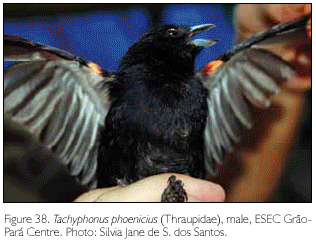
We recorded this species at all sites surveyed, except FLOTA Faro and FLOTA Trombetas; tape-recordings were obtained at ESEC Grao-Para North and REBIO Maicuru, while five males (MPEG 66763 and MPEG 66766 - 66769) and three females (MPEG 66762 and MPEG 66764 - 66765) were collected at ESEC Grao-Para Centre, the only site where it was common (Figure 38; Appendix). Those records extend significantly the known distribution of T. phoenicius on the CNP and Guiana Shield (Isler & Isler, 1999); nearest CNP records include those from Novaes (1980) for the upper Paru do Leste river (ca. 85 km northwest of REBIO Maicuru) and another reported by Isler & Isler (1999) for the Amazonas/Para border (ca. 280 km southwest of ESEC Grao-Para South). The records presented here and those from Novaes (1978, 1980), Isler & Isler (1999), and Milensky et al. (2005) support the notion that T. phoenicius is widely distributed on the Guiana Shield in Brazil, apparently reaching higher densities in open vegetation enclaves.
]]>
Tangara guttata - Speckled Tanager
AA on two occasions sighted 4-5 individuals of this species while joining canopy mixed-species flocks in stunted 'campina' forest atop hill at ca. 450 m in ESEC Grao-Para South (Appendix); typically, canopy flocks joined by T. guttata in stunted 'campina' forest at this site were made up mostly of Thraupidae species such as dacnis Dacnis spp.), honeycreepers (Chlorophanes spiza and Cyanerpes spp.), and Tangara spp. tanagers. This is the first CNP record for T. guttata, extending significantly to the south the known distribution of this species (Isler & Isler, 1999; Milensky et al., 2005; Restallet al., 2006); the nearest previous records come from Suriname and French Guiana (over 350 km to the north of ESEC Grao-Para South) where isolated and patchily distributed populations associated with higher elevation sites have been recorded (Restall et al., 2006; Zyskowski et al., 2011).
Tangara varia - Dotted Tanager
On 17 June 2008, AA sighted six individuals of this species while joining a canopy mixed-species flocks in stunted 'campina' forest atop hill at ca. 450 m in ESEC Grao-Para South, when a female was shot (MPEG 65541; Appendix); other Thraupidae species such as dacnis (Dacnis spp.), honeycreepers (Chlorophanes spiza and Cyanerpes spp.), and Tangara spp. tanagers were in the same flock. This is the first CNP record for T. varia, extending significantly to the south the known distribution of this species (Isler & Isler, 1999; Restall et al., 2006); the nearest previous records come from Suriname and French Guiana (over 350 km to the north of ESEC Grao-Para South), where isolated and patchly distributed populations associated with higher elevation sites have been recorded (Isler & Isler, 1999; Restall et al., 2006; Robbins et al., 2007).
Tangara cayana - Burnished-buff Tanager
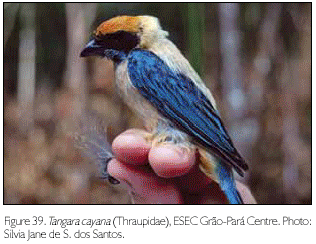
We recorded this species only at FLOTA Trombetas in 'terra-firme' forest edge and ESEC Grao-Para Centre in gallery forest and open 'cerrado', where two males (MPEG 66771 - 66772) and two females (MPEG 66773 - 66774) were collected (Figure 39; Appendix). Even though this species has been recorded before in the northeastern part of the CNP (Isler & Isler, 1999), our records indicate a more widespread distribution in this region than previously thought (Isler & Isler, 1999; InfoNatura, 2007).
]]>
Tersina viridis - Swallow Tanager
We recorded this species only in river-edge forest border at REBIO Maicuru and FLOTA Paru and in open 'cerrado' at ESEC Grao-Para Centre, where it was common and an immature male was collected (MPEG 66777; Appendix). This is the second CNP record, after that of Novaes (1980), extending signifcantly to the southeast the known distribution of T. viridis on the Guiana Shield (Isler & Isler, 1999; Restall et al., 2006; InfoNatura, 2007). Due to the preliminary nature ofthis study, it is impossible to know whether our and Novaes (1980) CNP records (all clustered between October and Late January) indicate a seasonal movement pattern for T. viridis in this part of the Guiana Shield, as verified in other parts of northern South America (Isler & Isler, 1999).
Dacnis albiventris - White-bellied Dacnis
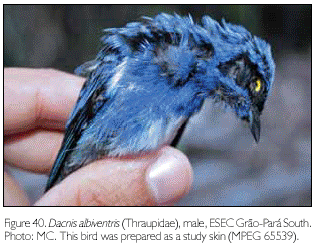
On 19 June 2008, AA shot an adult male (MPEG 65539) of this species after spotting it in a canopy mixed-species flocks in stunted forest atop hill at ca. 450 m in ESEC Grao-Para South (Figure 40; Appendix); other Thraupidae species such as dacnis (Dacnis spp.), honeycreepers (Chlorophanes spiza and Cyanerpes spp.), and Tangara spp. tanagers were in the same flock. This is the first CNP record for D. albiventris, extending significantly (over 1,000 km) to the east the known distribution of this species, thought previously to occur on the Guiana Shield only in southern Venezuela (Isler & Isler, 1999; Milensky et al., 2005; Restall et al., 2006). Our record reinforces the patchy and local nature of this species' distribution throughout the Amazon basin, apparently tied to stunted 'campina' patches (Isler & Isler, 1999; Restall et al., 2006).
Zonotrichia capensis - Rufous-collared Sparrow
We recorded this species only in open 'cerrado' at ESEC Grao-Para Centre, where one individual was tape-recorded and another collected (MPEG 66778). Our new record indicates a wider distribution in the CNP and the Guiana Shield as a whole than previously thought (Restall et al., 2006; InfoNatura, 2007).
Sporophila crassirostris/maximiliani - Great/Large-billed Seed-Finch
On 16 December 2008, the territorial song of an individual belonging either to Sporophila crassirostris or S. maximiliani was heard briefly at a d istance on the west bank of the Paru river at FLOTA Paru. The area where the bird was heard was covered by disturbed river-edge forest with tall grass along the river banks; the bird was probably singing from a nearby river island also covered by tall grass. Unfortunately, the bird was not tape-recorded to allow for an accurate species indentification. Both S. crassirostris and S. maximiliani have been recorded throughout the eastern part of the Guiana Shield (Milensky et al., 2005; infoNatura, 2007), thus rendering the distinction between them in the eastern part of the CNP even more complicated when specimens are lacking. in the neighbouring state of Amapá, where both species have been documented with specimens, S. crassirostris appears to be associated with 'cerrado', whereas S. maximiliani was collected only in marshy areas surrounded by forest (Novaes, 1978); similarly, Haverschmidt & Mees (1994) recorded only S. crassirostris in the savannas of southern Suriname. Therefore, if those species are truly seggregated by major habitat types in this part of the Guiana Shield, the FLOTA Paru record probably refers to S. maximiliani, regarded as endangered throughout Brazil (iBAMA, 2003) and locally in the state of Pará (SEMA, 2007). Future studies should seek to identify with certainty the local Great/Large seed-finch species occuring in the eastern part of the CNP as well as evaluate the true taxonomic and evolutionary independence between S. crassirostris and S. maximiliani.
Piranga rubra - Summer Tanager
On 30 January 2009, a young male was shot by AA in open 'cerrado' at ESEC Grão-Pará Centre (MPEG 66770); this specimen exhibits the typical more slender and light horn bill color distinguishing P. rubra from its congener Hepatic Tanager Piranga flava, which is also known to occur in the CNP and the Guiana Shield (isler & isler, 1999; Restall et al., 2006). A few days before, on 21 January 2009, a male Piranga tanager in full red plumage was spotted by AA in open 'cerrado' at ESEC Grão-Pará South, but at such a long distance that it prevented its specific identification with certainty. The specimen collected represents the first CNP record for Prubra, which is known to occur primarily along the coast in the Guianas, thus extending significantly the range of this boreal migrant inland on the Guiana Shield (isler & isler, 1999; Restall et al., 2006). Our record and those available in the literature (isler & isler, 1999; Restall et al., 2006) indicate that both Prubra and P flava may occur syntopically in 'cerrado' enclaves on the Guiana Shield at least during the boreal winter, thus underscoring the need of caution when identifying Piranga tanagers seen in this region.
Parula pitiayumi - Tropical Parula
We recorded this species only on ridgetops at ca. 500 m in ESEC Grão-Pará North, REBIO Maicuru, and FLOTA Paru; several individuals were tape-recorded at ESEC Grão-Pará North and REBIO Maicuru (Appendix). These are the first documented records for the CNP with previous nearest records coming from the Acary mountains in Guyana (Blake, 1950; Robbins et al., 2007), western Suriname (Restall et al., 2006), French Guiana and northern Amapá (Milensky et al., 2005; infoNatura, 2007). Our records extend significantly to the south the known distribution of P pitiayumi on the Guiana Shield, where it is found always at higher elevations, including isolated mountain ranges covered by forest.
]]> CONSERVATION IMPLICATIONS
Among all 446 species recorded by us throughout the five CNP conservation units sampled, 74 (16.6%) can be regarded as of special interest for conservation because of their status, i.e. threatened, endemic, rare, range-restricted, and persecuted by hunters (Appendix). Most (41) of those species are endemic to the Guiana Shield (Appendix), and represent 73.5% of the total number of endemics recognized for the Guiana area of endemism by stotz et al. (1996), thus underscoring the importance of the CNP conservation units sampled for the conservation of those species, which can only be preserved in this part of the world. twenty other species are patchily distributed, local, and rare in the Amazon, and therefore also require special attention (Appendix); some of them such as Crypturellus erythropus (tinamidae) and Tachyphonusphoenicius (thraupidae) are locally common, whereas others such as Phyllomyias griseiceps (tyrannidae) and Pachyramphus surinamus (tityridae) have been recorded at most sites sampled. Migratory and commonly hunted species account, respectively, for seven and five of the total species of special interest for conservation recorded (Appendix); except for Attila phoenicurus (tyrannidae), all migratory species observed were wintering north American migrants, thus showing the importance of the conservation units sampled for the preservation of birds well beyond the CNP and northern south America. only two of those species of special interest for conservation are regarded as threatened by the Brazilian federal goverment and the state of Pará, and therefore afford official protection status: Aratinga maculata (Psittacidae) and Sporophila crassirostris/maximiliani (Emberizidae); the CNP conservation units where populations of those two species have been recorded (FLOTA trombetas, ESEC Grão-Pará, and FLOTA Paru) are therefore of critical importance for the consolidation of management and recovery plans for them (Appendix). finally, Morphnus guianensis (Accipitridae) is regarded as near-threatened by iUCn (2010) and was recorded at most sites sampled (figure 2; Appendix).
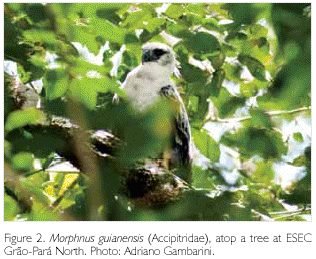
It is now clear that the conservation units surveyed harbor a large number of bird species, including a significant number of those of special conservation interest. this is mostly because the sampled conservation units are connected, and cover together over 13.2 million ha (Avila- Pires et al., 2010) within the least deforested sector of Brazilian Amazonia (fearnside, 2005; silva et al., 2005). farmers and cattle ranchers have remained conspicuously absent from most of the CNP, but this situation may change with the fast economic expansion and high number of development projects planned for the Brazilian Amazon (Allegretti, 2006; smeraldi, 2006). several new roads are planned for the CNP (Allegretti, 2006; smeraldi, 2006), where one of the largest bauxite deposits recorded to date has been discovered, mostly within ESEC Grão-Pará (the largest unit of the conservation mosaic; Avila-Pires et al., 2010), the limits of which now are being disputed (Milanez, 2009). ironically, bauxite deposits at ESEC Grão-Pará are clustered in its southern part, where they seem associated with table shaped ridges at altitudes around 500 m and the tops of which are covered by a mix of 'campina' and 'cerradão' (figure 46) and where a significant number of bird species of special conservation interest were found, namely Aratinga maculata (Psittacidae), Hemitriccus inornatus and Elaenia ruficeps (tyrannidae), Tachyphonus phoenicius, Tangara guttata, Tangara varia, and Dacnis albiventris (figures 38 and 40; thraupidae); in fact, the latter three species were recorded only on those ridge tops and are probably dependent on this habitat for survival (Appendix).
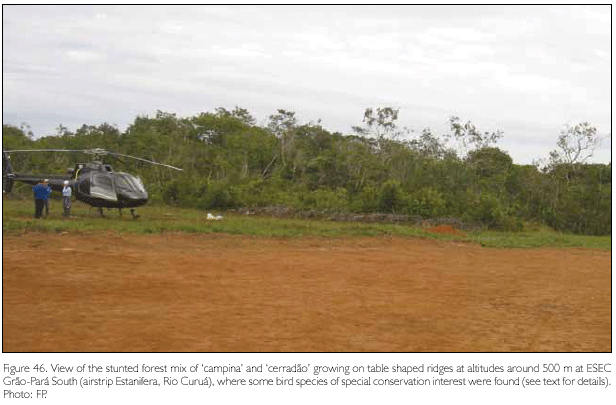
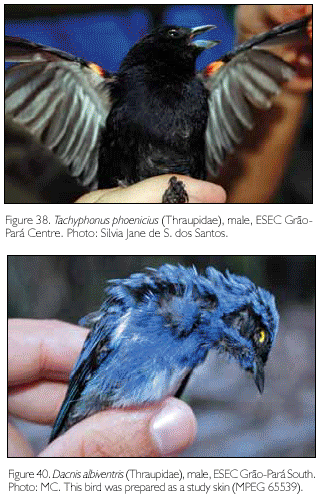
Because the original biota of the CNP is still nearly intact, future development plans for this part of Amazonia should take advantage of this unique oportunity so as not to repeat the same destructive approach towards the environment practiced in other parts of the state of Pará, which have resulted in many species currently being regarded as threatened (Albernaz & Avila-Pires, 2009). A decisive step in that direction is to take into account the unique attributes of the CNP biodiversity components, such as those for the birds reported above, when designing long-term sustainable development policies for this region.
CONCLUSIONS
Oren (2001) regarded the southern part of the Guiana shield (including the CNP) as one of the least sampled areas in the Brazilian Amazon. the results presented here have significantly improved the knowledge on the avifauna of this region, complementing studies already available for neighboring areas, namely the Brazilian states of Amapá (novaes, 1974, 1978) and roraima (naka et al., 2006), and the countries of Guyana, suriname, and french Guiana (tostain et al., 1992; Haverschmidt & Mees, 1994; Braun et al., 2000; Milensky et al., 2005; restall et al., 2006; Zyskowski et al., 2011). supporting this conclusion is the fact that out of the 446 species recorded during our surveys, 62 consisted of important range extensions for the Guiana shield, many of which were recorded for the first time in the CNP (see above).
Our annotated check-list also underscores the heterogeneous nature of the CNP landscape, where the composition and number of species recorded at each site varied significantly according to the local existence and steepness of altitudinal and vegetational (forest/'cerrado' and seasonally-flooded/upland forest) gradients (Appendix). the east/west break in the composition of the 'cerrado' avifauna on the Guiana shield discussed by Mittermeier et al. (2010) is also documented here for 'terra-firme' species, with the trombetas river apparently coinciding with this major avifaunal disjunction. We found a typical 'terra-firme' avifauna east of the trombetas river that included many Guiana shield endemics also restricted to suriname, french Guiana, and the Brazilian state of Amapá; on the other hand, most species recorded only west of this river are also found in Guyana, Venezuela, and the states of roraima and Amazonas in Brazil. Mittermeier et al. (2010) suggest that climatic-vegetational cycles creating a forest corrridor that once separated the Amapá/suriname and the Guyana/Venezuela/roraima savannas could have been responsible for the biogeographic break they documented for the 'cerrado' species. the fact that the 'terra-firme' break in species composition shown here coincided in location with that observed for 'cerrado' species suggest that other mechanisms such as geological events might probably be involved as well. future multidisciplinary work involving biogeographers, geologists, and paleoclimatologists should clarify the spatio-temporal events associated with this major east/west break in species composition documented for both 'cerrado' and 'terra-firme' avifaunas on the Guiana shield.
]]>ACKNOWLEDGMENTS
We dedicate this paper to the memory of Arlindo Pinto de souza Júnior who joined us on all trips to prepare mammal specimens; his sense of humor, charisma, and passion for natural history will be forever missed. We thank José nílton da silva santa Brígida for preparing most of the bird specimens collected during the surveys and Jucinaldo da silva ('Locutor') for deligently helping us set up and run mist-nets. We are also indebted to José Leite da silva ('Cumarú') for occasionally collecting interesting bird specimens. Conservação internacional (Ci-Brasil) financed research equipment and supplies, air travel from Belém to santarém and Boa Vista, the costs of the boat for the FLOTA faro expedition, subsistence costs of all expeditions, as well as salaries and stipends to all field workers and most researchers. As conditioned by the mining research license given by the secretaria de Estado de Meio Ambiente do Pará (sEMA-PA), rio tinto (exploring for bauxite in the area) covered all costs regarding logistics from santarém and Boa Vista to the campsites, and took care of opening up heliports, mounting and disassembling camps, flying in and out personnel, food and material, and removing all extraneous material from the campsites. sEMA-Pará also provided logistical and legal support, issuing the collecting permit used throughout this study (#001/2008). sidnei M. dantas helped with the cluster analysis in figure 45. two anonymous referees and the associate Editor made valuable suggestions to this paper. AA also thanks the Brazilian national research Council (CNPq) for a research fellowship (grant # 310593/2009-3) and 'instituto nacional de Ciência e tecnologia (inCt) em Biodiversidade e Uso da terra da Amazônia' (CNPq grant # 574008/2008-0) for support to his research. fP thanks 'rede Clima' for a research fellowship (CNPq grant # 371740/2009-6). MC expresses gratitude to Ci-Brasil for financial support during the project. EP thanks 'inCt em Biodiversidade e Uso da terra da Amazônia' for a research fellowship (CNPq grant # 383939/2009-7). LSM is supported by a Master's fellowship from CNPq (grant # 133320/2009-0).
REFERENCES
ALBERNAZ, A. L. K. M. & T. C. S. AVILA-PIRES, 2009. Espécies ameaçadas de extinção e áreas críticas para a biodiversidade no Pará: 1-54. Museu Paraense Emílio Goeldi and Conservation Internacional, Belém.
ALEIXO, A., 2009. Knowledge gaps, research priorities, and future perspectives on bird conservation in the Brazilian Amazon. In: A. C. DE LUCA, P. E. DEVELEY, G. A. BENCKE & J. M. GOERCK (Eds.): Áreas importantes para a conservação das aves no Brasil. Parte II - Amazônia, Cerrado e Pantanal: 55-69. SAVE Brasil, São Paulo.
ALLEGRETTI, R. F., 2006. Do Avança Brasil ao PPA de Lula: o que mudou do ponto de vista ambiental na agenda do desenvolvimento da Amazônia. Ciência & Ambiente 32: 15-34.
AVILA-PIRES, T. C. S., M. S. HOOGMOED & W. A. ROCHA, 2010. Notes on the Vertebrates of northern Pará, Brazil: a forgotten part of the Guiana Region, I. Herpetofauna. Boletim do Museu Paraense Emílio Goeldi. Ciências Naturais 5(1): 13-112.
BLAKE, E. R., 1950. Birds of the Acary Mountains southern British Guiana. Fieldiana: Zoology 32: 419-474.
BRAUN, M. J., D. W. FINCH, M. B. ROBBINS & B. K. SCHIMIDT, 2000. A field checklist of the birds of Guyana. Smithsonian Institution, Washington.
BRAUN, M. J., M. B. ROBBINS, C. M. MILENSKY, B. J. O'SHEA, B. R. BARBER, W. HINDS & W. S. PRINCE, 2003. New birds for Guyana from Mts. Roraima and Ayanganna. Bulletin of the British Ornithological Club 123(1): 24-33.
BROOKE, M. L., 2004. Oxyruncus cristatus. In: J. DEL HOYO, A. ELLIOT & D. CHRISTIE (Eds.): Handbook of Birds of the World: Cotingas to Pipits and Wagtails: v. 9: 73. Lynx Edicions, Barcelona.
CBRO, 2009. Comitê Brasileiro de Registros Ornitológicos. Lista das aves do Brasil. 8nd edition. Available at: <http://www.cbro.org.br/CBRO/listabr.htm>. Accessed on: 21 April 2010.
CLOCK, B. M., 2004. Hemitriccusinornatus. In: J. DEL HOYO, A. ELLIOT & D. CHRISTIE (Eds.): Handbook of Birds of the World: Cotingas to Pipits and Wagtails: v. 9: 324. Lynx Edicions, Barcelona.
COHN-HAFT, M., A. WHITTAKER & P. C. STOUFFER, 1997. A new look at the "species-poor" central Amazon: the avifauna north of Manaus, Brazil. Ornithological Monographs 48: 205-235.
COLLAR, N. J., 2005. Family Turdidae (thrushes). In: J. DEL HOYO, A. ELLIOT & D. CHRISTIE (Eds.): Handbook of Birds of the World: Cuckoo-shrikes to Thrushes: v. 10: 514-807. Lynx Edicions, Barcelona.
COLWELL, R. K., 2009. EstimateS: statistical estimation of species richness and shared species from samples. Version 8.2.0. Available at: <http://www.purl.oclc.org/estimates>. Accessed on: 21 April 2010.
CRACRAFT, J., 1985. Historical biogeography and patterns of differentiation within the South American avifauna: areas of endemism. Ornithological Monographs 36: 49-84.
FARNSWORTH, A. & D. J. LEBBIN, 2004a. Myiophobus fasciatus. In: J. DEL HOYO, A. ELLIOT & D. CHRISTIE (Eds.): Handbook of Birds of the World: Cotingas to Pipits and Wagtails: v. 9: 348. Lynx Edicions, Barcelona.
FARNSWORTH, A. & D. J. LEBBIN, 2004b. Contopus virens. In: J. DEL HOYO, A. ELLIOT & D. CHRISTIE (Eds.): Handbook of Birds of the World: Cotingas to Pipits and Wagtails: v. 9: 369. Lynx Edicions, Barcelona.
FARNSWORTH, A. & D. J. LEBBIN, 2004c. Contopus albogularis. In: J. DEL HOYO, A. ELLIOT & D. CHRISTIE (Eds.): Handbook of Birds of the World: Cotingas to Pipits and Wagtails: v. 9: 371. Lynx Edicions, Barcelona.
FEARNSIDE, P. M., 2005. Deforestation in Brazilian Amazonia: history, rates, and consequences. Conservation Biology 19(3): 680-688.
FITZPATRICK, J. W., 2004a. Leptopogon amaurocephalus. In: J. DEL HOYO, A. ELLIOT & D. CHRISTIE (Eds.): Handbook of Birds of the World: Cotingas to Pipits and Wagtails: v. 9: 307. Lynx Edicions, Barcelona.
FITZPATRICK, J. W., 2004b. Myiopagiscaniceps. In: J. DEL HOYO, A. ELLIOT & D. CHRISTIE (Eds.): Handbook of Birds of the World: Cotingas to Pipits and Wagtails: v. 9: 265. Lynx Edicions, Barcelona.
FITZPATRICK, J. W., 2004c. Myiopagisflavivertex. In: J. DEL HOYO, A. ELLIOT & D. CHRISTIE (Eds.): Handbook of Birds of the World: Cotingas to Pipits and Wagtails: v. 9: 266. Lynx Edicions, Barcelona.
FITZPATRICK, J. W., 2004d. Phylloscartes virescens. In: J. DEL HOYO, A. ELLIOT & D. CHRISTIE (Eds.): Handbook of Birds of the World: Cotingas to Pipits and Wagtails: v. 9: 300. Lynx Edicions, Barcelona.
FITZPATRICK, J. W., 2004e. Inezia subflava. In: J. DEL HOYO, A. ELLIOT & D. CHRISTIE (Eds.): Handbook of Birds of the World: Cotingas to Pipits and Wagtails: v. 9: 312. Lynx Edicions, Barcelona.
FORSHAW, J. M., 2006. Parrots of the World: An Identification Guide: 1-584. Princeton University Press, Princeton.
GIBBS, A. K. & C. N. BARRON, 1993. The geology of the Guiana Shield. Oxford University Press, New York.
GRISCOM, L. & J. C. GREENWAY JR., 1941. Birds of lower Amazonia. Bulletin of the Museum of Comparative Zoology 88(3): 83-344.
HAFFER, J., 1974. Avian speciation in tropical South America. With a systematic survey of the toucans (Ramphastidae) and jacamars (Galbulidae). Publications of the Nuttall Ornithological Club 14: 1-390.
HAMMER, O., D. A. T. HARPER & P. D. RYAN, 2001. PAST: Paleontological Statistics Software Package for Education and Data Analysis. Palaeontologia Electronica
HAVERSCHMIDT, F. & G. F. MEES, 1994. Birds of Suriname: 1-578. VACO Press, Paramaribo.
HERZOG, S. K., M. KESSLER & T. M. CAHILL, 2002. Estimating species richness of tropical bird communities from rapid assessment data. The Auk 119: 749-769.
HOSNER, P. A., 2004. Elaenia ruficeps. In: J. DEL HOYO, A. ELLIOT & D. CHRISTIE (Eds.): Handbook of Birds of the World: Cotingas to Pipits and Wagtails: v. 9: 272. Lynx Edicions, Barcelona.
IBAMA, 2003. Instituto Brasileiro do Meio Ambiente e dos Recursos Naturais Renováveis. Lista nacional da fauna brasileira ameaçada de extinção. Available at: <http://www.mma.gov.br/port/sbf/fauna/index.cfm>. Accessed on: 21 April 2010.
INFONATURA, 2007. Animals and Ecosystems of Latin America. Version 5.0. NatureServe. Arlington. Available at: <http://www.natureserve.org/infonatura>. Accessed on: 21 April 2010.
ISLER, M. L. & P. R. ISLER, 1999. The Tanagers: natural history, distribution and identification: 1-406. Smithsonian Institution, Washington.
ISLER, M. L., J. ALVAREZ ALONSO, P. R. ISLER & B. M. WHITNEY, 2001. A review of the Percnostola rufifrons complex (Passeriformes: Thamnophilidae) with description of a new species from northern Amazonian Peru. The Wilson Bulletin 113(2): 164-176.
IUCN, 2010. International Union for Conservation of Nature. IUCN Red List of Threatened Species. Available at: <http://www.redlist.org/>. Accessed on: 21 April 2010.
JOSEPH, L., 2004. Myiarchus tyrannulus. In: J. DEL HOYO, A. ELLIOT & D. CHRISTIE (Eds.): Handbook of Birds of the World: Cotingas to Pipits and Wagtails: v. 9: 438. Lynx Edicions, Barcelona.
MARANTZ, C. A., A. ALEIXO, A. L. BEVIER & M. A. PATTEN, 2003. Family Dendrocolaptidae (woodcreepers). In: J. DEL HOYO, A. ELLIOT & D. CHRISTIE (Eds.): Handbook of Birds of the World: Broadbills to Tapaculos: v. 8: 358-447. Lynx Edicions, Barcelona.
MILANEZ, F., 2009. A outra margem do rio. National Geographic Magazine 114: 44-61.
MILENSKY, C. M., H. WILTSHIRE, A. ALEIXO & M. E. C. LIMA, 2005. Birds. In: T. HOLLOWELL & R. P. REYNOLDS (Eds.): Checklist of the Terrestrial Vertebrates of the Guiana Shield. Bulletin of the Biological Society of Washington (13): 43-73.
MITTERMEIER, J. C., K. ZYSKOWSKI, E. S. STOWE & J. E. LAI, 2010. Avifauna of the Sipaliwini savanna (Suriname) with insights into its biogeographic affinities. Bulletin of the Peabody Museum of Natural History 51(1): 97-122.
MOBLEY, J. A., 2004. Pachyramphus viridis. In: J. DEL HOYO, A. ELLIOT & D. CHRISTIE (Eds.): Handbook of Birds of the World: Cotingas to Pipits and Wagtails: v. 9: 453. Lynx Edicions, Barcelona.
MORITZ, C., J. L. PATTON, C. J. SCHNEIDER & T. B. SMITH, 2000. Diversification of rainforest faunas: An integrated molecular approach. Annual Review of Ecology and Systematics 31: 533-563.
NAKA, L. N., M. COHN-HAFT, F. MALLET-RODRIGUES, M. P. D. SANTOS & M. E. TORRES, 2006. The avifauna ofthe Brazilian state of Roraima: bird distribution and biogeography in the Rio Branco basin. Revista Brasileira de Ornitologia 14(3): 197-238.
NEMÉSIO, A. & C. RASMUSSEN, 2009. The rediscovery of Buffon's "Guarouba"or "Perriche jaune": two senior synonyms of Aratinga pintoi Silveira, Lima & Höfling, 2005 (Aves: Psittaciformes). Zootaxa 2013: 1-16.
NOVAES, E. C., 1974. Ornitologia do Território do Amapá I. Publicações Avulsas do Museu Paraense Emílio Goeldi 25: 1-121.
NOVAES, E. C., 1978. Ornitologia do Território do Amapá II. Publicações Avulsas do Museu Paraense Emílio Goeldi 29: 1-75.
NOVAES, E. C., 1980. Observações sobre a avifauna do alto curso do Rio Paru do Leste, Estado do Pará. Boletim do Museu Paraense Emílio Goeldi, série Zoologia 100: 1-58.
OREN, D. C., 2001. Biogeografia e conservação de aves na região amazônica. In: J. P CAPOBIANCO, A. VERÍSSIMO, A. L. MOREIRA, D. SAWYER, I. SANTOS & L. P S. PINTO (Eds.): Biodiversidade na Amazônia brasileira: avaliação e ações prioritárias para a conservação, uso sustentável e repartição de benefícios: 97-109. Instituto Socioambiental, São Paulo.
PACHECO, J. E. & E. OLMOS, 2006. As aves do Tocantins 1: região sudeste. Revista Brasileira de Ornitologia 14: 55-71.
REMSEN JR., J. V., 2003. Eamily Eurnariidae (ovenbirds). In: J. DEL HOYO, A. ELLIOT & D. CHRISTIE (Eds.): Handbook of Birds of the World: Broadbills to Tapaculos: v. 8: 162-357. Lynx Edicions, Barcelona.
REMSEN JR., J. V., C. D. CADENA, A. JARAMILLO, M. NORES, J. E. PACHECO, M. B. ROBBINS, T. S. SCHULENBERG, E. G. STILES, D. F. STOTZ & K. J. ZIMMER, 2010. A classification of the bird species of South America. American Ornithologists' Union. Available at: <http://www.museum.lsu.edu/~Remsen/ SACCBaseline.html>. Accessed on: 21 April 2010.
RESTALL, R., C. RODNER & M. LENTINO, 2006. Birds of Northern South America: An Identification Guide. v. 1: 1-880. Yale University Press, New Haven and London.
RIDGELY, R. S. & G. TUDOR, 1994. The birds of South America. v. 2: 1-814. University of Texas Press, Austin.
ROBBINS, M. B. & T. A. PARKER III, 1997. Voice and taxonomy of Caprimulgus (rufus) otiosus (Caprimulgidae), with a reevaluation of Caprimulgus rufus subspecies. Ornithological Monographs 48: 601-607.
ROBBINS, M. B., M. J. BRAUN & D. W. FINCH, 2004. Avifauna of the Guyana southern Rupununi, with comparisons to other savannas of northern South America. Ornitologia Neotropical 15: 173-200.
ROBBINS, M. B., M. J. BRAUN, C. M. MILENSKY, B. K. SCHMIDT, W. PRINCE, N. H. RICE, D. W. FINCH & B. J. O'SHEA, 2007. Avifauna of the upper Essequibo river and Acary mountains, Southern Guyana. Ornitologia Neotropical 18(3): 339-368.
ROBINSON, S. K. & J. TERBORGH, 1997. Bird community dynamics along primary sucessional gradients of an Amazonian whitewater river. Ornithological Monographs 48: 641-672.
SCHUCHMANN, K.-L., 1999. Family Trochilidae (Hummingbirds). In: J. DEL HOYO, A. ELLIOT & D. CHRISTIE (Eds.): Handbook of Birds of the World: Barn-owls to Hummingbirds: v. 5: 468-680. Lynx Edicions, Barcelona.
SEMA, 2007. Secretaria de Estado de Meio Ambiente. Lista de espécies da flora e da fauna ameaçadas no Estado do Pará. Available at: <http://www.sema.pa.gov.br/resolucoes_detalhes. php?idresolucao=54>. Accessed on: 21 April 2010.
SILVA, J. M. C., 1995. Birds of the cerrado region, South America. Steenstrupia21(2): 69-92.
SILVA, J. M. C., A. B. RYLANDS & G. A. B. FONSECA, 2005. The fate of the Amazonian areas of endemism. Conservation Biology 19(3): 689-694.
SILVEIRA, L. F., F. C. T. LIMA & E. HÖFLING, 2005. A new species of Aratinga parakeet (Psittaciformes: Psittacidae) from Brazil, with taxonomic remarks on the Aratinga solstitialis complex. The Auk 122(1): 292-305.
SMERALDI, R., 2006. PPA 2004-2007 e obras de infraestrutura na Amazônia. Ciência & Ambiente 32: 35-44.
SNOW, D. W., 2004a. Family Pipridae (manakins). In: J. DEL HOYO, A. ELLIOT & D. CHRISTIE (Eds.): Handbook of Birds of the World: Cotingas to Pipits and Wagtails: v. 9: 110-169. Lynx Edicions, Barcelona.
SNOW, D. W., 2004b. hdopleura fusca. In: J. DEL HOYO, A. ELLIOT & D. CHRISTIE (Eds.): Handbook of Birds of the World: Cotingas to Pipits and Wagtails: v. 9: 87. Lynx Edicions, Barcelona.
STOTZ, D. F., J. W. FITZPATRJCK, T. A. PARKER III & D. K. MOSKOVITS, 1996. Neotropical birds: Ecology and Conservation. The University of Chicago Press, Chicago.
TOSTAIN, O., J.-L. DUJARDIN, C. H. ÉRARD & J.-M. THIOLLAY, 1992. Oiseaux de Guyane: 1-222. Société d'Études Ornithologiques, Brunoy.
WALTHER, B. A., 2004. Attila phoenicurus. In: J. DEL HOYO, A. ELLIOT & D. CHRISTIE (Eds.): Handbook of Birds of the World: Cotingas to Pipits and Wagtails: v. 9: 444. Lynx Edicions, Barcelona.
ZIMMER, K. J. & A. WHITTAKER, 2000. Species limits in Pale-tipped Tyrannulets (Inezia: Tyrannidae). The Wilson Bulletin 112(1): 51-66.
ZIMMER, K. J. & M. L. ISLER, 2003. Family Thamnophilidae (typical antbirds). In: J. DEL HOYO, A. ELLIOT & D. CHRISTIE (Eds.): Handbook of Birds of the World. Broadbills to Tapaculos: v. 8: 448-681. Lynx Edicions, Barcelona.
ZYSKOWSKI, K., J. C. MITTERMEIER, O. OTTEMA, M. RAKOVIC, B. J. O'SHEA, J. E. LAI, S. B. HOCHGRAF, J. DE LEÓN & K. AU, 2011. vifauna of the easternmost tepui, Tafelberg in central Suriname. Bulletin of the Peabody Museum of Natural History, Yale University 52(1): 153-180.
 Autor para correspondência: ]]>
Alexandre Aleixo.
Autor para correspondência: ]]>
Alexandre Aleixo.
Museu Paraense Emílio Goeldi.
Coordenação de Zoologia.
Av. Perimetral, 1901 - Terra Fime.
Belém, PA, Brasil. CEP 66040-170
(aleixo@museu-goeldi.br).
Recebido em 15/05/2010
Aprovado 10/03/2011
Responsabilidade editorial: Marinus Hoogmoed
]]>