
ORIGINAL ARTICLE | ARTIGO ORIGINAL | ARTÍCULO ORIGINAL
Identification of rotavirus G and P genotypes in nursing and weaned piglets in the metropolitan region of Belém, Pará State, Northern Brazil
Identificação de genotipos G e P de rotavirus em leitões em fase de amamentação e desmamados na região metropolitana de Belém, Estado do Pará, Região Norte do Brasil
Identificación de genotipos G y P de rotavirus en lechones en fase de amamantamiento y destetados en la región metropolitana de Belém, Estado de Pará, Región Norte de Brasil
]]> Daniel Stangarlin de CamargoI; Jane Cecília Silveira de MatosI; Sylvia de Fátima dos Santos GuerraI; Luana da Silva SoaresII; Alessilva do Socorro Lima de OliveiraI; Darleise de Souza OliveiraII; Yvone Benchimol GabbayII; Alexandre Costa LinharesII; Joana D'Arc Pereira MascarenhasII
INúcleo de Medicina Tropical, Universidade Federal do Pará, Belém, Pará, Brasil
IISeção de Virologia, Instituto Evandro Chagas/SVS/MS, Ananindeua, Pará, Brasil
Correspondence
Endereço para correspondência
Dirección para correspondencia
ABSTRACT
Rotaviruses are an important agent of diarrhea in piglets, primarily during nursing and post-weaning with severity. The aim of this study was to identify rotavirus G and P genotypes obtained from piglets reared at five piggeries in Belém, Pará State, Northern Brazil. Fecal specimens were collected from nursing and weaned piglets. A total of 172 samples were tested, of which 17 (9.9%) were positive for group A rotaviruses all of them from piglets kept at nursing and then were sequenced for the of VP7 and VP4 genotyping. The consistency of positive fecal samples were 53% (9/17) diarrheic, 23.5% (4/17) pasty and 23.5% (4/17) normal. The most common G genotype was G3 representing 53% (9/17), followed by G5 genotype (17%, 3/17). The P genotype recorded was P[23] corresponding to 23.5% (4/17). This study showed that rotaviruses circulated in swine herds in the metropolitan region of Belém, in Northern region. G3P[23] combination was recorded for the first time in Brazil.
]]> Keywords: Rotavirus; Piglets, Weaning; Herds, G3P[23] genotype.RESUMO
Os rotavírus são um importante agente de diarreia em leitões, principalmente durante a amamentação e pós-desmame com gravidade. O objetivo deste estudo foi identificar os genótipos G e P de rotavírus obtidos de leitões de cinco criadouros em Belém, Estado do Pará, Norte do Brasil. Espécimes fecais foram coletados de leitões em fase de amamentação e desmamados. Foi testado um total de 172 amostras, das quais 17 (9,9%) foram positivas para rotavírus do grupo A, a partir de leitões amamentados e, em seguida, foram sequenciadas pela genotipagem do VP7 e VP4. A consistência das amostras de fezes positivas foi de 53% (9/17) diarreico, 23,5% (4/17) pastosa e 23,5% (4/17) normal. O genótipo G mais comum foi o G3 com 53% (9/17), seguido pelo genótipo G5 (17%, 3/17). O genótipo P registrado foi de P[23] que corresponde a 23,5% (4/17). Este estudo mostrou a circulação dos rotavírus em rebanhos suínos na região metropolitana de Belém, na Região Norte. A combinação de G3P[23] foi registrada pela primeira vez no Brasil.
Palavras-chave: Rotavirus; Leitões Desmamados; Rebanhos e genótipo G3P[23].
RESUMEN
Los rotavirus son un importante agente de diarrea en lechones, principalmente durante el amamantamiento y el pos destete con gravedad. El objetivo de este estudio fue el de identificar los genotipos G y P de rotavirus obtenidos de lechones de cinco criaderos en Belém, Estado de Pará, Norte de Brasil. Fueron colectados especímenes fecales de lechones en fase de amamantamiento y destetados. Se hicieron pruebas a un total de 172 muestras, de las cuales 17 (9,9%) fueron positivas para rotavirus del grupo A, a partir de lechones amamantados y, enseguida, se secuenciaron por el genotipado del VP7 y VP4. La consistencia de las muestras de heces positivas fue de 53% (9/17) diarreico, 23,5% (4/17) pastoso y 23,5% (4/17) normal. El genotipo G más común fue el G3 con 53% (9/17), seguido por el genotipo G5 (17%, 3/17). El genotipo P registrado fue de P[23] que corresponde a 23,5% (4/17). Este estudio mostró la circulación de los rotavirus en rebaños porcinos en la región metropolitana de Belém, en la Región Norte. La combinación de G3P[23] se registró por primera vez en Brasil.
Palabras clave: Rotavirus; Lechones Destetados; Rebaños y genotipo G3P[23].
INTRODUCTION
]]> Enteric illness is the major cause of mortality in weaned and post-weaned piglets and diarrhea is the main clinical symptom in infected animals, with economic losses considerably stronger for the producer1. Multifactorial disease and virus are the most common illnesses that pig herds tend to have, causing immune depression, and resulting in high morbidity and mortality2. A number of different agents can cause diarrhea in growing pigs, including Brachyspira spp., Campylobacter spp., Clostridium perfringens type A, enterotoxigenic lineages of Escherichia coli, Lawsonia intracellularis, Salmonella spp., Yersinia spp., Coronavirus, Rotavirus, Norovirus, Sapovirus, Calicivirus, Isospora suis, and Trichuris suis3,4,5,6,7.Rotaviruses are an important (primary or secondary) cause of diarrhea in weaned and post-weaned piglets, contributing (or predisposing animals) to outbreaks of enteric diseases, with knock-on effects for the whole herd. Mortality in piglets in the weaning and post-weaning phases during rotavirus outbreaks may be as high as 10%8. These viruses can induce neonatal diarrhea, causing dehydration, stress, weight loss, develop mental retardation and loss of earnings, predisposition to other illnesses, and death3.
In Southern Brazil, estimates of the prevalence of rotaviruses in piglets herds affected by frequent episodes of gastroenteritis ranged from 20.5% to 90%9. In addition to their effects on these farm animals, a number of studies have indicated that porcine rotavirus may constitute a potential source of interspecies transmission involving humans10,11,12,13.
Rotaviruses belong to the Rotavirus genus, which is a member of the Reoviridae family. These viruses measure approximately 70 nm, they have icosahedral symmetry, non-enveloped surrounded by a double-shelled capsid with three layers: Core, enclosing 11 double-stranded (ds) RNA segments; middle layer (VP6) and outer layer (VP7 and VP4). The inner shell consists of VP6 and the outer shell is composed of VP4 and VP7, which are independent neutralization antigens. They are classified in serogroups based on the serological cross-reactivity of VP6 protein or migration pattern of the genomic segments by polyacrylamide gel electrophoresis (electropherotype). Eight groups are recognized, and are denominated A to H. Group A, B, and C rotaviruses have been associated with diseases in humans and animals14,15,16. Groups D to G have been detected only in animals and recently the group H was associated with infection in humans16,17. The two outer capsid proteins, VP4 and VP7, which independently elicit neutralizing antibodies and induce protective immunity thus rotavirus strains were classified as P (for protease-sensitive) and G (for glycoprotein) genotypes. So far, 27 G and 37 P genotypes have been identified in humans and animals. More recently, novel VP7 genotypes were discovered (G20-G27), VP4 (P[28]-P[37]), VP6 (I12-I16), and other animals have been identified with RV strains like South american camelids (guanaco and vicuna)18,19.
Twelve G genotypes (G1 to G6, G8 to G12, and G26) and 13 P genotypes (P[1], P[5] to P[8], P[11], P[13], P[19], P[23], P[26], P[27], P[32], and P[34]) have been associated with pigs18,20,21,22. The most common G genotypes identified in swine are G3, G4, G5, and G11 associated with P[6] and P[7]23.
The porcine group A rotaviruses (PoRV-A) cause endemic or epidemic enteritis in nursing and weaned piglets, and are a major reservoir of genetic material for the diversification of human RV-A22. There are some indirect evidences that PoRV-A are able to cross the interspecies barrier and infect humans and other domesticated animals24,25,26. Data accumulation on genetic heterogeneity of porcine rotaviruses will be fundamental to identify uncommon human strains22.
The aim of this study was to identify rotavirus G and P genotypes obtained from piglets reared at five places in the metropolitan region of Belém, in Northern Brazil.
MATERIALS AND METHODS
STUDY AREA
]]> Samples were collected from five piggeries in the metropolitan region of Belém, Pará State. The present study was approved by the Animal Research Ethics Committee (CEPAN) of Instituto Evandro Chagas under registration number 0022/2008. Fecal samples were collected from at least 30% of the piglets in each herd. None of the piglets were vaccinated against rotaviruses. Samples were obtained from animals of two age groups - nursing (0-28 days) and weaning (29-56 days).The piggeries analyzed in the present study were located in different areas from metropolitan region of Belém, and each one presented specific characteristics. Piggery 1 is located in a rural university in the urban area. Piggery 2 is on the suburb of the urban area, in a federal rural institution. Piggery 3 is on a farm in a rural zone where the installations are in a satisfactory condition: a large space between pigs allocation, a designed area arranged the animals by age, proper food and hygiene practices to get an intensive swine production, vaccines and supplementary medicines according to the Brazilian laws. In that farm there was a close contact between animals and humans. Piggery 4 is also located in the rural zone, presented the worst conditions of hygiene. Piggery 5 is located in another rural college, has the best installations and hygiene.
SAMPLES
The fecal samples were collected by anal stimulation using a silicone urethral sound - size number 10 (Mark Med, Bragança Paulista, Brazil) lubricated with vaseline, which was used for anal massage, following the procedure described by Kroeff9. The samples were placed in a sterile container without device for conservation. The vial was kept in a styrofoam-box with ice until being received at laboratory. The consistency of the feces was determined in one of these three categories - diarrheic, pasty or normal. The samples were collected between April, 2008, and May, 2009, and each farm was visited twice during that period. Fecal specimens were collected from a number of other domestic animals (goats and poultry).
IMMUNOCHROMATOGRAPHY
The fecal samples were screened for human RV-A using an immunochromatography kit (Rota-Strip, BioConcept, Belgium) according to the protocol specified by the manufacturing company.
VIRAL NUCLEIC ACID EXTRACTION AND POLYACRYLAMIDE GEL ELECTROPHORESIS (PAGE)
The suspensions were prepared in 20% Tris/Ca++ and clarified by centrifugation at 10,500 X g for 20 min at 4o C. The supernatant was retrieved for the extraction of nucleic acid (dsRNA), which was obtained by using the technique described by Boom et al27. Then the rotavirus groups were identified using PAGE8,9.
DETERMINATION OF THE G AND P ROTAVIRUS GENOTYPES BY NUCLEOTIDE SEQUENCING
The RV-A were amplified by RT-PCR using specific primers for the VP4 and VP7 genes. The primer sets were Con2/Con328 and Beg 9/End 929. Reverse transcription was conducted with SuperScriptTM (Invitrogen, Carlsbad, CA), and recombinant Taq DNA polymerase (Invitrogen) was used to amplify the cDNA, resulting in sequences of 876 bp and 1,062 bp, corresponding to genes encoding the VP4 and VP7 proteins, respectively. All PCR products were purified using a QIAquick® PCR purification kit (Qiagen, Hilden, Germany).
]]> The PCR products were purified, resuspended in formamide and sequenced automatically using the same primers as in RT-PCR. Sequencing was carried out by the dideoxynucleotide chain termination method on an ABI Prism 3100 automatic sequencer (Applied Biosystems, Foster City, USA), using the ABI Prism Big Dye Terminator cycle sequencing Ready Reaction Kit (Applied Biosystems). The sequences obtained for the VP4 and VP7 genes were assembled and analyzed with the BioEdit Sequence Alignment Editor (version 7.2.5). Phylogenetic analysis was performed in MEGA (version 6.0.6). Distances between sequences were analyzed using the neighbor-joining algorithm based on the Kimura two-parameter distance method to estimate the number of nucleotides30. The second approach was the maximum parsimony method with heuristic or branch-and-bound searches. Bootstrap resampling (over 1,000 replicates) was performed for the neighbor-joining analyses of the sequences of both genes. Comparative analyses with the prototype strains for the VP4 and VP7 genes were conducted out using the GenBank at the National Center for Biotechnology Information, USA (www.ncbi.nlm.nih.gov), by using BLAST and nucleotide searches.NUCLEOTIDE SEQUENCE ACCESSION NUMBERS
The nucleotide sequence data reported in this paper were submitted to GenBank with the following accession numbers (VP7 gene): JX103948, JX103949, JX103950, JX103951, JX103952, JX103953, JX103954, JX103955, JX103956, JX103957, JX103958, and JX103959, and (VP4 gene) JX103944, JX103945, JX103946 and JX103947.
RESULTS
DETECTION OF ROTAVIRUSES
A total of 172 fecal samples were collected from the piglets of five sample herds, which 17 (9.9%) were positive for rotaviruses in immunochromatography and PAGE techniques (Table 1). All positives samples showed long electropherotype pattern, came from piggery 5 and collected in two different periods from nursing piglets (< 30 days of age) fed on gilt's milk.
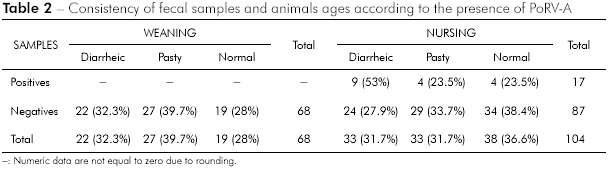
Most of the samples (93/172; 54.7%) were diarrheic in consistency, while just over a quarter (49/172; 27.9%) was normal, and the remainder (30/172; 17.4%), pasty. The consistency of the positive samples followed virtually the same pattern, with 53% diarrheic (9/17), 23.5% (4/17) pasty, and the same proportion to normal consistency (Table 2). The most common symptoms presented by the positive piglets were fever and prostration. Nine samples were obtained from other animals (eight goats at piggery 5 and a chicken from site 3), although PoRV-A was not detected in any of these specimens.
GENOTYPING OF POSITIVE NUCLEOTIDE SEQUENCING SAMPLES BY NUCLEOTIDE SEQUENCING
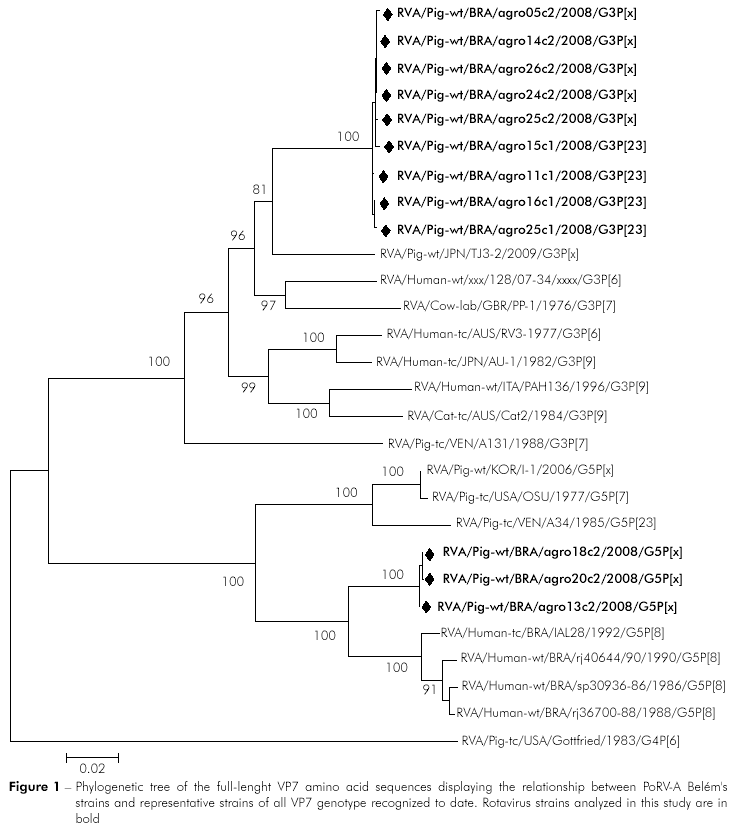
Twelve of the seventeen positive samples (70.5%) yielded an adequate amplicon for G genotype sequencing. Based on these sequences, the most frequent genotype was G3, that accounted for 53% (9/17) of the positive isolates and had amino acid sequences 96.4% to 96.5% similar to TJ3-2 strain, a G3 type PoRV-A found in Japanese pigs31. The remainder of these positive samples (3/17; 17%) presented G5 genotype, and VP7 analysis revealed a 96.9% amino acid sequence similar to the human G5 strain IAL-28, and a 96.5% match with the rj40644/90 strain, a second human G5 strain found in Brazil (Figure 1).
]]>
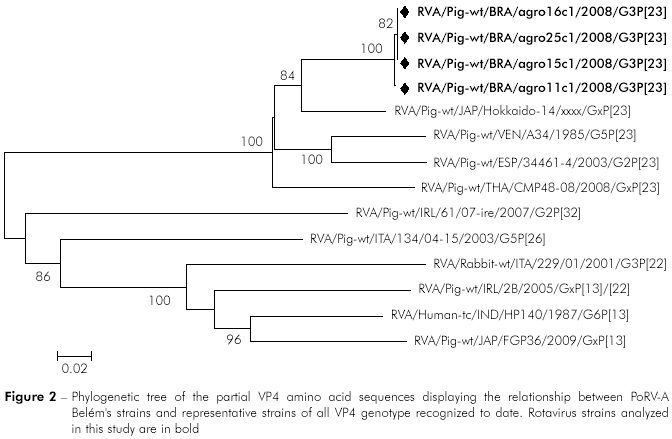
With regards to the VP4 gene, it was identified P[23] genotype in four positive samples (4/17; 23.5%) with amino acid sequences most closely related (95.9-96.5%) to the Hokkaido-14 strain (Japan), also found in pigs (Figure 2). In the remainder of samples (13/17; 76.5%) it was not possible to determine the VP4 gene sequence due to inadequate amplicon. Of note, further studies will be carried out aiming to identify the untyped genotypes. All four (23.5%) samples were G3P[23] combination.
DISCUSSION
It was the first study conducted in Northern Brazil about swine where the occurrence of rotaviruses was confirmed with an infection rate of 9.9%. In Southern Brazil, Kroeff9 has recovered PoRV-A from 35.3% of the nursing/weaning piglets sampled. This comparatively high infection rate was found even with the best management and hygiene conditions, and productivity in compared to the facilities analyzed in the present study. The low rate of infection with PoRV-A (9.9%) recorded in this study could be related to the hot weather, management practices or, probably, the small number of piggeries sampled.
In Southern and Southeastern Brazil, an extensive study of nursing piglets recorded a prevalence of 28.3% PoRV-A in stool with normal to diarrheic consistency (81.3% diarrheic)32. Gatti et al1 also found a high rate of PoRV-A (84.6%) in diarrheic episodes. Alfieri et al33 observed PoRV-A in 96.5% of diarrheic pigs. The consistency of the fecal samples collected during the present study varied from normal (23.5%) to pasty (23.5%), although most of the samples (52.3%) were diarrheic ones.
]]> Jacobson et al3 detected symptoms such as diarrhea, vomiting, dehydration, and anorexia in pigs infected naturally by PoRV-A. The main symptoms presented by piglets from Belém were diarrhea, fever, prostration, anorexia and dehydration, but vomiting was not observed.In Venezuela, Liprandi et al34 found PoRV-A in 4-6 week old piglets. In Denmark, PoRV-A was predominant in 60% of 4-week old piglets35. Alfieri et al33 demonstrated that porcine rotaviruses are amply distributed in Brazilian swine herds of 3-5 weeks of age. A similar pattern was observed in the present study with PoRV-A recorded in piglets of 0-4 weeks of age. The mother's milk plays an important role in protecting the piglet against infections such as rotaviruses, which tend to occur at higher rates in weaned piglets33,34,36.
In Ireland, Collins et al22 identified PoRV-A in 6.5% of asymptomatic piglets (no diarrhea) of over 4 weeks of age and Lorenzetti et al37 recorded an outbreak of PoRV-A in piglets of suckling and weaned ages in a vaccinated herd, with a frequency of 27.3% from asymptomatic individuals. Asymptomatic pigs of this study represented 23.5% of positive samples and 2.32% of the total samples, there was no significant difference (p = 0.41) when it compared rates of PoRV-A frequency between asymptomatic or symptomatic pigs. Age differences should also be taken into account, however, because the animals may develop PoRV-A antibodies as they age, so symptoms such as diarrhea may be less frequent in older animals.
Miyazaki et al38 have reported outbreaks of PoRV-A in a large farrow-to-finish piggery in Japan during 2009 and 2010. P[23] genotype occurred at a higher rate (61.5%) when comparing with the present study (23.5%). In the case of G genotypes, G3 - the most common in Belém (53%) - was recorded in only 13.3% of the cases from Japan, while G5 was recorded only once (6.6%). While P[23] genotype was combined with G3 was in this study, all the cases of P[23] from Japan were combined with G9 which was not recorded in the present study. In China, a rare P[23] genotype was also found in association with G9 in 2008, showing a high degree of nucleotide homology (98.4%) when compared with Brazilian PoRV-A strains (data not shown)31.
Lorenzetti et al37 registered an outbreak of PoRV-A in suckling and weaned piglets from a vaccinated pig herd against G4 and G5 genotypes. The frequency of infection was 72.7% in diarrheic samples and 27.3% in those of asymptomatic piglets. The main P genotype was P[6], which is of human origin. While the vaccine protected against the principal symptoms of the rotaviruses, considerable antigenic diversity of P[6] may reduced the vaccine effectiveness. This effect can be associated with immune pressure produced by developing of mass vaccination and not specifically to failure vaccination39. The piglets in the present study in Belém were infected by G3P[23] and G5[not typed] genotypes and did not receive the rotavirus vaccine for animals. As in the study of Lorenzetti et al37, the positive cases recorded in the present study were collected from asymptomatic animals.
In Southern and Southeastern Brazil several studies have shown the diversity PoRV-A genotype which are relatively common in pigs. Barreiros et al40 isolated G3P[7] and G5P[7] strains. Rácz et al41 identified the G3, G4, G5, P[6], and P[7] types. Gregori et al42 reported the G5P[6] genotype as the most frequent type and Kroeff9 recorded G5, G3, G4, G10 and G9 strains. While G9 was not recorded in studies from Belém, G3 and G5 were found to be common genotypes in piglets. The P[6] genotype was predominant in all the studies from Southern Brazil9,35,42. Tonietti et al43 related the first detection of P[23] genotype in Brazil associated with G5 in samples that were collected in 2011, however P[23] genotype of this present study were collected in 2008, showing that this P-type has circulated before in Northern Region, furthermore this is the first reported case of G3P[23] combination in Brazil.
The phylogenetic analysis of the full amino acid sequences of the VP7 genes of the three G5 samples identified in the present study clustered closely (96.5-96.9% similarity) with the human IAL-28 and rj40644/90 strains44,45. The amino acid sequences of the nine G3 samples were also very close (96.4-96.5%) to the TJ3-2 strain found in Japanese pigs.
Four of the five piggeries investigated in the present study in Belém were in a technically satisfactory conditions and the only positive test results were obtained from these conditions of rearing pigs. The distances between the sampled places (or in any other place) in this present study, probably did not have influence in the results. Vaccination of piglets and gilts is the most effective way of protecting those animals against rotavirus because gilts can produce antibodies should pass on to the piglets by the colostrums46. Dewey et al2 has reported that changes in management practices, such as the expansion of the installations, early weaning, and all-in all-out production, modified the frequency of PoRV-A in a herd in Ontario, Canada. Other factors may contribute to an increased incidence of rotaviruses, such as low relative humidity, high population density, and the density of primiparous females35.
CONCLUSION
]]> This study showed the circulation of rotaviruses in swine herds in the metropolitan region of Belém, in Northern Region, and to our knowledge. G3P[23] combination was recorded for the first time in Brazil.
FINANCIAL SUPPORT
Daniel Stangarlin de Camargo, Luana da Silva Soares, Darivaldo da Luz Neri, Regis Piloni Maestri, and Alessilva do Socorro Oliveira received a grant from the Brazilian National Counsil of Technological and Scientific Development (Conselho Nacional de Desenvolvimento Científico e Tecnológico - CNPq). Jane Cecília Silveira de Matos and Sylvia de Fátima dos Santos Guerra received fellowships from the Brazilian Coordination for the Improvement of Higher Level Personnel (Coordenação de Aperfeiçoamento de Pessoal de Nível Superior - CAPES).
REFERENCES
1 Gatti MS, Hara NH, Ferraz MM, Castro AFP. Presence of group A and non-A rotaviruses in neonatal piglets in Campinas, SP, Brazil. Med Microbiol Immunol.1989;178(6):347-9. Doi: 10.1007/BF00197453 [Link]
2 Dewey C, Carman S, Pasma T, Josephson G, McEwen B. Relationship between group A porcine rotavirus and management practices in swine herds in Ontario. Can Vet J. 2003 Aug;44(8):649-53.[Link]
3 Jacobson M, Hard af Segerstad C, Gunnarsson A, Fellström C, Verdier Klingenberg K, Wallgren P, et al. Diarrhoea in the growing pig - a comparison of clinical, morphological and microbial findings between animals from good and poor performance herds. Res Vet Sci. 2003 Apr;74(2):163-9. Doi: 10.1016/S0034-5288(02)00187-X [Link]
4 Barry AF, Alfieri AF, Alfieri AA. High genetic diversity in RdRp gene of Brazilian porcine sapovirus strains. Vet Microbiol. 2008 Sep;131(1-2):185-91. Doi: 10.1016/j.vetmic.2008.02.021 [Link]
]]> 5 Martella V, Banyai K, Lorusso E, Bellacicco AL, Decaro N, Mari V, et al. Genetic heterogeneity of porcine enteric caliciviruses identified from diarrhoeic piglets. Virus Genes. 2008 Apr;36(2):365-73. Doi: 10.1007/s11262-008-0198-0 [Link]6 Shen Q, Zhang W, Yang S, Cui L, Hua X. Complete genome sequence of a new-genotype porcine norovirus isolated from piglets with diarrhea. J Virol. 2012 Jun;86(12):7015-6. Doi: 10.1128/JVI.00757-12 [Link]
7 Shen Q, Zhang W, Yang S, Yang Z, Chen Y, Cui L, et al. Recombinant porcine norovirus identified from piglet with diarrhea. BMC Vet Res. 2012 Sep;8(155):1-6. Doi: 10.1186/1746-6148-8-155 [Link]
8 Teodoroff TA, Tsunemitsu H, Okamoto K, Katsuda K, Kohmoto M, Kawashima K, et al. Predominance of porcine rotavirus G9 in Japanese piglets with diarrhea: close relationship of their VP7 genes with those of recent human G9 strains. J Clin Microbiol. 2005 Mar;43(3):1377-84. Doi: 10.1128/JCM.43.3.1377-1384.2005 [Link]
9 Kroeff, SS. Caracterização sorologica e molecular de rotavirus de suinos na Região Sul do Brasil [dissertação]. Curitiba (PR): Universidade Federal do Paraná; 1999.
10 Hoshino Y, Honma S, Jones RW, Ross J, Santos N, Gentsch JR, et al. A porcine G9 rotavirus strain shares neutralization and VP7 phylogenetic sequence lineage 3 characteristics with contemporary human G9 rotavirus strains. Virology. 2005 Feb;332(1): 177-88. Doi: 10.1016/j.virol.2004.11.006 [Link]
11 Martella V, Ciarlet M, Baselga R, Arista S, Elia G, Lorusso E, et al. Sequence analysis of the VP7 and VP4 genes identifies a novel VP7 gene allele of porcine rotaviruses, sharing a common evolutionary origin with human G2 rotaviruses. Virology. 2005 Jun;337(1):111-23. Doi:10.1016/j.virol.2005.03.031 [Link]
12 Mascarenhas JDP, Leite JPG, Lima JC, Heinemann MB, Oliveira DS, Araújo IT, et al. Detection of a neonatal human rotavirus strain with VP4 and NSP4 genes of porcine origin. J Med Microbiol. 2007 Apr;56(Pt 4):524-32. Doi: 10.1099/jmm.0.46635-0 [Link]
13 Mascarenhas JDP, Linhares AC, Gabbay YB, Lima CS, Guerra SFS, Soares LS, et al. Molecular characterization of VP4 and NSP4 genes from rotavirus strains infecting neonates and young children in Belém, Brazil. Virus Res. 2007 Jun;126(1-2):149-58. Doi: 10.1016/j.virusres.2007.02.010 [Link]
14 Collins PJ, Martella V, O'Shea H. Detection and characterization of group C rotaviruses in asymptomatic piglets in Ireland. J Clin Microbiol. 2008 Sep;46(9):2973-9. Doi: 10.1128/JCM.00809-08 [Link]
]]> 15 Cashman O, Collins PJ, Lennon G, Cryan B, Martella V, Fanning S, et al. Molecular characterization of group A rotaviruses detected in children with gastroenteritis in Ireland in 2006-2009. Epidemiol Infect. 2012 Feb;140(2):247-59. Doi: 10.1017/S0950268811000306 [Link]16 Matth ijnssens J, Otto PH, Ciarlet M, Desselberger U, Van Ranst M, Johne R. VP6-sequence-based cutoff values as a criterion for rotavirus species demarcation. Arch Virol. 2012 Jun;157(6):1177-82. Doi: 10.1007/s00705-012-1273-3 [Link]
17 Estes MK, Kapikian AZ. Rotaviruses. In: Knipe DM, Howley PM, Griffin DE, Lamb RA, Malcolm MA, editors. Fields Virology. 5th ed. Philadelphia: Lippincott Williams & Wilkins; 2007. p. 1917-74.
18 Matthijnssens J, Ciarlet M, McDonald SM, Attoui H, Banyai K, Brister JR, et al. Uniformity of rotavirus strain nomenclature proposed by the Rotavirus Classification Working Group (RCWG). Arch Virol. 2011 Aug;156(8):1397-413. Doi: 10.1007/s00705-011-1006-z [Link]
19 Trojnar E, Sachsenroder J, Twardziok S, Reetz J, Otto PH, Johne R. Identification of an avian group A rotavirus containing a novel VP4 gene with a close relationship to those of mammalian rotaviruses. J Gen Virol. 2013 Jan;94(Pt 1):136-42. Doi: 10.1099/vir.0.047381-0 [Link]
20 Martella V, Ciarlet M, Banyai K, Lorusso E, Arista S, Lavazza A, et al. Identification of group A porcine rotavirus strains bearing a novel VP4 (P) genotype in Italian swine herds. J Clin Microbiol. 2007 Feb;45(2):577-80. Doi: 10.1128/JCM.02262-06 [Link]
21 Steyer A, Poljsak-Prijatelj M, Barlic-Maganja D, Jamnikar U, Mijovski JZ, Marin J. Molecular characterization of a new porcine rotavirus P genotype found in an asymptomatic pig in Slovenia. Virology. 2007 Mar;359(2):275-82. Doi:10.1016/j.virol.2006.10.001 [Link]
22 Collins PJ, Martella V, Sleator RD, Fanning S, O'Shea H. Detection and characterisation of group A rotavirus in asymptomatic piglets in southern Ireland. Arch Virol. 2010 Aug;155(8):1247-59. Doi: 10.1007/s00705-010-0713-1 [Link]
23 Papp H, Laszlo B, Jakab F, Ganesh B, De Grazia S, Matthijnssens J, et al. Review of group A rotavirus strains reported in swine and cattle. Vet Microbiol. 2013 Aug;165(3-4):190-9. Doi: 10.1016/j.vetmic.2013.03.020 [Link]
24 Santos N, Lima RC, Nozawa CM, Linhares RE, Gouvea V. Detection of porcine rotavirus type G9 and of a mixture of types G1 and G5 associated with Wa-like VP4 specificity: evidence for natural human-porcine genetic reassortment. J Clin Microbiol. 1999 Aug;37(8):2734-6. [Link]
]]> 25 Martella V, Banyai K, Ciarlet M, Iturriza-Gomara M, Lorusso E, Grazia S, et al. Relationships among porcine and human P[6] rotaviruses: evidence that the different human P[6] lineages have originated from multiple interspecies transmission events. Virology. 2006 Jan;344(2):509-19. Doi: 10.1016/j.virol.2005.08.029 [Link]26 Ghosh S, Varghese V, Samajdar S, Bhattacharya SK, Kobayashi N, Naik TN. Molecular characterization of a porcine group A rotavirus strain with G12 genotype specificity. Arch Virol. 2006 Jul;151(7):1329-44. Doi: 10.1007/s00705-005-0714-7 [Link]
27 Boom R, Sol CJ, Salimans MM, Jansen CL, Wertheim-Van Dillen PM, Van der Noordaa J. Rapid and simple method for purification of nucleic acids. J Clin Microbiol. 1990 Mar;28(3):495-503. [Link]
28 Gentsch JR, Glass RI, Woods P, Gouvea V, Gorziglia M, Flores J, et al. Identification of group A rotavirus gene 4 types by polymerase chain reaction. J Clin Microbiol. 1992 Jun;30(6):1365-73. [Link]
29 Gouvea V, Glass RI, Woods P, Taniguchi K, Clark HF, Forrester B, et al. Polymerase chain reaction amplification and typing of rotavirus nucleic acid from stool specimens. J Clin Microbiol. 1990 Feb;28(2):276-82. [Link]
30 Kimura M. A simple method for estimating evolutionary rates of base substitutions through comparative studies of nucleotide sequences. J Mol Evol. 1980 Dec;16(2):111-20. Doi:10.1007/BF01731581 [Link]
31 Shi H, Chen J, Li H, Sun D, Wang C, Feng L. Molecular characterization of a rare G9P[23] porcine rotavirus isolate from China. Arch Virol. 2012 Oct;157(10):1897-903. Doi: 10.1007/s00705-012-1363-2 [Link]
32 Linhares RC, Barry AF, Alfieri AF, Médici KC, Feronato C, Grieder W, et al. Frequency of group a rotavirus in piglet stool samples from non-vaccinated Brazilian pig herds. Braz Arch Biol. Technol. 2009 Nov;52 Spec:63-8. Doi: 10.1590/S1516-89132009000700009 [Link]
33 Alfieri A, Resende M, Conte LE, Alfieri AF. Evidences of the involvement of rotavirus in the diarrhea in weaning and post weaning pigs. Arq Bras Med Vet Zootec. 1991;43(4):291-300.
34 Liprandi F, García D, Botero L, Gorziglia M, Cavazza ME, Pérez-Schael I, et al. Characterization of rotaviruses isolated from pigs with diarrhoea in Venezuela. Vet Microbiol. 1987 Jan;13(1):35-45. Doi: 10.1016/0378-1135(87)90096-4 [Link]
]]> 35 Svensmark B. Prevalence rate of porcine rotavirus in Danish swine herds. Ann Rech Vet. 1983;14(4):433-6. [Link]36 Alfieri AA, Alfieri AF, Beuttemmüller EA, Brito BG, Medici KC. Aspectos epidemiológicos da rotavirose suína na região sudoeste do estado do Paraná, Brasil. Semina Cien Agr. 1999 mar;20(1):5-11. Doi: 10.5433/1679-0359.1999v20n1p5 [Link]
37 Lorenzetti E, Medeiros TNS, Alfieri AF, Alfieri AA. Genetic heterogeneity of wild-type G4P[6] porcine rotavirus strains detected in a diarrhea outbreak in a regularly vaccinated pig herd. Vet Microbiol. 2011 Dec;154(1-2):191-6. Doi: 10.1016/j.vetmic.2011.06.026 [Link]
38 Miyazaki A, Kuga K, Suzuki T, Kohmoto M, Katsuda K, Tsunemitsu H. Genetic diversity of group A rotaviruses associated with repeated outbreaks of diarrhea in a farrow-to-finish farm: identification of a porcine rotavirus strain bearing a novel VP7 genotype, G26. Vet Res. 2011 Nov;42(112):1-10. Doi: 10.1186/1297-9716-42-112 [Link]
39 Matthijnssens J, Bilcke J, Ciarlet M, Martella V, Bányai K, Rahman M, et al. Rotavirus disease and vaccination: impact on genotype diversity. Future Microbiol. 2009 Dec;4(10):1303-16. Doi: 10.2217/fmb.09.96 [Link]
40 Barreiros MAB, Alfieri AA, Alfieri AF, Médici KC, Leite JPG. An outbreak of diarrhoea in one-week-old piglets caused by group A rotavirus genotypes P[7],G3 and P[7], G5. Vet Res Commun. 2003 Sep;27(6):505-12. Doi: 10.1023/A:1025797809680 [Link]
41 Rácz ML, Kroeff SS, Munford V, Caruzo TA, Durigon EL, Hayashi Y, et al. Molecular characterization of porcine rotaviruses from the Southern region of Brazil: characterization of an atypical genotype G[9] strain. J Clin Microbiol. 2000 Jun;38(6):2443-6. [Link]
42 Gregori F, Rosales CAR, Brandão PE, Soares RM, Jerez JA. Diversity of porcine rotavirus genotypes in São Paulo State, Brazil. Pesqu Vet Bras. 2009 Sep;29(9):707-12. Doi: 10.1590/S0100-736X2009000900005 [Link]
43 Tonietti PO, Hora AS, Silva FD, Ruiz VL, Gregori F. Phylogenetic analyses of the VP4 and VP7 genes of porcine group A rotaviruses in São Paulo State, Brazil: first identification of G5P[23] in piglets. J Clin Microbiol. 2013 Aug;51(8):2750-3. Doi: 10.1128/JCM.01175-13 [Link]
44 Timenetsky MC, Gouvea V, Santos N, Carmona RC, Hoshino Y. A novel human rotavirus serotype with dual G5-G11 specificity. J Gen Virol. 1997 Jun;78( Pt 6):1373-8. [Link]
]]> 45 Araújo IT, Assis RMS, Fialho AM, Mascarenhas JDP, Heinemann MB, Leite JPG. Brazilian P[8],G1, P[8],G5, P[8],G9, and P[4],G2 rotavirus strains: nucleotide sequence and phylogenetic analysis. J Med Virol. 2007 Jul;79(7):995-1001. Doi: 10.1002/jmv.20918 [Link]46 Saif LJ, Fernandez FM. Group A rotavirus veterinary vaccines. J Infect Dis. 1996 Sep;174 Suppl 1:S98-106. Doi: 10.1093/infdis/174.Supplement_1.S98 [Link]
 Correspondence / Correspondência / Correspondencia:
Joana D'Arc Pereira Mascarenhas
Instituto Evandro Chagas, Seção de Virologia
Rodovia BR 316, km 7, s/no. Bairro: Levilândia
CEP: 67030-000 Ananindeua-Pará-Brasil
Phone #: +55 (91) 3214-2016 / Fax #: +55 (91) 3214-2005 ]]>
Received / Recebido em / Recibido en: 23/8/2013
Accepted / Aceito em / Aceito en: 25/4/2014