ORIGINAL ARTICLE | ARTIGO ORIGINAL | ARTÍCULO ORIGINAL
Alphavirus serosurvey in domestic herbivores in Pará State, Brazilian Amazon
Soropesquisa de Alphavirus em herbívoros domésticos no Estado do Pará, Amazônia Brasileira
Estudio serológico de Alphavirus en herbívoros domésticos en el Estado de Pará, Amazonía Brasileña
]]> Alexandre do Rosário CassebI; Jannifer Oliveira ChiangII; Lívia Carício MartinsII; Sandro Patroca da SilvaIII; Daniele Freitas HenriquesII; Lívia Medeiros Neves CassebII; Pedro Fernando da Costa VasconcelosII,IV
IInstituto da Saúde e Produção Animal, Universidade Federal Rural da Amazônia, Belém, Pará, Brasil
IISeção de Arboviroiogia e Febres Hemorrágicas, Instituto Evandro Chagas/SVS/MS, Ananindeua, Pará, Brasil
IIICentro de Inovações Tecnológicas, Instituto Evandro Chagas/SVS/MS, Ananindeua, Pará, Brasil
IVDepartamento de Patologia, Universidade do Estado do Pará, Belém, Pará, Brasil
Correspondence
Endereço para correspondência
Dirección para correspondencia
Pará State comprises 26% of Brazilian Amazon Region where a large diversity of arboviruses has been described. This study aimed to assess the prevalence and distribution of hemagglutination-inhibition (HI) that detect antibodies against four units to Eastern equine encephalitis virus (EEEV), Western equine encephalitis virus (WEEV), Mayaro virus (MAYV) and Mucambo virus (MUCV), a subtype of the Venezuelan equine encephalitis virus (VEEV), in 2,191 serum samples of horses, cattle, sheep and water buffaloes in Pará State, Brazil. The goal was to identify the prevalence of antibodies in these domestic farm animals to determine which arboviruses are circulating and determine which farm animal is the most sensitive for detecting Alphavirus. Antibodies against all investigated arboviruses were detected in almost all animals species studied. Our results indicated that domestic herbivores are susceptible to the tested arboviruses and evidence of active Alphavirus in farm animals in the Brazilian Amazon. An analysis of HI antibody prevalence by animal species indicated significant difference between horses and water buffaloes, cattle and sheep. The horses showed higher prevalence of antibodies in heterotypic reactions showing to be the best species of domestic farm animal to serve as sentinel to detect the movement of arboviruses in the Brazilian Amazon.
Keywords: Alphavirus; Amazonian Ecosystem; Animals; Hemagglutination Inhibition Tests.
RESUMO
O Estado do Pará compreende 26% da Amazônia brasileira, onde uma grande diversidade de arbovírus é descrita. Este estudo teve como objetivo avaliar a prevalência e distribuição de inibição da hemaglutinação (HI) que detecta anticorpos contra quatro tipos de vírus: vírus da encefalite equina do leste (EEL), vírus da encefalite equina do oeste (EEO), vírus Mayaro (MAYV) e vírus Mucambo (MUCV), um subtipo do vírus da encefalite equina venezuelana (VEEV), em 2.191 amostras de soro de equinos, bovinos, ovinos e bubalinos no Estado do Pará, Brasil. O objetivo foi identificar a prevalência de anticorpos nestes animais de fazenda para determinar quais arbovírus estão circulando e determinar que animal é mais sensível para detectar Alphavirus. Os anticorpos contra os arbovírus investigados foram detectados em quase todos os animais das espécies estudadas. Os resultados indicaram que herbívoros domésticos são suscetíveis aos arbovírus testados e evidencia Alphavirus ativos em animais de fazenda na Amazônia brasileira. Uma análise da prevalência de anticorpos HI por espécies de animais indicaram diferença significativa entre equinos e bubalinos, bovinos e ovinos. Os equinos apresentaram maior prevalência de anticorpos em reações heterotípicas, os quais demonstram ser as melhores espécies de animais de fazenda como sentinelas para detectar a circulação de arbovírus na Amazônia brasileira.
Palavras-chave: Alphavirus; Ecossistema Amazônico; Animais; Testes de Inibição da Hemaglutinação.
RESUMEN
El Estado de Pará comprende 26% de la Amazonía brasileña, en la cual se describe una gran diversidad de arbovirus. Este estudio tuvo como objetivo evaluar la prevalencia y distribución de inhibición de la hemoaglutinación (HI) que detecta anticuerpos contra cuatro tipos de virus: virus de la encefalitis equina del este (EEE), virus de la encefalitis equina del oeste (EEO), virus Mayaro (MAYV) y virus Mucambo (MUCV), un subtipo del virus de la encefalitis equina venezolana (EEV), en 2.191 muestras de suero de equinos, bovinos, ovinos y bufalinos en el Estado de Pará, Brasil. El objetivo fue el de identificar la prevalencia de anticuerpos en estos animales de hacienda para determinar cuales arbovirus están circulando y determinar que animal es más sensible para detectar Alphavirus. Los anticuerpos contra los arbovirus investigados fueron detectados en casi todos los animales de las especies estudiadas. Los resultados indicaron que los herbívoros domésticos son susceptibles a los arbovirus testados y evidencia Alphavirus activos en animales de hacienda en la Amazonía brasileña. Un análisis de la prevalencia de anticuerpos HI por especies de animales indicó una diferencia significativa entre equinos y bufalinos, bovinos y ovinos. Los equinos presentaron mayor prevalencia de anticuerpos en reacciones heterotípicas y demuestran ser las mejores especies de animales de hacienda como centinelas para detectar la circulación de arbovirus en la Amazonía brasileña.
Palabras clave: Alphavirus; Ecosistema Amazónico; Animales; Pruebas de Inhibición de Hemaglutinación.
]]>
INTRODUCTION
With few exceptions, the arboviruses are zoonosis because they are maintained in nature in a cycle of non-human vertebrates and arthropods and the Pan-Amazonia is the largest arbovirus reservoir in the world. The Brazilian Amazon hosts the largest variety of known and isolated arboviruses1. In Brazil, several species cohabitat between hematophagous diptera and wild vertebrates, especially in Amazon. Those species may have high diversity among large species population sizes, sometimes are globally unique. Altogether provide favorable environmental for viruses, mainly some arboviruses1,2.
Disequilibrium in this ecosystem is associated with factors such as deforestation, highways and dam constructions3, colonization and urbanization of new areas after railway construction4 and improper use of the land and subsoil5,6. All of these factors contribute to the appearance of new arboviruses diseases.
The Togaviridae family comprises the Alphavirus and Rubivirus genus. The Alphavirus infect a variety of vertebrates, including man. Eleven types of virus have been associated with human disease, and at least eight have been responsible for outbreaks: Eastern equine encephalitis virus (EEEV), Western equine encephalitis virus (WEEV), Venezuelan equine encephalitis virus (VEEV), Mayaro virus (MAYV), ONyong-nyong virus (ONNV), Ross River virus (RRV) Chikungunya virus (CHIKV), and Getah virus (GeV)7.
Infections in domestic herbivores by arboviruses belonging to the genus Alphavirus manifest themselves as systemic, encephalic and hemorrhagic syndromes. The encephalic form is more common in horses, which are mostly affected by EEEV and WEEV8.
There are approximately 210 arboviruses isolated in Brazil, with large majority of them in the Brazilian Amazon9,10,11, however, a few studies have focused on identifying the prevalence of antibodies in domestic animals to determine which Alphavirus are circulating and which farm animal is the most sensitive for detecting these Alphavirus. Those are the goals of this study.
MATERIALS AND METHODS
ETHICAL FEATURES
]]> All procedures which involved newborn (2-3 days old) of Swiss albino mice and domestic animals were done to avoid undue suffering. This study was approved by the Animal Research Ethics Committee (CEPAN) of the Instituto Evandro Chagas (IEC) (protocol 054/2009 CEPAN/IEC) in November 27, 2009.ANIMALS AND SAMPLES
Inclusion Criteria: Animals aged from 2 years old, without arbovirus vaccination, born and raised at the collection site.
Exclusion Criteria: Animals younger than 2 years old, vaccinated against any arbovirus or originating from any other places than the collection site.
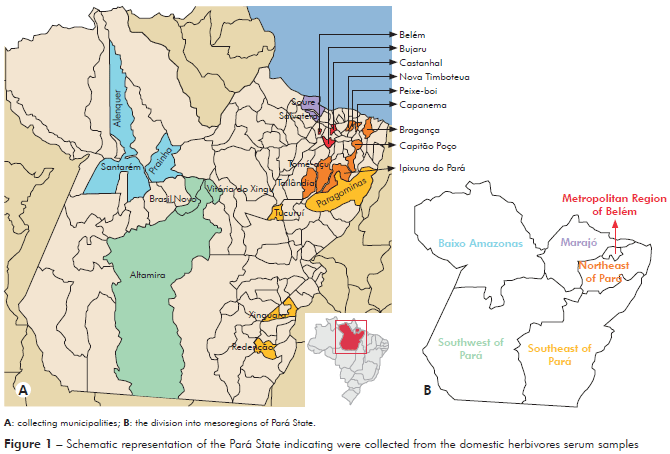
Blood was collected throughout 2009 from animals living in the six mesoregions of the Pará State (Figure 1). The samples were collected by jugular vein vacuum puncture, and the following domestic herbivores were independent of sex and race: horses (Equus ferus), cattle (80s spp.), water buffalo (Bubalus bubalis) and sheep (Ovis aries).
The animals were restrained and the local asepsis was done, jugular vein was punctured, without anticoagulant, using a vacuum system. From 5 to 10 mL of blood was collected and waited approximately for 90 min to allow coagulation and serum separation and it was subjected to centrifugation at 2,000 rpm for 5 min. The separated serum was transported on ice and then stored at -70° C until being analyzed by serologic testing. A total of 2,191 serum samples were collected: 385 from sheep, 399 from cattle, 654 from water buffaloes and 753 from horses.
]]> HEMAGGLUTINATION-INHIBITION (HI) TESTHI test was performed following protocol described by Shope12. This test was performed with antigens from EEEV, WEEV, MAYV and Mucambo virus (MUCV) isolated in Brazil. This virus belonged to the collection of the Arbovirology and Hemorrhagic Fevers Division of the IEC, Ananindeua, Para State, Brazil. These antigens were prepared from infected brain, liver or serum of newborn mice, and sera were tested against four antigen units13. The criteria for positivity as monotypic (reaction against only one antigen) or heterotypic (reactions against two or more antigens of the same virus genus, that may indicate cross reaction) was used14.
STATISTICAL ANALYSIS
The proportion method recommended by the Brazilian Ministry of Health was used to evaluate data9. Susceptibility tests were conducted on Lowenstein-Jensen medium. Antibiotics were applied in the recommended critical concentrations of 0.2 µg/mL for H, 40.0 µg/mL for R, 2.0 µg/mL for E, 25.0 µg/mL for Z, 4.0 µg/mL for S and 20.0 µg/mL for Et.
The analysis was done using the Chi-square test and the sample scores were measured using a significance level of 0.05 (BioEstat v.5.0 software)15.
RESULTS
All equine, bovine and water buffaloes presented high serologic prevalence to the four alphaviruses used in this study; the sheep did not present HI antibodies to MAYV. The total reactions (TR), heterotypic reactions (HR) and monotypic reactions (MR) are shown in table 1.
]]>
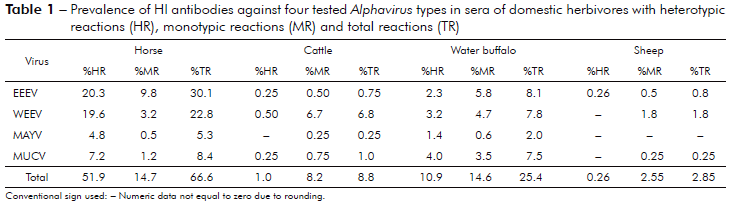
The HR correspond to 65.7% while MR represented 34.7% of all positive reactions. The HR of animal species comparing to the TR were: equine 77.9%, water buffaloes 42.8%, bovine 11.4% and ovine 9.1%. The equine showed HR higher than other animal species (p < 0.0001). The water buffaloes have also presented HR significantly higher than other ruminant species (p < 0.0001), but no differences were found among bovine and ovine prevalences.
The MR of animal species comparing to the TR were: ovine 90.9%; bovine 88.67%; water buffaloes 57.8% and equine 22.1%. No statistic difference was found in the ovine and bovine (p = 0.9203) analysis, but significant differences were obtained in the other species analyzed (p < 0.001).
When was observed each species of arboviruses and studied animal, the HR showed the following results: equine - EEEV (67.4%), MUCV (85.7%), WEEV (86%) and MAYV (90%); water buffaloes - EEEV (28.3%), WEEV (41.2%), MUCV (53.1%) and MAYV (69.2%); bovine - EEEV (33.3%), MUCV (25%), WEEV (7.40%) and MAYV (0%); ovine - EEEV (33.33%); the other alphaviruses did not show positive HR. The MR were: equine - EEEV (32.6%), WEEV (13.95%), MAYV (10.0%) and MUCV (14.3%); water buffaloes - EEEV (71.7%), WEEV (60.8%), MAYV (30.8%) and MUCV (46.9%); bovine - EEEV (66.7%), WEEV (92.6%), MAYV (100%) and MUCV (75%); ovine - EEEV (66.7%), WEEV (100%) and MUCV (100%).
DISCUSSION
The current study determined the prevalence of HI antibodies against EEEV, WEEV, MAYV and MUCV in four species of domestic herbivores. Of the Alphavirus, all of them have already been isolated from arthropods and/or wild vertebrates and also from humans in Brazil. Only the EEEV and WEEV have been proven to cause disease in domestic herbivores (horses).
In Brazilian Amazon, EEEV and WEEV have been isolated from birds, horses and mosquitoes in Belém Metropolitan Region and Southern Pará. Antibodies against these arboviruses have also been found, with a low prevalence in wild mammals16. The results of this study indicated a high prevalence of HI antibodies against EEEV and WEEV in horses, which showed a frequent exposure of this population to mosquitoes that carry these arboviruses, in order to confirm even the MR, it is necessary to conduct more specific tests such as the plaque reduction neutralization test (PRNT) or molecular studies as the next-generation sequencing (NGS).
Despite the lack of reports on clinical disease in horses, only one epizootic outbreak by EEEV has been reported in the Municipality of Bragança, Pará State, in 196217; however there are no reported cases of encephalitis in human in the Amazon Region caused by those arboviruses18. But, EEEV caused neurological illness in human beings in the North America8, and two fatal cases had been reported in South America, one in Brazil, in Bahia State19 and the other one in Trinidad and Tobago20. Aguilar et al21 report that the low incidence of cases of human encephalitis in the South America probably is due to the low infectivity and not the virulence of the isolated cases of EEEV that circulate in that region.
]]> Some epizootic strains of VEEV may be transmitted from horse to human by mosquitoes and the epidemic transmission cycle of VEEV involves horses which are the main source of the virus, namely, the source of infection for new hematophagous mosquitoes22. The MUCV subtype III of VEEV23 is usually isolated in Amazoni and it has been associated with sporadic febrile syndromes in humans in Brazil, Trinidad and Tobago, Surinam and French Guiana.The virus illness has evolved without important complications and without a record of epidemics24. It has also been isolated in Southeastern Brazil, close to the Vale do Ribeira, in São Paulo State25; however, there are no reports of that disease in domestic animals. Nevertheless, a 10 month-old equine experimentally infected via intramuscular route with high doses of MUCV has developed viremia which lasted for three days, with fever that lasts for 24 h and persistent leucopenia26. Additionally, Iverson et al27 found anti-MUCV antibodies in an equine that had symptoms compatible to encephalitis in the Brazilian Pantanal.
Ulloa et al28 found 45% of positivity for antibodies by plaque reduction neutralization test (PRNT) for the cattle in VEEV in Mexico. These data contrasted with those observed in this current study, where MUCV prevalence in cattle was just 1% of positivity for antibodies HI. It is interesting to note a greater percentage of positive reactions to horse antibody HI (8.36%) and water buffalo (7.49%).
MAYV was first isolated in Trinidad and Tobago in 195429 and is frequently isolated in northern of South America from humans, wild vertebrates (mainly monkeys) and mosquitoes. Outbreaks in humas caused by the virus of that febrile exanthematous disease have been frequently reported in Amazonia11,30,31. In this study, the prevalence of HI antibodies against MAYV in domestic herbivores was low. It should be noticed that antibodies against this virus were not detected in sheep during HI test, despite cohabitation with other animal species that did exhibit positive reactions against MAYV. There are no reports of any disease caused by this virus in domestic animals; however, the clinical syndromes that appear in humans presents symptoms that may not be perceived in domestic animals such as horses and ruminants.
In the International Catalogue of Arboviruses are registered approximately one hundred forty arboviruses infecting humans and farm animals, and some of these arboviruses infections only cause sub-clinical disease detected by the presence of antibodies32. In this study, domestic herbivores showed different prevalences of HI antibodies to the Alphavirus analyzed with the higher prevalence for horses, which may be related to the thickness of the skin which is thinner than those of the ruminants, thereby easing up the infection. On the other hand, the water buffalo has the keratin layer of the skin thicker than the cattle, because buffaloes have the habit of living in flooded regions where there is the greatest amount of arthropods, so increasing the probability of infection since there was higher prevalence of antibodies to the Alphavirus HI compared to other ruminants analyzed.
CONCLUSION
In the Brazilian Amazon, farm animals may have exposed for thousands of mosquito bites in areas where could be used as transmission for this virus. It only takes one infected mosquito to cause seroconversion. But there is no evidence that domestic farm animals are frequently exposed to arboviruses, it may represent a public health risk to humans that ca be susceptible to develop disease from that virus. Thus, it is possible to infer that horses showed higher prevalence of antibodies in heterotypic reactions showing to be the best species of domestic farm animal to serve as sentinel to detect the movement of arboviruses in the Brazilian Amazon.
ACKNOWLEDGMENTS
]]> Our gratitude to the IEC/SVS/MS and the Universidade Federal Rural da Amazônia who contributed greatly to the development of this research.
FINANCIAL SUPPORT
This study was partially supported by the National Council for Scientific and Technological Development (CNPq) (grant 301641/2010-2).
REFERENCES
1 Leão RNQ, organizador. Doenças infecciosas e parasitárias: enfoque amazônico. Belém: CEJUP; 1997.
2 Vasconcelos PFC, Travassos da Rosa APA, Dégallier N, Travassos da Rosa JFS, Pinheiro FP. Clinical and ecoepidemiological situation of human arboviruses in Brazilian Amazonia. Cienc Cult. 1992 Mar-Jun;44(2/3):117-24. [Link]
3 Vasconcelos PFC. Emergence of arboviruses in Brazilian Amazon Region. Virus Rev Res. 1999;4 Suppl 1:48-9. [Link]
4 Le Duc JW, Piheiro FP. Oropouche fever. In: Monath TIP, editor. The arboviruses: epidemiology and ecology. Boca Raton: CRC Press; 1988. p. 1-14.
]]> 5 Dégallier N, Travassos da Rosa APA, Vasconcelos PFC, Rodrigues SG, Travassos da Rosa ES, Sá Filho GC, et al. New entomological and virological data on the vectors of sylvatic yellow fever in Brazil. Cienc Cult. 1992 Mar-Jun;44(2/3):136-42. [Link]6 Vasconcelos PF, Travassos da Rosa AP, Rodrigues SG, Travassos da Rosa ES, Degallier N, Travassos da Rosa JF. Inadequate management of natural ecosystem in the Brazilian Amazon region results in the emergence and reemergence of arboviruses. Cad Saude Publica. 2001;17 Suppl:155-64. Doi: 10.1590/S0102-311X2001000700025 [Link]
7 Calisher CH, Shope RE, Brandt W, Casals J, Karabatsos N, Murphy FA, et al. Proposed antigenic classification of registered arboviruses I. Togaviridae. Alphavirus. Intervirology. 1980;14(5-6):229-32. [Link]
8 Weaver SC, Reisen WK. Present and future arboviral threats. Antiviral Res. 2010 Feb;85(2):328-45. Doi: 10.1016/j.antiviral.2009.10.008 [Link]
9 Vasconcelos AA, Pinheiro FP, Shope RE, Travassos da Rosa JFS, Travassos da Rosa ES, Dégallier N, et al. Arboviruses pathogenic for man in Brazil. In: Travassos da Rosa APA, Vasconcelos PFC, Travassos da Rosa JFS, editors. Overview of arbovirology in Brazil and neighbouring countries. Belém: Instituto Evandro Chagas; 1998. p. 72-99. [Link]
10 Martins LC, Diniz JA, Silva EV, Barros VL, Monteiro HA, Azevedo RS, et al. Characterization of Minacu virus (Reoviridae: Orbivirus) and pathological changes in experimentally infected newborn mice. Int J Exp Pathol. 2007 Feb;88(1):63-73. Doi: 10.1111/j.1365-2613.2006.00516.x [Link]
11 Azevedo RS, Silva EV, Carvalho VL, Rodrigues SG, Nunes-Neto JP, Monteiro H, et al. Mayaro fever virus, Brazilian Amazon. Emerg Infect Dis. 2009 Nov;15(11):1830-2. Doi: 10.3201/eid1511.090461 [Link]
12 Shope RE. The use of micro-hemagglutination inhibition test to follow antibody response after arthropod-borne virus infection in a community of forest animals. An Microbiol. 1963;11:167-71.
13 Clarke DH, Casals J. Techniques for hemagglutination and hemagglutination-inhibition with arthropod-borne viruses. Am J Trop Med Hyg. 1958 Sep;7(5):561-73. [Link]
14 Rodrigues SG, Oliva OP, Araújo FAA, Martins LC, Chiang JO, Henriques DF, et al. Epidemiology of Saint Louis encephalitis virus in the Brazilian Amazon region and in the State of Mato Grosso do Sul, Brazil: elevated prevalence of antibodies in horses. Rev Pan-Amaz Saude. 2010 Mar;1(1):81-6. Doi: 10.5123/S2176-62232010000100012 [Link]
]]> 15 Ayres M, Ayres Jr M, Ayres DL, Santos AS. BioEstat 5.0: aplicações estatísticas nas áreas das ciências biológicas e médicas. Belém: Sociedade Civil Mamirauá; 2007.16 Shope RE, Andrade AH, Bensabath G, Causey OR, Humphrey PS. The epidemiology of EEE, WEE, SLE and Turlock viruses, with special reference to birds, in a tropical rain forest near Belem, Brazil. Am J Epidemiol. 1966 Nov;84(3):467-77. [Link]
17 Causey OR, Shope RE, Laemmert HW. Report of an epizootic of encephalomyelitis virus in Pará, Brazil. Rev Ser Esp Saude Publica. 1962;12:47-50.
18 Woodall J. Notas históricas de alguns arbovírus isolados no laboratório de vírus de Belém da Fundação Rockefeller. In: 3° Simpósio Internacional de Arbovirus dos Trópicos e Febres Hemorrágicas; 2004 30 nov-3 dez; Belém; Belém: Instituto Evandro Chagas; 2004. p. 12-3.
19 Alice FJ. Infecção humana pelo vírus "leste" da encefalite equina. Bol Inst Biol Bahia. 1956;3:3-9.
20 Corniou B, Ardoin P, Bartholomew C, Ince W, Massiah V. First isolation of a South American strain of Eastern Equine virus from a case of encephalitis in Trinidad. Trop Geogr Med. 1972 Jun;24(2):162-7.
21 Aguilar PV, Robich RM, Turell MJ, O'Guinn ML, Klein TA, Huaman A, et al. Endemic eastern equine encephalitis in the Amazon region of Peru. Am J Trop Med Hyg. 2007 Feb;76(2):293-8. [Link]
22 Stott JL. Togaviridae e Flaviviridae. In: Hirsh DCZ, Chung YC, editores. Microbiologia veterinária. Rio de Janeiro: Guanabara Koogan; 2003. p. 358-67.
23 Young NA, Johnson KM. Antigenic variants of Venezuelan equine encephalitis virus: their geographic distribution and epidemiologic significance. Am J Epidemiol. 1969;89(3):286-307. [Link]
24 Causey OR, Causey CE, Maroja OM, Macedo DG. The isolation of arthropod-borne viruses, including members of two hitherto undescribed serological groups, in the Amazon region of Brazil. Am J Trop Med Hyg. 1961 Mar;10(2):227-49. [Link]
]]> 25 Lopes OS, Sachetta LA. Isolation of Mucambo virus, a member of the Venezuelan equine encephalitis virus complex in the State of São Paulo, Brazil. Rev Inst Med Trop Sao Paulo. 1978 Mar-Apr;20(2):82-6.26 Shope RE, Causey OR, Andrade AH, Theiler M. The Venezuelan equine encephalomyelitis complex of group a arthropod-borne viruses, including Mucambo and Pixuna from the Amazon Region of Brazil. Am J Trop Med Hyg. 1964 Sep;13:723-7. [Link]
27 Iversson LB, Silva RA, Rosa AP, Barros VL. Circulation of eastern equine encephalitis, western equine encephalitis, Ilheus, Maguari and Tacaiuma viruses in equines of the Brazilian Pantanal, South America. Rev Inst Med Trop Sao Paulo. 1993 Jul-Aug;35(4):355-9. Doi: 10.1590/S0036-46651993000400009 [Link]
28 Ulloa A, Langevin SA, Mendez-Sanchez JD, Arredondo-Jimenez JI, Raetz JL, Powers AM, et al. Serologic survey of domestic animals for zoonotic arbovirus infections in the Lacandon Forest region of Chiapas, Mexico. Vector Borne Zoonotic Dis. 2003 Jul;3(1):3-9. [Link]
29 Anderson CR, Downs WG, Wattley GH, Ahin NW, Reese AA. Mayaro virus: a new human disease agent. II. Isolation from blood of patients in Trinidad, B.W.I. Am J Trop Med Hyg. 1957 Nov;6(6):1012-6. [Link]
30 Pinheiro FP, Freitas RB, Travassos da Rosa JF, Gabbay YB, Mello WA, LeDuc JW. An outbreak of Mayaro virus disease in Belterra, Brazil: I. Clinical and virological findings. Am J Trop Med Hyg. 1981 May;30(3): 674-81. [Link]
31 Pinheiro FP. Arboviral zoonoses in South America Mayaro fever. In: Baran GW, editor. Handbook series in zoonoses. Boca Raton: CRC Press; 1981. p. 159-64.
32 Karabatsos N, editor. International catalogue of arboviruses, including certain other viruses of vertebrates. 3rd ed. San Antonio: American Society of Tropical Medicine and Hygiene; 1985. p. 1141.
]]>
 Correspondence /Correspondência / Correspondencia:
 Received / Recebido em / Recibido en: 28/5/2012
Accepted / Aceito em / Aceito en: 23/11/2012